Our Climate Action Plan

 Trying to make more thoughtful travel choices in a country of vast distances  and fragile landscapes.

Finding a More Honest Balance

Travel to Mongolia has an impact. Pretending otherwise would not be honest

A Note From Jess

Many people travel to Mongolia because they want to experience its open landscapes and meet herding families. 

But those landscapes and families are already being affected by climate change and are under pressire. 

Winters are harder to predict. Summers can be drier. Pasture is under pressure. Water sources are changing. Dzuds (cynical weather events associated with the Central Asian steppe) can bring huge livestock losses. For herding families, climate change is not an abstract future concern. It affects income, food security, migration, generational  decision-making, and whether younger generations feel able to continue a rural way of life.

This is the complicated place where our work sits. 

We run journeys in Mongolia, one of the most remote and landlocked countries in the world. Most of our guests have to fly here. Our trips involve long distances, road journeys, vehicles, food supplies, accommodation, water, waste, and resources. We cannot pretend travel to Mongolia has no impact.

But we also know that tourism, when done with care, can provide income, connection, and practical support to rural families, local projects, national parks, small businesses, and our Mongolian team.

So this Climate Action Plan is not a claim that we have solved our climate impact.

It is a working record of what we are trying to reduce, what we are still trying to understand, and how we are making decisions as a small company working in a country already feeling the effects of climate change.

Mongolian dirt road

Where We Are Now

We are a very small Mongolia-focused company, working with around 150–200 travellers a year.

We are a registered tour company in Mongolia, pay taxes in Mongolia, maintain Mongolian bank accounts, and employ Mongolians.

We do not have investors, shareholders, or a dedicated sustainability department. Our scale is small. Our resources are limited. But our decisions still matter.

We created this Climate Action Plan after signing up to Tourism Declares a Climate Emergency and the Glasgow Declaration on Climate Action in Tourism.

Both ask tourism businesses to take climate action seriously. For larger companies, that may include formal carbon accounting, published reduction targets, and detailed reporting. For us, as a very small company, it means starting honestly from where we are: understanding our impact, reducing what we can, being transparent about what we cannot yet measure, and linking climate action to the wider responsibilities we report on through our annual Impact Reports.

For us, climate action is not only about carbon reporting. It is also about considering our wider impact: on people, places, livelihoods, landscapes, water, waste, food, transport, and the way tourism shapes expectations of Mongolia.

That is why this Climate Action Plan sits alongside our annual Impact Reports. The reports help us look more honestly at where our money, time, relationships, and responsibilities go. This plan helps us ask how those choices connect to climate and environmental impact.

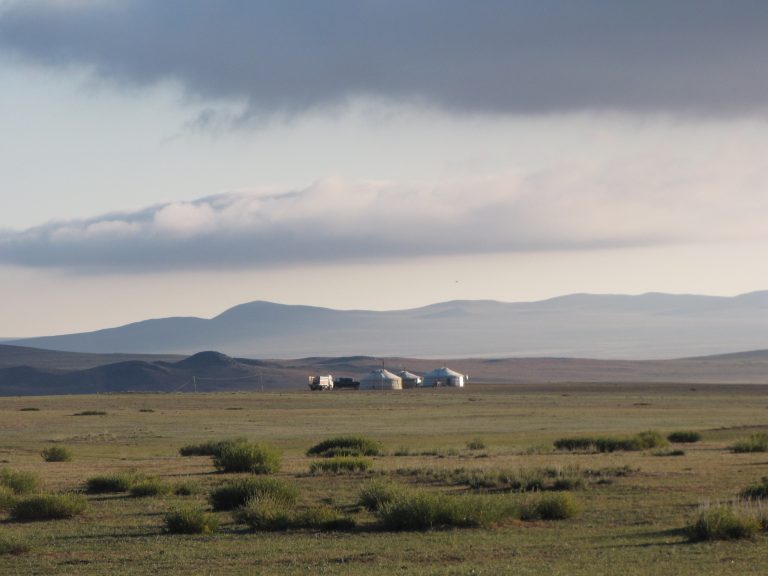
Mongolian ger for our Earth Day Mongolia blog post
Why We Are Not Publishing Carbon Measurements Yet

At present, we are not publishing carbon measurements for each of our tours.

This is not because carbon does not matter. It does. But meaningful carbon measurement requires reliable data across transport, accommodation, fuel use, meals, office operations, domestic flights, supply chains, guest choices, and the many smaller decisions that shape a journey. It also requires time, money, and specialist knowledge.

For a small company like ours, that is a much bigger task than adding a carbon figure to a webpage.

Tourism in Mongolia has also changed significantly since the pandemic. We are still reviewing which journeys feel right for us, our team, our guests, and our long-term local partners. Some tours continue largely as before. Others have changed, and some may no longer be the right fit.

Until our tour structure is more settled, it is difficult to measure each journey consistently or meaningfully.

International travel creates a further challenge. Most guests must fly long distances to reach Mongolia, often using different airlines and routes. We do not include international flights in our trips and do not currently measure them, but we recognise that promoting travel to Mongolia means we are part of that impact.

We are therefore not claiming to be a low-carbon company. Nor do we describe our journeys as carbon neutral, carbon positive, or fully offset.

We have explored Mongolia-based climate, pastureland, and carbon projects, and we would like to support this kind of work when funds allow. At present, however, we cannot make a meaningful annual financial commitment without taking money away from other responsibilities, including fair payment for our team, our long-term local partners, and our existing community work.

For now, our focus is on making practical reductions where we can.

We would rather be honest about what we can and cannot currently do than publish carbon figures or make environmental claims we cannot properly stand behind.

What We Are Not Claiming

We are not claiming to be a low-carbon company.

For most international guests, travelling to Mongolia involves long-haul flights. Mongolia is also vast, with limited transport infrastructure, and road journeys and domestic flights are often part of the reality of travelling here.

We are not claiming that our journeys are carbon neutral, carbon positive, or fully offset.

We have explored Mongolia-based climate and pasture-restoration projects and would like to provide more direct financial support when our resources allow. At present, however, we cannot make a meaningful annual company contribution without taking money away from other responsibilities, including fair payment for our team, support for our long-term local partners, and our existing community work.

Guests can choose to make a voluntary contribution through our flight calculator (details further down the page), but we do not present this as cancelling out the impact of their journey.

We are choosing not to overstate what we do.

We are a small travel company trying to make more thoughtful choices within the practical realities of operating across Mongolia.


What We Are Doing Now

Our climate action focuses on the parts of our work where we can make practical decisions.

These are not dramatic actions, and we do not present them as a complete solution. They are choices that fit the scale of who we are and the realities of operating in Mongolia.

Transport and Journey Design

We do not design short fly-in, fly-out itineraries that move guests rapidly between Mongolia’s best-known highlights.

We limit unnecessary domestic flights and use trains where they make practical sense and add something meaningful to the journey.

Instead, we encourage longer and slower travel. This does not mean road travel has no environmental impact. Mongolia is vast, its infrastructure is limited, and long journeys are part of the reality of travelling here.

However, slower itineraries allow guests to spend more time in each place rather than treating Mongolia as a checklist to be consumed as quickly as possible.

Long-Term Local Partnerships

Our journeys are personally researched, designed, and managed. They are shaped around long-term relationships with Mongolian families, projects, communities, and local businesses rather than around a constant search for new places to sell.

We do not ask our local partners to reorganise their lives for our convenience or turn everyday work into a performance.

Livestock, family responsibilities, haymaking, winter preparation, and other daily priorities come first. Travel must make space for real life rather than reshape it for visitors.

Working with established partners also helps us understand the pressures a particular place or family may be facing and adapt our journeys accordingly.

Group Size

We keep our small-group tours to a maximum of six guests and offer only a limited number of departures each year.

This helps us avoid sending a constant flow of visitors to the same families and places or turning communities into fixed stops on a tourism circuit.

Low Season Travel

We also promote travel outside the busiest summer months through a 15% low-season discount.

This helps spread income more evenly across the year for our Mongolian team and long-term local partners while reducing some of the pressure created by Mongolia’s short peak tourism season.

Food, Waste & Water

Food, water, and waste are practical considerations on every journey.

Outside Ulaanbaatar, our team prepares most meals using mobile kitchens carried in our vehicles. We buy from local shops and markets throughout each journey and avoid building menus around imported foods or recreating international dishes unnecessarily.

We carry refillable water containers and filtered drinking water to reduce reliance on single-use plastic bottles. We also offer guests a 15% discount on filtered reusable water bottles.

Waste remains a significant challenge in Mongolia, particularly outside Ulaanbaatar, where collection and recycling infrastructure are limited.

We cannot solve that problem, but we can reduce what we add to it. We ask guests to take responsibility for non-biodegradable and sanitary waste and prepare them honestly for the realities of water use, toilets, rubbish, road travel, and limited infrastructure.

International Flights and Voluntary Contributions

Most guests need to fly internationally to reach Mongolia. We do not include international flights within our tours, and guests travel using many different airlines and routes, so we do not currently calculate these emissions ourselves.

However, we recognise that promoting travel to Mongolia means we are part of that impact.

Guests who would like to take responsibility for the impact of their international flights can use the calculator below to estimate their emissions and make a voluntary contribution.

The calculator was created for EL by C-Level, a certified B Corp that supports climate action through ecosystems and local communities. C-Level is also a member of 1% for the Planet, contributing 1% of its turnover to approved environmental organisations.

Contributions made through our calculator support the Mongolian Nomad Project, a community-based Plan Vivo project working to restore pastureland and strengthen local livelihoods in Mongolia.

Plan Vivo projects are independently certified and designed to deliver long-term benefits for the climate, biodiversity, and local communities.

We know that making a contribution is not a substitute for reducing emissions, and offsetting is not a perfect answer. Reducing avoidable emissions must come first.

But where emissions cannot currently be avoided, we believe that taking practical, independently verified action is better than ignoring the impact altogether.

Our Sustainable Development Goals

We use the Sustainable Development Goals as a framework, but our work does not begin with them. It begins with Mongolia, our team, our guests, our local partners, and the choices we make as a small tourism company

The goals most connected to our work are:

SDG 5 – Gender Equality

Measuring Our Impact - Gender Equality - Sustainable Development Goal 5

Tourism can create opportunities for women, but only if companies make deliberate choices about employment, training, confidence, safety, and leadership.

At Eternal Landscapes, all our trip assistants are Mongolian women.

Some are teachers. Some are students. Some are mothers. Some work with us alongside other careers or family responsibilities. Many did not come into tourism through a formal route. Our role is to create space, training, mentoring, and flexible work that allows them to develop confidence and skills over time.

This is not always simple. Women’s lives are complex. Family expectations, childcare, study, health, confidence, and social pressure all shape whether someone can work in tourism.

But we believe this is where small companies can make a difference.

We were awarded Gender Equality Champion by Equality in Tourism International for this work, but the real value is in the long-term support behind the award: flexible employment, training, mentoring, and keeping the door open for women as their lives change.

SDG 10 – Reduced Inequalities

Sustainable Development Goal 10

There are significant inequalities between urban and rural Mongolia, and between those with access to education, language skills, transport, networks, and tourism opportunities, and those without.

Tourism can sometimes widen those gaps. It can benefit people who already have good English, good vehicles, good online visibility, or access to international contacts.

We try to work differently.

We build long-term partnerships with rural families, community projects, women, older drivers, and people whose knowledge or skills may not fit neatly into mainstream tourism marketing.

This does not solve inequality. But it does mean asking who gets included, who gets paid, who is visible, and who is left out.

SDG 12 – Responsible Consumption And Production

Measuring Our Impact - Responsible Consumption and Production - Sustainable Development Goal 12

Waste is one of the most visible environmental issues in Mongolia.

There is limited infrastructure, especially outside Ulaanbaatar. In many places, waste collection is basic or unavailable. Recycling exists, but it is inconsistent and often informal. Rubbish is sometimes burned or buried. Travellers notice it, and local communities live with it.

We cannot solve Mongolia’s waste challenges. But we can reduce what we add to them.

Our main actions include:

  • carrying filtered water and refillable water containers in our vehicles
  • encouraging guests to bring reusable bottles
  • working with Water-To-Go to reduce reliance on single-use plastic bottles
  • reducing food waste through better planning
  • avoiding unnecessary packaging where possible
  • encouraging guests to pack out sanitary waste and non-biodegradable items
  • supporting recycling options where they exist
  • organising and funding our annual national park community clean-up
  • talking honestly with guests about waste, infrastructure, and responsibility

Responsible travel is not only about what happens in beautiful places. It is also about what we leave behind.

SDG 13 – Climate Action

Measuring Our Impact - Climate Action - Sustainable Development Goal 13

Mongolia is already being affected by climate change.

The annual mean air temperature has increased significantly over recent decades. Pastureland is under pressure. Lakes, rivers, springs, and glaciers are changing. Dry conditions can increase the risk of steppe and forest fires. Water resources are becoming more fragile.

For herding families, this has real consequences.

It affects pasture, movement, livestock health, income, and decisions about whether to stay in the countryside or move closer to towns and cities. These are the same families travellers often come to Mongolia hoping to meet.

As a tourism company, we have a responsibility to reduce what we can.

We are not currently publishing carbon measurements for our tours. But we are taking action in the areas we can influence:

  • limiting unnecessary domestic flights
  • avoiding short highlight-based itineraries
  • encouraging longer stays
  • using trains where possible
  • keeping group sizes small
  • reducing single-use plastic
  • planning food carefully
  • supporting low-season travel
  • working with long-term local partners
  • helping guests understand the climate realities of Mongolia

We are not claiming to be a low-carbon company.

We are a small travel company trying to make lower-impact choices in a high-distance country.

SDG 15 – Life On Land

Measuring Our Impact - Life On Land - Sustainable Development Goal 15

Mongolia’s landscapes can look vast and resilient, but they are fragile.

Soil degradation, desertification, overgrazing pressure, water scarcity, climate change, and increasing tourism all affect the land. In some areas, the pressure is visible through vehicle tracks, rubbish, erosion, crowded viewpoints, damaged vegetation, and stress on local water sources.

Our approach is small-scale.

We keep our group sizes small. We limit the number of departures we offer. We avoid creating a constant tourism circuit through the same communities. We use Leave No Trace principles. We work with national park staff and local families. We encourage guests to walk carefully, camp respectfully, avoid damaging vegetation, and understand that landscapes are lived in, not empty spaces for travellers to consume.

We also support conservation and community projects where we can, including our annual national park community clean-up at Terkhiin Tsagaan Nuur National Park.

Our Next Steps

Our next steps are deliberately practical.

We want to reduce our single-use plastic and look at ways we can track food waste, water use, and vehicle fuel use.

We will keep reviewing our journeys to make sure they still feel right for Mongolia, our team, and our long-term local partners.

We also want to link this Climate Action Plan more closely to our annual Impact Reports, so climate action remains part of our wider responsibility rather than becoming a separate marketing claim.

In time, we hope to move towards carbon measurement, but only when we can do it properly and publish figures we can stand behind.

This is a working document. It will change as we learn more, as Mongolia changes, and as our own work continues to evolve.

Mongolian gers on a biking tour in Mongolia

Get in Touch

If you have insights or suggestions to help us improve, please don’t hesitate to reach out to Jess.

Contact Jess
WhatsApp
WhatsApp Chat
Send us a message today and we will contact you as soon as possible.