Climate Emergency in Mongolia

We focus exclusively on Mongolia. It is the country we know, the country our team calls home, and the place where we see the impacts of the climate crisis firsthand.

Mongolia is a vast country, but its landscapes are fragile. It sits between the deserts of Central Asia and the forests of Siberia, with desert, desert steppe, open steppe, forest-steppe, boreal forest, mountains, rivers, and lakes all forming part of its natural identity.

Mongolia is warming faster than the global average. The effects are already visible: more unpredictable weather, drought, flooding, dzud, water stress, pasture degradation, desertification, biodiversity loss, and growing pressure on herding livelihoods. Ulaanbaatar is affected too, with heavy rainfall and flooding placing strain on already limited urban infrastructure.

Table of Contents

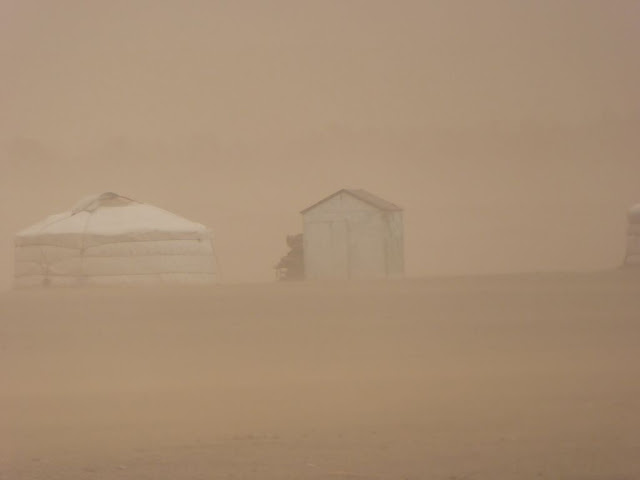
Sand storms such as this one are a frequent occurrence in Mongolia during the spring season - not just in the Gobi Desert but countrywide.

Desertification and Pasture Pressure

Desertification is one of Mongolia’s most urgent environmental challenges. Much of the country’s pastureland is under pressure, with climate change combining with mining, fire, unsustainable land use, and overgrazing.

The growth in goat numbers, linked partly to global demand for cashmere, has also added pressure in some regions. Goats graze differently from sheep and can damage plants more severely, especially where pasture is already fragile.

This matters because healthy pasture is central to Mongolia’s ecosystems and to the lives of herding families. When pasture declines, it affects livestock, income, food security, rural culture, and the ability of families to remain in the countryside.

Dzud: Climate Pressure in Real Life

Dzud is a harsh winter disaster in which livestock are unable to reach pasture because of deep snow, ice, extreme cold, or a combination of conditions. It has always been part of life in Mongolia, but recent dzuds show how vulnerable herding families are becoming as weather patterns become more extreme and less predictable.

The winter of 2023/24 was one of the harshest Mongolia had experienced in decades. Snow covered much of the country, and millions of animals were lost. For herding households, livestock are not only an economic asset. They are food, transport, culture, savings, security, and identity

Spring Sandstorms and Changing Weather

Sandstorms have always occurred in Mongolia, especially in spring. However, more frequent or intense storms are part of a wider pattern of environmental pressure.

The video below was filmed in March 2021 in Dundgobi Aimag, one of Mongolia’s Gobi provinces. Dundgobi means “Middle Gobi” and is home to Erdenedalai, where our guests are hosted by herding families including the Nergui family, with whom we have worked for many years.

Although this is one location, the scene could represent many parts of the Gobi in spring: dry land, strong winds, fragile pasture, and communities living directly with environmental change.

The Impact on Herders and Rural Communities

For many Mongolian households, especially herding families, the climate emergency is not a future concern. It is already affecting daily life.

Drought, dzud, desertification, water stress, pasture pressure, and forest and steppe fires can all make traditional livelihoods harder to maintain. When animals are lost or pasture becomes unreliable, families may have little choice but to leave the countryside and move to Ulaanbaatar.

This movement brings further pressure: on housing, employment, infrastructure, air quality, and social support in the capital.

Ulaanbaatar Is Affected Too

The climate emergency is not only a rural issue. Ulaanbaatar is also vulnerable.

Heavy rainfall and flooding have placed pressure on the city’s infrastructure, while air pollution, rapid urban growth, and resource use remain major challenges. The climate crisis affects Mongolia’s cities as well as its countryside.

Mongolia on the Global Stage

In August 2026, Mongolia will host UNCCD COP17 in Ulaanbaatar, a United Nations conference focused on desertification, drought, land restoration, and sustainable land management.

Its presence in Mongolia feels significant. These are not distant issues here. Desertification, pasture pressure, drought, dzud, water stress, and climate-related migration are already affecting landscapes, herding livelihoods, and communities across the country.

Speaking at the World Climate Action Summit at COP28, Mongolia’s President Ukhnaa Khurelsukh confirmed Mongolia’s preparations to host UNCCD COP17 in 2026 and highlighted the importance of rangelands and pastoralists — both central to Mongolia’s landscapes, culture, and rural livelihoods. For Mongolia, climate action is not abstract. It is tied directly to land, pasture, water, animals, and the future of herding communities.

“We must never forget that the harmonious coexistence between human beings and nature is the very basis of human existence.”

Mongolia’s President Ukhnaa Khurelsukh, speaking at COP28  

Reasons for Hope: Mongolian Climate Action Stories

The climate emergency in Mongolia is serious, but there are also people and organisations working for change — often with persistence, creativity, and deep commitment to the places they call home.

Breathe Mongolia

Breathe Mongolia – Clean Air Coalition is a non-profit community of young changemakers working towards a future with clean air and a healthy climate for all.

Founded in response to Mongolia’s air pollution crisis, their work connects clean air, public health, climate justice, youth leadership, and civic action. Through public education, advocacy, real-time monitoring, and community engagement, they help people understand that air pollution and climate change are not separate issues, but part of the same challenge.

In 2025, Breathe Mongolia received The Iris Prize, which supports established youth-led environmental projects with the potential to grow and be replicated. Their recognition is a reminder that climate action in Mongolia is also being led by a younger generation — practical, informed, and determined to create a healthier future.

Video: Find out more about Breathe Mongolia’s work through The Iris Project video.

Batmunkh Luvsandash

In 2025, Mongolian environmental activist Batmunkh Luvsandash received the Goldman Environmental Prize. Determined to protect his homeland from mining, his activism helped secure a 66,000-acre protected area in Dornogovi province in April 2022, adding to other land already protected by Batmunkh and his allies.

The area is home to Argali sheep, endangered Asiatic wild ass, and a wide variety of plants. His work is a reminder that protecting land in Mongolia is also about protecting wildlife, pasture, water, local communities, and future generations.

GerHub

GerHub is another example of practical, local climate action. Its work in Ulaanbaatar’s ger areas looks at how better ger insulation and cleaner heating options can reduce heat loss, improve living conditions, and help address air pollution.

This kind of work may not always make international headlines, but it matters. Climate action in Mongolia is not only about large conferences or national targets. It is also about warmer homes, cleaner air, healthier families, protected pasture, and communities finding realistic ways to adapt.
Tourism Is Part of This Picture

Tourism does not sit outside Mongolia’s climate reality. Travel creates emissions, uses resources, and can add pressure to places, communities, water sources, pasturelands, and fragile ecosystems.

As a Mongolia-based tour operator, we have a responsibility to think carefully about how we design, sell, and operate our journeys. For us, this means keeping groups small, designing routes carefully, working with long-term local partners, avoiding unnecessary journeys where possible, reducing avoidable waste, preparing guests honestly, and making sure our tours bring positive local value rather than simply extracting from the places we visit.

Our Climate Action Plan

We are a signatory of the Glasgow Declaration on Climate Action in Tourism. s part of that commitment, we report on our progress and continue to review the impact of our work.

This page explains why the climate emergency matters in Mongolia. You can read more about what we are doing, what we are still working on, and where we need to improve in our Climate Action Plan.

Experience Mongolia With Us

Lorem ipsum dolor sit amet consectetur adipiscing elit Whether you're travelling solo, with friends, or planning a private adventure, our journeys are designed to help you experience Mongolia with curiosity, openness and time to connect. Explore what's possible.
Share this article