Mongolia Travel Questions, Answered Honestly
Planning a trip to Mongolia naturally comes with a lot of questions. We have answered the ones we are asked most often below, from visas and booking details to toilets, road journeys, accommodation, safety, and what travelling with us is really like.
There is a lot here, so please scroll through until you find the question you need. We believe in being honest rather than making Mongolia sound easier than it is. Mongolia is not always easy, but it is memorable — and being prepared helps you travel with more confidence, patience, and enjoyment.
If there is anything we have not answered, just get in touch and we will be happy to help.
Mongolia is currently open to international travellers arriving by air through Chinggis Khaan International Airport in Ulaanbaatar.
If you are planning to enter Mongolia by land or train, we recommend checking current schedules before you commit to travel. Border crossing hours and rail services can change, and they may occasionally be affected by Mongolian, Russian, or Chinese public holidays.
Most international travellers arrive at Chinggis Khaan International Airport, Mongolia’s main international airport. It is located around 52 km south of central Ulaanbaatar and the transfer time between the airport and the city is usually between one and two hours, depending on your arrival or departure time.
Mongolia has land border crossings with both Russia and China, but only certain checkpoints are open to international travellers.
Opening hours can be limited and may change around public holidays, local conditions, or administrative decisions. If you are planning an overland route, we recommend checking current border information before you finalise your plans and allowing extra time.
Mongolia’s international rail connections with both Beijing and Irkutsk are currently open. International train travel operates on the main Trans-Mongolian route, linking Ulaanbaatar with Beijing via the Chinese border crossing at Zamyn-Uud / Erlian — with one weekly service in each direction.
Visa requirements depend on your nationality, passport, and length of stay.
Many passport holders, including travellers from the UK, Europe, Australia, Canada, New Zealand, and the US, can currently enter Mongolia visa-free for short stays. However, visa rules can change, so we always recommend checking the official visa information before you travel.
If you do need a visa, Mongolia has an online e-visa system. It usually works well, although occasional hiccups do happen, and we can point you in the right direction if needed.
Your passport must be valid for at least six months from your date of entry into Mongolia.
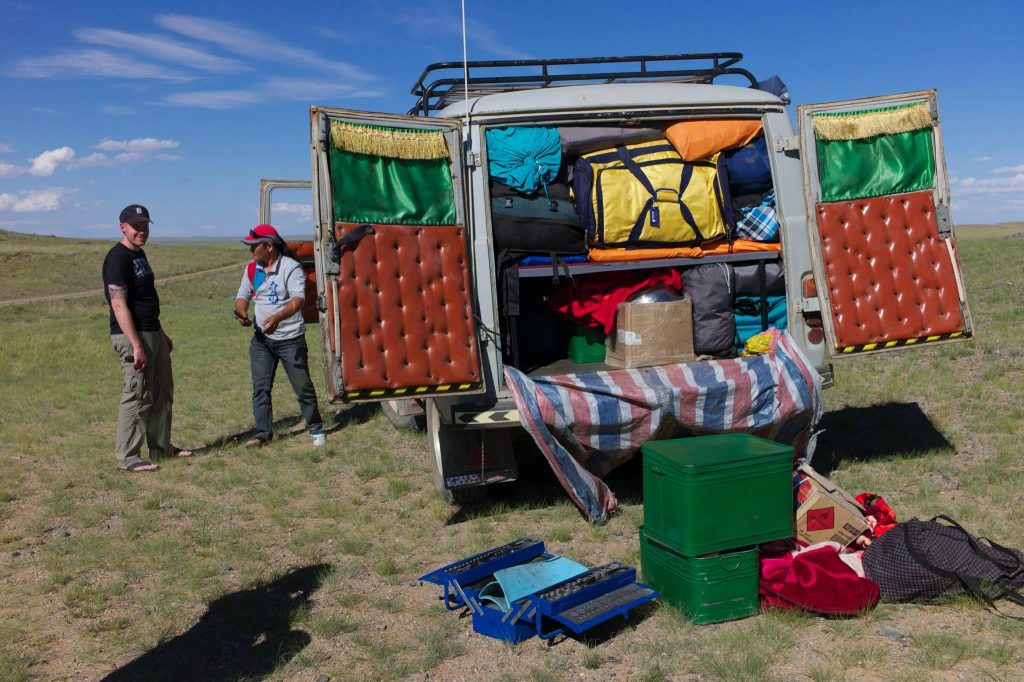
Mongolia is a remarkable country to travel through, but it is not always an easy one.
It is vast, open, and often beautiful, but it also comes with long drives, rough roads, basic facilities, limited rural infrastructure, changeable weather, and a travel rhythm that cannot always be controlled. Outside Ulaanbaatar, flush toilets, hot showers, reliable electricity, and smooth service are not guaranteed. In many areas, formal toilet facilities are limited, rubbish management is poor, and travel can feel physically and mentally tiring.
But Mongolia also offers something increasingly hard to find: space, strong hospitality, big landscapes, quiet moments, family life, working herding culture, and a sense of travel shaped by the road rather than a fixed schedule.
Mongolia may be right for you if you are curious, patient, adaptable, and willing to accept the country as it is — not as a polished or social media version created for visitors. If you need high comfort, certainty, luxury, or a tightly controlled itinerary, Mongolia may feel challenging or frustrating.
An Eternal Landscapes trip may be right for you if you want a thoughtful, locally rooted, well-supported way to experience Mongolia beyond a checklist of highlights.
Our journeys are shaped by local relationships, long-term community partnerships, flexible days, our intergenerational Mongolian teams of older male drivers and female trip assistants, family-operated accommodation, and the realities of travelling through a country with limited infrastructure.
We are not a luxury tour operator, and we do not try to smooth Mongolia into something it is not. We will prepare you honestly, support you carefully, and do our best to make the journey flow, but you will still need flexibility, patience, respect, and a sense of humour.
If you are looking for a trip that feels personal, grounded, and connected to the people and landscapes of Mongolia, our style may suit you well. If you prefer a more conventional escorted tour, a fixed daily schedule, or higher levels of comfort, another company may be a better fit.
Because honest preparation leads to better travel.
Mongolia is extraordinary, but it is not always easy. There are long drives, basic toilets, limited showers, rough roads, rubbish issues, fragile environments, social challenges, and a lack of infrastructure in many rural areas. Pretending these things do not exist would not be fair to you, to our team, or to the people who live with these realities every day.
We do not believe responsible travel means only showing the beautiful parts of a country. It also means understanding context, travelling with respect, and recognising that Mongolia is not a backdrop created for visitors.
We talk honestly because we want you to arrive prepared, not disappointed. We also want the right travellers to choose us: people who can appreciate Mongolia’s beauty while understanding its complexities.
For us, this honesty is part of care.
The right trip depends on your time, interests, comfort level, preferred season, and how much structure or independence you want.
If this is your first visit to Mongolia, our central and/or Gobi journeys can be a good introduction. They give you a strong sense of the country without asking you to commit to the longest drives or most remote conditions.
If you have more time, longer journeys allow you to travel more slowly and reach regions where distance is part of the experience. Western Mongolia, Khovsgol, the far east, and some trekking routes are rewarding but require more flexibility, patience, and comfort with basic conditions.
If you are interested in a specific focus — walking, riding, wildlife, festivals, photography, family stays, or winter trips, — we can help guide you towards the trip that best matches your expectations.
You do not need to know exactly which itinerary is right before you contact us. Tell us what interests you, what concerns you, your dates, your comfort level, and how you like to travel, and we will be honest about what we think will suit you.
Yes. Many of our guests travel solo, and solo travellers are very welcome on our trips.
Joining a small group can be a good way to experience Mongolia if you are travelling alone. You have the support of our local team and the companionship of other travellers, while still having space and independence. Once in the countryside, there is usually time to walk, sit, read, take photographs, or simply have quiet time away from the group.
If you are used to travelling independently, we understand you may not want to feel looked after every minute. Our trips are supported, but not overly managed.
We do not charge a single supplement for solo travellers on our small group trips. However, please be aware that many of our small group journeys use shared accommodation, including single-sex guest gers with three or four beds. Some homestays may also be shared by the group, depending on the family, location, and style of accommodation available.
Where hotel rooms are included, these are usually twin-share. If you would prefer a single hotel room, this may be possible depending on availability, with the additional cost paid directly to the hotel.
We do also warmly welcome solo travellers on our tailor-made trips but of course, this depends on your personal budget.
You can read more on our solo travel page here.
You may find cheaper Mongolia trips elsewhere. You may also find much more expensive ones. Eternal Landscapes sits in the middle: we are not a budget operator, and we are not a luxury company.
Our prices reflect the way we choose to work.
We keep our groups small. We do not add hidden local payments or food kitties. We include drinking water, meals on tour, entrance fees, local team support, and the services listed in your itinerary. We work with our own team of trusted drivers and trip assistants rather than outsourcing each journey to the lowest available rate.
We also pay for the things that help a journey run properly: planning time, vehicle support, equipment, maintenance contributions, safety preparation, financial protection, insurance, and long-term relationships with the families and local partners we work with across Mongolia.
We know price matters. But we also know that very low prices often come at a cost somewhere — to the team, the driver, the host family, the quality of support, or the honesty of what is included.
Our aim is not to be the cheapest. It is to offer fair, thoughtful, well-supported travel that reflects the real cost of operating responsibly in Mongolia.
Mongolia can be a challenging destination for travellers with accessibility needs. Long travel days, rough roads, uneven ground, basic rural facilities, outdoor toilets, steps into gers, and limited accessible infrastructure all need to be considered carefully.
Our small-group journeys are shaped by Mongolia’s seasons, traditional celebrations, rural environments, and long travel days. As a result, they may not be suitable for every traveller or every access need.
Our tailor-made journeys give us more room to explore what may be possible. We are not a specialist accessibility travel company, but we will always listen carefully, be honest about the realities, and talk through options before you book.
We recommend reviewing our accessibility information page for a clearer picture of what to expect, and then contacting us directly if you would like to discuss your individual requirements.
We are bonded through the Travel Trust Association, membership number U8885. This means your money is financially protected when you book with us.
We are also a registered Mongolian business, Gobi Gua Undur, and a member of the Mongolian Tourism Association. In addition, we are insured through Travel Risk Professionals / Tasker and Partners.
We know that booking with a small, independent company requires trust, so we are happy to send further details if you would like them.
Once your dates and trip choice are confirmed, we set up your booking through the WeTravel booking platform. This is where you complete your booking form, review the booking conditions, and make your payment securely.
We also send pre-departure information and practical guides to help you prepare properly.
We know Mongolia can feel like a big destination to prepare for, so we try to give you the information you need without overwhelming you.
We try to be as fair and flexible as possible.
If you cancel well in advance, we may be able to refund your payment (holding on to your deposit as a lifetime credit), depending on the timing and what has already been booked. If we have already paid non-refundable costs on your behalf, such as domestic flights or accommodation, those costs may need to be deducted.
Cancellation terms become stricter closer to departure because by that stage, we will already have committed money and work to your journey, and our local team and partners will have planned around your visit.
Our full cancellation terms are explained in our Booking Conditions, which we send before you book.
To secure your place, we ask for a deposit of USD 600 per person for our small group trips. The remaining balance is usually due around 30 days before the start of your trip, with instalment payments possible on request.
Tailor-made journeys involve a significant amount of planning, research, costing, and discussion before the final itinerary is confirmed. Once work has been agreed and is underway in earnest, we may ask for a non-refundable holding deposit of USD 450. This reflects the time spent creating and costing your experience.
Once your tailor-made itinerary is finalised, the main deposit will usually be between USD 600 and 40% of the total trip cost, depending on the complexity and length of the journey, minus any holding deposit already paid.
What is a lifetime deposit?
Under normal circumstances, our deposits are what we call lifetime deposits.
This means that if you book and then an emergency means you cannot travel, you do not automatically lose your deposit. Instead, we can hold it as credit towards a future trip. There is no expiry date, and you can also transfer it to a friend or family member.
This is part of how we try to be fair and flexible while still protecting the time, planning, and local commitments involved in each journey.
Travel and medical insurance is mandatory for everyone travelling with us.
Mongolia is remote, and medical care outside Ulaanbaatar can be limited. Your insurance must include medical care and emergency repatriation. We also strongly recommend cover for cancellation, curtailment, personal liability, luggage, and travel disruption.
If your trip includes horse riding, camel riding, trekking, cycling, or other specific activities, please make sure your policy covers those activities.
You are responsible for checking the small print of your own policy.

We partner with Global Rescue, a travel protection service that provides medical, evacuation, and crisis response support, including field rescue from the point of injury or illness.
We recommend Global Rescue because Mongolia’s remote landscapes can make evacuation more complex. However, you are welcome to choose your own insurance and assistance provider, as long as your cover is suitable for the trip you are joining.
In addition, IMG Signature travel insurance makes a good add-on to a Global Rescue membership, providing coverage against a variety of unforeseen expenses while you’re traveling.
Below are a few other options:
World Nomads – Worldwide
AXA – Worldwide
Staysure’s – UK
Insure&Go – UK
Travel & General – UK
Campbell Irvine – UK
Travel Guard/AIG – US
We’re a small company and do not book international flights for our guests. However, the following information should be of help.
Or the following airlines fly into Ulaanbaatar.
The flight frequency does change based on the season (not all are daily flights) and winter schedules are often subject to reduced frequency. Sometimes, airlines remove routes depending on popularity.
MIAT (Mongolian Airlines)
Aero Mongolia
Hunnu Air
Eznis Airways
Air China
Aeroflot
Turkish Airlines
Korean Air
Asiana Airlines
Air Busan
SCAT Airlines
Angara Airlines
Flying with one airline and on one ticket is advisable for long-haul flights involving same-day international connections, as the airlines will simply put you onto the next onward flight if you miss a connection due to their fault. Your baggage should transfer through directly as well. If you are flying with different airlines and on separate tickets, ensure that your connection times are not too tight.
You can read our Privacy Policy here.
Most travellers do not need much spending money once they are on tour with us.
We do not ask for a local payment, a food kitty, or a separate cash fund. Drinking water, tea, coffee, meals on tour, entrance fees, and your airport or train station transfers are included unless we have clearly stated otherwise.
For a two-week trip, around US$300 per person is usually more than enough for souvenirs, snacks, soft drinks, alcohol, and personal extras. Many travellers spend less, especially if they are travelling as a couple or do not plan to buy many souvenirs. Larger items such as cashmere can be purchased by card.
The local currency is the Mongolian tögrög, also written as tugrik.
You cannot obtain Mongolian currency before arriving in Mongolia. There are ATMs and exchange facilities at the airport and train station, but exchange rates are usually better in central Ulaanbaatar.
USD, GBP, EUR, CNY, JPY, and other major currencies can usually be exchanged in Ulaanbaatar. In the countryside, we recommend using Mongolian tögrög or, for exchange purposes, US dollars. Although exchanging in the countryside can take time due to bank queues.
We highlight useful exchange locations in the Ulaanbaatar map we provide arrival.
Cards and ATMs are widely available in Ulaanbaatar and in larger provincial towns. In rural areas, access is more limited, and ATMs may not always be available or working.
Each bank also sets its own ATM transaction limit, usually between 400,000 and 800,000 MNT per withdrawal, so you may need to make more than one withdrawal depending on how much cash you need.
We recommend carrying some cash once you leave Ulaanbaatar, especially for personal extras such as drinks, snacks, laundry, small purchases, and souvenirs.
Domestic flight baggage allowances in Mongolia are usually limited. A common allowance is 15 kg checked luggage with 5kg hand luggage, although this can vary by airline and route.
If your bag is overweight, you may need to pay extra baggage charges at the airport. These are usually charged per kilogram and are paid directly to the airline at check-in.
We will provide current guidance if your itinerary includes domestic flights.
Our trips are local, fluid, and flexible.
Each journey has a structure, but we do not run our trips to a rigid minute-by-minute schedule. That style of travel rarely works well in Mongolia, where roads, weather, livestock, family life, local events, and seasonal conditions all shape the rhythm of the journey.
Many of our guests are people who might usually travel independently, or who feel unsure about the idea of an organised tour. We try to offer the support of a local team while keeping some of the freedom, flexibility, and openness of independent travel.
If you are looking for luxury, tight schedules, polished service, or every detail controlled in advance, we may not be the right company for you. If you are open-minded, curious, patient, and willing to experience Mongolia on its own terms, then you may find our style of travel suits you well.
An EL trip may be right for you if you are looking for a thoughtful, well-supported way to experience Mongolia beyond a checklist of highlights.
Our journeys are shaped by local relationships, long drives, changing weather, simple facilities, family-operated accommodation, and the realities of travelling through a vast country with limited infrastructure.
There may be irritations and difficulties. Mongolia can be dusty, windy, bumpy, beautiful, frustrating, generous, and unpredictable — sometimes all in the same day.
We will do our best to make the experience as smooth as possible, but you need to bring flexibility, patience, respect, a sense of humour, and a willingness to adapt.
Our itineraries are carefully planned, but they are not rigid scripts.
Mongolia does not always respond well to fixed schedules. Weather, road conditions, family commitments, festivals, livestock, domestic flights, and local circumstances can all affect the flow of a journey.
When changes are needed, your team will explain the situation and make the best decision possible. Sometimes these changes are practical. Sometimes they lead to unexpected moments that become part of the experience.
Flexibility is not a lack of planning. It is part of travelling well in Mongolia.
You will travel with one of our local Mongolian teams, usually made up of a male Mongolian driver and an English-speaking female Mongolian trip assistant.
We do not outsource our journeys to drivers and guides working the general tourism circuit. Instead, we have developed our own small team through long-term training, support, and employment.
Our team members are not interchangeable. They are people we know personally and work with closely.
Our trip assistants are English-speaking Mongolian women who help the journey work.
They translate, support meals, help with daily logistics, assist with cultural understanding, liaise with families and local partners, and act as a bridge between you, your driver, the people you meet, and the wider experience.
They are not there to perform a scripted guiding role or lecture at every stop. Their role is more practical, personal, and rooted in the rhythm of the journey.
We are proud to provide long-term training and employment opportunities for women in Mongolia, including women who may not otherwise have found a route into tourism.
Most of our drivers speak limited English.
They are usually older, more traditional Mongolian men with many years of experience on Mongolia’s roads. They may not fit the image of a modern, urban, English-speaking guide, but they bring something extremely valuable: practical knowledge, mechanical skill, patience, and the ability to read the roads, weather, vehicles, and landscapes.
Older, more traditional male drivers are often overlooked in a tourism industry increasingly focused on younger, English-speaking, urban Mongolians. We value their experience and the role they play in making our journeys work.
Your trip assistant will help with communication.
We work with a team of drivers who own their own vehicles. These include Furgon 4x4 vans, Hyundai Starex, Mitsubishi Delica, and similar vehicles suited to Mongolian conditions.
Because the vehicles are driver-owned, interiors and seat layouts vary. Our drivers take pride in their vehicles, and we support them with maintenance funds where possible.
All vehicles used for tourism must pass Mongolian Government tourism assessments and the standard vehicle inspection process.
Mongolia is vast, and long drives are part of almost every journey.
Approximate travel times are shown on each itinerary, but exact arrival times are difficult to predict. Road conditions can change with weather, river levels, construction, livestock movement, and seasonal use.
Some drives may feel long or tiring. Some may also become memorable parts of the journey, with picnic stops, open landscapes, small towns, roadside conversations, and a growing sense of Mongolia’s scale.
If you can accept the road as part of the experience rather than just a way to get somewhere, you will find travelling in Mongolia much easier.
We limit guest numbers per vehicle because comfort and space matter on Mongolia’s long road journeys.
Some companies place five or six guests in one vehicle. We prefer to keep numbers lower, usually three or four guests per vehicle, depending on the itinerary and vehicle type.
This gives everyone more room and makes long drives more manageable.
Seatbelts in Mongolia are more complicated than in countries where vehicles are manufactured or imported to a uniform standard.
Many second-hand vehicles arrive in Mongolia without rear seatbelts, and drivers retrofit them where possible. However, not every seat in every vehicle may have a full seatbelt. Where this is the case, we provide lap belts where possible and continue to work with our drivers to improve vehicle safety across our trips.
If seatbelts are a particular concern for you, please let us know before booking so we can discuss the realities honestly and check the vehicle arrangements for your journey.
Public toilets are also limited, especially away from towns. On the main roads and popular tourism routes, you will increasingly find roadside stops with flush toilets, but elsewhere you should be prepared to use nature when necessary.
Our travellers vary widely in age, nationality, background, and travel experience.
Some are solo travellers. Some are couples or friends. Some are experienced independent travellers who want local support in Mongolia. Others are joining their first trip to a more remote destination.
What they usually have in common is curiosity, patience, respect, and a willingness to experience Mongolia on its own terms.
Our youngest traveller has been 18 months and our oldest 84, although most of our travellers are adults between their 20s and 70s.
Plans can change in Mongolia.
Weather, road conditions, domestic flights, family commitments, livestock movements, local events, illness, vehicle issues, and seasonal conditions can all affect the flow of a journey. This is not because the itinerary has been poorly planned. It is because Mongolia is a vast country with limited infrastructure, and travel here often requires flexibility.
If something changes, your team will explain the situation and make the best decision possible. Sometimes this may mean changing the route, adjusting the pace, using different accommodation, or reworking part of the day.
We will always try to keep the spirit and purpose of your journey intact. In Mongolia, flexibility is not a backup plan. It is part of travelling well.
As much as possible, we use rural family-operated ger accommodation and homestays. We prefer to support this local form of accommodation because it provides supplementary income and extra financial security for rural families, helping them remain in their home areas rather than feeling pressure to migrate to Ulaanbaatar.
These are families we work with through long-term local community partnerships. We only stay where there is an existing relationship and where hosting has been agreed in advance. We never turn up unannounced or expect a herding family to provide accommodation without preparation.
The style and standard of accommodation will vary from family to family. Think of these stays as small rural businesses, not rustic luxury homestays. Please remember that this is someone’s home and way of life, and each family provides what they can according to their own circumstances.
Beds will vary in comfort. Many rural Mongolians still traditionally sleep on the floor, so the idea of a hotel-style mattress is not always part of daily life. Some beds may be more comfortable than expected; others may be firmer or more basic.
Where possible, you will have your own guest ger to share as a group. However, we do not request full exclusivity at family-operated ger camps, as this limits the income available to the families. During peak season, you may see or share the wider camp area with other travellers.
This depends on the itinerary and the accommodation available.
At family-operated ger camps, you will usually share a guest ger with others in your group. On small group trips, this may mean single-sex guest gers with three or four beds. At some homestays, accommodation may be shared by the group depending on the family, location, and available space.
We try to find the right balance between comfort, privacy, and supporting the families fairly. However, rural Mongolia does not always offer private rooms or hotel-style arrangements.
If privacy is especially important to you, please let us know before booking so we can explain what is realistic for your itinerary.
Toilets at family-operated ger accommodation and homestays are usually outside long-drop toilets, sometimes squat-style and sometimes sit-down. If you are staying at a family home, the toilet may be shared with the family.
Some toilets will be better than expected. Some will be more basic than expected. This is one of the realities of rural Mongolia, where most homes do not have running water or indoor bathrooms.
The toilets are not there to disgust or challenge you. They are part of daily life on the ground, and we ask guests to approach them with patience, respect, and perspective.
Most rural Mongolians use local town shower houses rather than having showers at home. On many of our itineraries, this is what we do as well.
Town shower houses are part of everyday life for many people in Mongolia, both in rural areas and smaller towns. You usually have your own private cubicle, with plenty of hot water, and for many guests this becomes an unexpected highlight.
It is also a small introduction to real daily life in Mongolia: queueing with local people, using the same facilities, and understanding how water and washing work in places without running water at home.
Not all itineraries include tent camping, so please check your specific itinerary.
Where we camp, we use Vango Hurricane or Nemesis tents. We also travel with a kitchen tent and a toilet tent. Our camping is practical, comfortable enough, and designed for Mongolia’s conditions, but it is not luxury safari-style camping.
When camping near rural families, we do not set up too close to their gers as this would intrude on their privacy. Local life may only be a short walk away, but we try to respect personal space and daily routines.
If you enjoy open landscapes, quiet evenings, and simple campsites, you may find these nights especially memorable.
In some locations, and on some itineraries, we use tourist ger camps. This is especially common in areas such as Khovsgol or where family-operated accommodation is not suitable or available.
We do not automatically book the most luxurious or exclusive camps. Instead, we choose the ones we think work best for your route, your style of trip, and the location you are visiting.
Facilities at tourist ger camps can vary widely. Some have western-style toilets, showers, restaurants, and electricity. Others are simpler. There may be times when hot water is limited, electricity is only available during certain hours, or facilities are affected by generators, solar power, water supply, staffing, low season, high season, or the remoteness of the location.
Photos online do not always show how consistently facilities work on the ground. A ger camp may look comfortable but still have limited hot water, patchy electricity, or candlelight in the evening.
We will always try to choose carefully, but Mongolia’s rural infrastructure means that even tourist ger camps can be unpredictable.
We do not use hotels on every itinerary, but where we do, they are usually locally owned.
Outside Ulaanbaatar, hotels are often built for Mongolian travellers, businesspeople, and passing local trade rather than for international visitors. They are not corporate chains and are usually practical rather than polished.
Standards vary. Some local hotels will pleasantly surprise you, while others may feel more basic. We use them where they make sense for the route, season, and comfort of the journey.
Mongolia is generally a safe destination for travellers, and most visits are trouble-free. It is not involved in any active conflict, and daily life across the country is shaped far more by weather, distances, work, family, and seasonal rhythms than by global headlines.
That said, Mongolia is not risk-free. Ulaanbaatar has the same issues you find in many capital cities, including opportunistic theft and pickpocketing. We recommend using common sense with belongings, avoiding walking alone late at night, and using trusted transport rather than informal taxis.
Outside the city, the main risks are usually practical rather than personal: long distances, rough roads, changing weather, limited medical facilities, and the realities of travelling in remote areas.
This is why we prepare guests carefully before they travel and why we ask everyone to bring flexibility, patience, and suitable travel insurance.
Mongolia sits between Russia and China, but it is not involved in any active conflict and maintains diplomatic relationships with both neighbours as well as with Europe, North America, and the wider international community.
Mongolia is a democracy with regular elections, although, like many countries, its politics can be lively and sometimes unsettled. Political developments do not usually affect day-to-day travel, tourism, or rural community life, but we monitor official travel advice and local conditions and will update guests if anything becomes relevant to their journey.
For most travellers, the main risks in Mongolia are practical rather than dramatic.
In Ulaanbaatar, take care with belongings in crowded areas, markets, bars, and public spaces. Avoid walking alone late at night and use hotel-arranged transport, restaurant-booked taxis, or a trackable taxi app such as UBCab where possible.
In the countryside, the main risks are linked to Mongolia’s scale and infrastructure: long drives, rough roads, sudden weather changes, limited medical care, livestock on roads, dogs around rural homes, and the distance between towns and services.
Your local team is there to support you, but Mongolia cannot be made fully smooth or predictable. Preparation matters.
Mongolia is generally a healthy destination, but we recommend speaking to a travel doctor or travel clinic before departure about vaccinations, medication, and your personal health needs.
We design our trips on the basis that guests have the general level of health and fitness required for their chosen journey. If you have a medical condition, disability, recent injury, allergies, dietary needs, or anything else that may affect your travel, please let us know at the time of booking.
We would much rather have an open conversation in advance so we can give honest advice about what may or may not be suitable.
Mongolia is generally a safe country for foreign women to travel in, especially as part of a small group or with a trusted local team. Many of our guests are solo female travellers, and supporting women to travel with confidence is an important part of how we work.
That said, Mongolia is not free from the same issues women may experience elsewhere. Alcohol consumption can sometimes lead to uncomfortable encounters, particularly in Ulaanbaatar or around nightlife, and some women may experience unwanted attention or comments from men.
Usual precautions apply: be aware of your surroundings, avoid walking alone late at night, and use trusted transport rather than informal taxis.
If you have any questions or concerns, please contact us. You can also read our dedicated guide for female travellers to Mongolia here.
LGBTQIA+ travellers are warmly welcome on Eternal Landscapes trips.
Mongolia is a democracy and same-sex relationships are legal, but social attitudes can still be conservative, especially outside Ulaanbaatar and among older or more traditional communities. Legal protections and everyday acceptance are not always the same thing, and LGBTQIA+ people in Mongolia can still face stigma, discrimination, and a lack of understanding.
For visitors, our advice is honest rather than alarmist. Most LGBTQIA+ travellers visit Mongolia without issue, but public displays of affection may attract attention, especially in rural areas or around bars and nightlife. Ulaanbaatar has a small LGBTQIA+ community and support organisations, but visibility remains more limited than in many Western countries.
With EL, you will be welcomed by our team and by the families we work with. We expect all guests to be treated with respect. If you have any concerns about rooming, privacy, local attitudes, or how best to travel comfortably in Mongolia, please contact Jess before booking. We would much rather have an open conversation in advance than leave you feeling unsure.
External Reading Links
Ulaanbaatar's LGBT centre: https://www.facebook.com/LGBTtuv/
D.d/h.z Bar: https://www.facebook.com/didihzub (the location does change)
In Ulaanbaatar, we do not recommend waving down informal taxis, especially at night or if travelling alone.
If you need a taxi, it is better to ask your accommodation or restaurant to book one for you, or to use a trackable taxi app such as UBCab. Your team can also advise you on local transport during your time in the city.
Travelling in remote areas means we take health and safety seriously.
Our trip assistants receive basic first aid training through the Mongolian Red Cross and can provide initial basic support while we arrange the next appropriate step. Your vehicle and driver remain with the journey, giving us flexibility if plans need to change because of illness, injury, weather, or road conditions.
Comprehensive travel insurance is mandatory for all guests and must include medical care and emergency repatriation. If your trip includes horse riding, camel riding, trekking, cycling, or other activities, please check that your policy covers those specifically.
Toilets and showers are one of the biggest adjustments for many travellers in Mongolia.
Outside Ulaanbaatar, facilities vary widely. Tourist ger camps may have western-style toilets, compost toilets, or long-drop toilets, depending on the location and standard of the camp. Family-operated ger accommodation and homestays usually have outside long-drop toilets, often shared with the family. Some are better than expected. Some are more basic than expected.
During road journeys, public toilet facilities are very limited, so toilet stops are often outdoor stops. Your team will help find somewhere private, and we provide a small trowel and bags where needed. Please do not bury sanitary items or wet wipes.
Showers are also limited in rural Mongolia because many communities do not have running water. Where tourist ger camps have showers, hot water may depend on solar heating, generators, water tanks, or set operating times. On many itineraries, we also use local town shower houses. These are part of everyday life for many Mongolians, with private cubicles and plenty of hot water, and they often become an unexpected highlight for our guests.
The facilities are not there to disgust or challenge you. They are part of daily life in rural Mongolia, and travelling with respect means understanding that.
Most of our journeys travel between roughly 1,300 and 2,000 metres above sea level. Some trekking routes may reach around 3,000 metres, but this is not usually sustained for long periods.
If your itinerary includes higher-altitude trekking or travel, we will explain this clearly before you book. If you have concerns about altitude, fitness, breathing, heart conditions, or any other medical issue, please speak to your doctor and let us know in advance.
Yes, there can be mosquitoes, flies, and other insects.
Mongolia has millions of head of livestock, as well as rivers, streams, lakes, wetlands, and four distinct seasons, so insects are part of the rural environment. How noticeable they are depends on the region, altitude, weather, and time of year.
They are often most active in the early evening when the wind drops. You are unlikely to be bothered everywhere, but insect repellent is worth bringing.
Where appropriate, local families may light a small smoke fire, known as utaa tavikh, to help keep insects away.
Mongolia is not always a pack-light destination.
Weather can change quickly, facilities are more limited outside Ulaanbaatar, and many journeys include a mix of landscapes, temperatures, and accommodation styles. We send a detailed packing list before departure so you know what to bring for your specific trip.
In general, soft bags, duffels, and rucksacks work much better than hard suitcases. They are easier to pack into vehicles, carry into gers, and manage on the road.
For many of our journeys, yes. Even if you are staying mainly in ger accommodation, we usually recommend bringing a sleeping bag.
We do have a small supply of sleeping bags available to borrow free of charge, including a liner, but they are not expedition-style sleeping bags and do not have a formal temperature rating. If you feel the cold, are travelling in the shoulder seasons, or are joining a trek, we recommend bringing your own suitable sleeping bag.
Electricity depends on where you are staying and the style of journey.
In Ulaanbaatar and larger towns, electricity is usually available. At tourist ger camps, electricity may be available in the evening, in certain areas only, or during generator hours. At family-operated ger accommodation, homestays, or camps, electricity may be very limited or not available at all.
We recommend travelling with a power bank, spare camera batteries if needed, and a head torch. Your vehicle may have charging options, but these should be seen as useful backup rather than something to rely on completely.
Part of travelling in Mongolia is accepting that not everything can be charged, connected, or available all the time.
There are a few apps that can be useful in Ulaanbaatar, although please be aware that some may require a Mongolian phone number or local payment card to register or use fully.
Useful apps for Ulaanbaatar
UBCab
Useful for booking taxis in Ulaanbaatar. It works in a similar way to Uber, although you may need a Mongolian phone number to register.
Google Maps
Useful for finding restaurants, cafés, hotels, museums, shops, and general walking routes in Ulaanbaatar. It is less reliable once you travel into rural Mongolia.
TokTok
A popular food and delivery app in Ulaanbaatar, useful if you want food delivered to your hotel or apartment.
UBEats
Another food delivery app linked to UBCab. Useful for ordering meals in Ulaanbaatar.
Google Translate
Useful for basic translation. Download Mongolian for offline use before travelling.
Useful apps outside Ulaanbaatar
Maps.me
Useful for offline maps, especially if you are travelling beyond Ulaanbaatar. Download the Mongolia map before you arrive.
Please remember that apps are helpful, but they do not always work smoothly in Mongolia. Internet access, registration requirements, and payment options can vary, especially once you leave Ulaanbaatar.
You do not need to be an athlete, but you do need to have a realistic level of fitness for the route you choose.
Mongolia’s terrain can be uneven, weather can change quickly, and facilities are basic. Some days may feel straightforward, while others may feel more demanding because of wind, heat, cold, river crossings, altitude, or the simple effort of moving through open landscapes.
We will always try to explain the level of each trek clearly. If you are unsure whether a trek is suitable, please ask before booking.
We do our best to match each rider with a suitable horse based on the riding information you provide before travel.
Mongolian horses are strong, forward-going, and used to open landscapes, but they are not riding-school horses. There may be opportunities for faster riding where conditions, horse suitability, and group safety allow, but safety and the comfort of the group always come first.
We use the Russian-style saddles commonly available in Mongolia rather than the traditional wooden saddles you may have seen herders riding in photos.
Before any horse trek, we will send you more detailed information so you understand what to expect and can check that the trip is suitable for your experience and confidence level.
We do not provide riding helmets, as we cannot guarantee a consistent safety standard or correct fit in Mongolia.
If you prefer to ride with a helmet, or if your insurance requires one, you must bring your own. Please check your travel insurance carefully, as some policies require a helmet for horse or camel riding cover to remain valid.
Camel treks are a memorable way to experience Mongolia’s desert and steppe landscapes, but they are still a form of animal-based travel and require care, patience, and realistic expectations.
Camels move at their own rhythm, and comfort levels vary depending on the route, weather, saddle style, and how used you are to riding. As with horse riding, please check that your travel insurance covers camel riding and bring your own helmet if you prefer or if your policy requires one.
Travelling in remote areas means we take health and safety seriously.
Our trip assistants receive basic first aid training through the Mongolian Red Cross and can provide initial basic support while we arrange the next appropriate step. Your vehicle and driver remain with the journey, giving us flexibility if plans need to change because of illness, injury, weather, or road conditions.
Comprehensive travel insurance is mandatory for all guests and must include medical care and emergency repatriation. If your trip includes horse riding, camel riding, trekking, cycling, or other activities, please check that your policy covers those specifically.
This depends on the trek.
Some treks have vehicle support, while others use pack animals. Where pack animals are used, the herder running the trek will make the final decision based on the route, weather, livestock, and group size.
We provide robust saddlebags, plus extra waterproof duffle-style bags to help keep key items such as sleeping bags and sleeping mats dry. Plastic sheeting is also available to cover equipment while moving and to protect saddles and gear at camp during bad weather.
Your trip supports local people through the choices we make about who we work with, how we pay them, and where your money is spent.
Eternal Landscapes is a small Mongolian-registered company. Our drivers, trip assistants, office team, cooks, hosts and local partners are Mongolian, and we work directly with families, small businesses and community projects rather than relying on large international suppliers.
This support includes:
Fair, realistic wages for our drivers and trip assistants
Long-term partnerships with herding families, homestay hosts and locally owned ger camps
Buying food, fuel and supplies from local shops and markets
Including locally run social enterprises, craftspeople and community projects in our itineraries
Creating employment opportunities for Mongolian women through our trip assistant training and mentoring programme
Returning to the same communities over time, rather than treating people as a one-off attraction
We are also careful not to present local people as part of a performance. The families and individuals you meet are hosts, partners and people with their own lives, responsibilities and choices. Activities may change, daily life may come first, and not every interaction is staged in advance.
Your trip will not solve every challenge facing rural communities, but it does help direct income towards local people, strengthen small-scale partnerships and support a form of tourism built around respect, continuity and fair exchange.
Yes. Our journeys are built around long-term local community partnerships.
We work with a network of rural families, local people, small projects, and community partners across Mongolia. Many of these relationships have developed over many years and are also personal friendships.
We only stay with families where there is an existing relationship and where hosting has been agreed in advance. We never turn up unannounced or expect a herding family to provide accommodation without preparation.
We also do not ask families to perform, change their daily routine, or reshape their home life around our comfort. The aim is not to create a staged experience, but to share a small part of everyday life in a way that brings additional income and long-term support.
Rubbish and water are serious issues in Mongolia, especially in rural areas where waste collection and recycling facilities are limited.
We do not buy bottled water for our trips as standard. Instead, each local team travels with large water containers, collects drinking water from town water stations where appropriate, and filters it for guest use. This reduces the number of plastic bottles used during a journey. We ask all guests to bring a reusable water bottle.
We also carry rubbish with us until it can be disposed of responsibly. This is not always perfect, because Mongolia’s waste infrastructure is limited, but we do not leave rubbish behind at camps, family homes, picnic stops, or in the open landscape.
We ask guests not to bury wet wipes, sanitary items, or other non-biodegradable waste. These should be wrapped and carried with the main rubbish until they can be disposed of properly.
Travelling responsibly in Mongolia means accepting that the systems are not always there — and still choosing to do better where we can.