Beyond the Orkhon Waterfall: The Tomorbat Family and Life in the Upper Orkhon
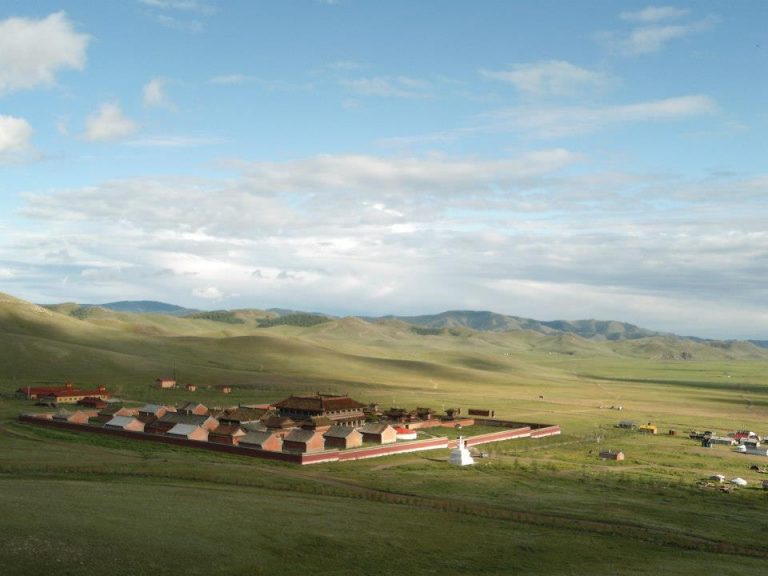
For many travellers, the Orkhon Valley means Kharkhorin: the former capital of the Mongol Empire, Erdene Zuu Monastery and a landscape shaped by centuries of political, religious and pastoral history.
But follow the Orkhon further upstream and the character of the landscape begins to change.
This is the Upper Orkhon — a region of volcanic terrain, river valleys, forested hills, summer pasture and small rural communities. Here, history is still present, but it is less about monuments and more about the everyday lives of the people who continue to herd livestock, move with the seasons and make their homes within the landscape.
It is here, close to Ulaan Tsutgalan — the Orkhon Waterfall — that we have worked with the Tomorbat family for many years.

Table of Contents
The Tomorbat Family
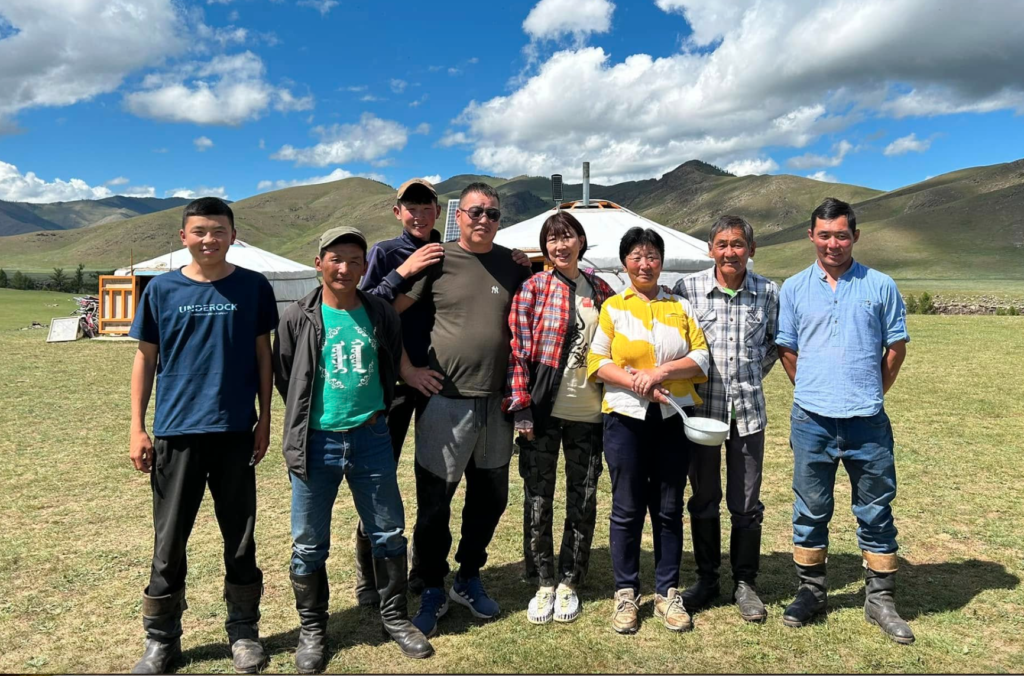
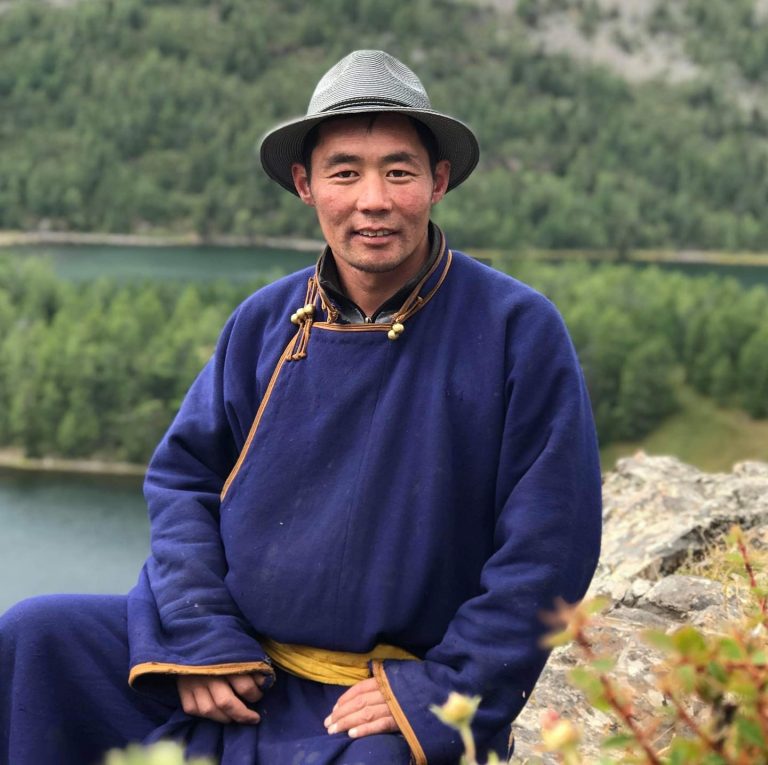
Tomorbat and his wife Namjilmaa live close to the Orkhon Waterfall in the Bat-Ölzii region of Övörkhangai Province.
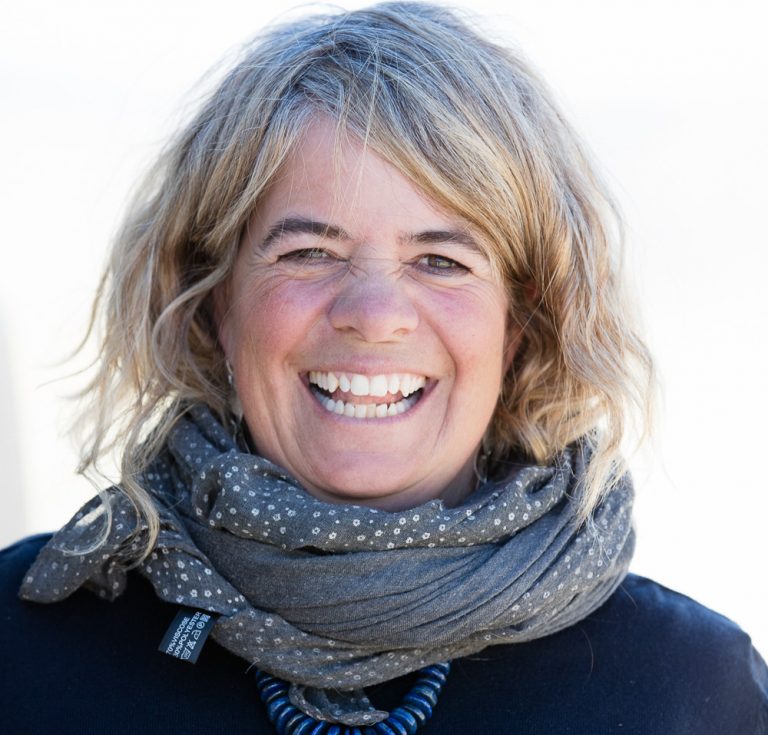
I still remember Namjilmaa adding a generous spoonful of her homemade butter to my bowl of salty milk tea. It was early spring, damp and cold, and she was convinced it was exactly what I needed — although I struggled rather more with the resulting combination of hot tea and melted butter.
The Upper Orkhon has become considerably busier since then, particularly during the short summer season. But the Tomorbat family remain firmly rooted here, continuing to herd, work with horses, run their camp and remain part of the wider Bat-Ölzii community throughout the seasons.
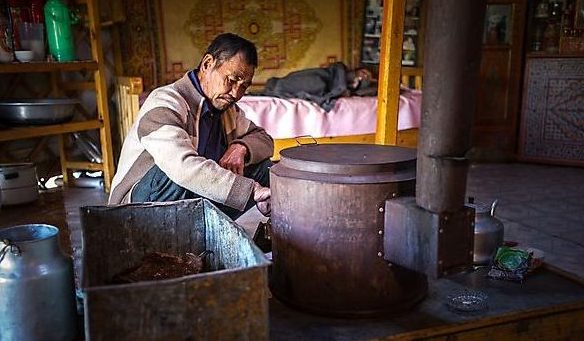
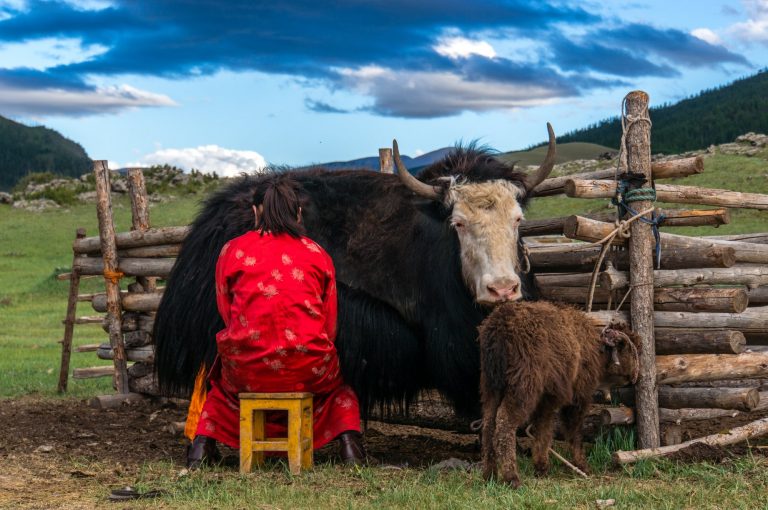
That matters to us. Their connection to the region does not begin or end with tourism. They are part of the local community throughout the year, keep a small herd of yaks which they milk during the summer months, and continue to balance the practical realities of rural life with running their camp and organising horse treks.
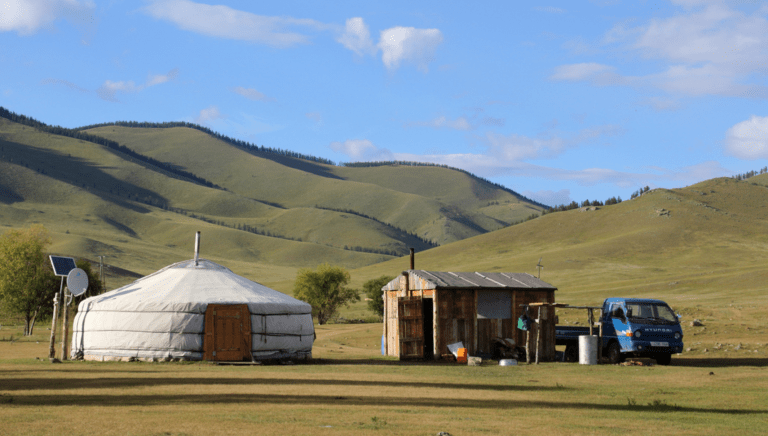
Their camp has never felt separate from everyday life. Horse guides come and go. Friends and neighbours call in from Bat-Ölzii. Family members arrive. Grandchildren play around the gers. Horses are being gathered or saddled. Yaks need milking. Someone is usually drinking tea. It is a working family space as much as a place for visitors to stay.
Life in the Upper Orkhon
The Upper Orkhon feels quite different from the wider valley around Kharkhorin.
Kharkhorin sits within a broad cultural landscape where the remains of ancient settlements, monasteries and archaeological sites reflect the valley’s importance to successive steppe empires. Further upstream, the landscape becomes more enclosed and increasingly shaped by the Khangai Mountains.
Around Ulaan Tsutgalan, old volcanic activity has left basalt formations and lava fields beneath a landscape of pasture, rivers and woodland. The Orkhon and its tributaries cut through the valley, while beyond the waterfall the routes become rougher as they lead towards higher grazing grounds and the mountains of Khuisiin Naiman Nuur — Mongolia’s Eight Lakes.
This is still part of the UNESCO-listed Orkhon Valley Cultural Landscape, but it shows a very different side of it. Livestock graze amongst volcanic formations. Families move between pasture. Horses remain practical working animals. Small settlements such as Bat-Ölzii provide the services that connect the surrounding herding communities. It is a landscape being used rather than simply observed.
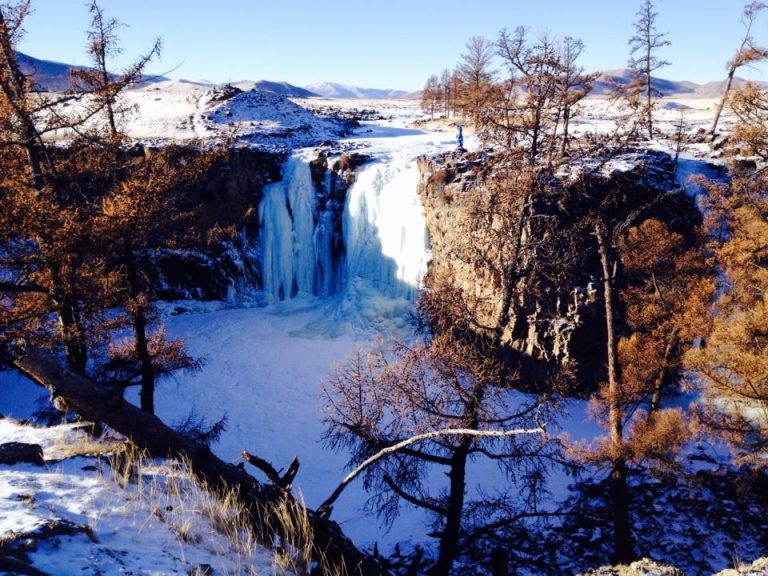
Ulaan Tsutgalan — The Orkhon Waterfall
Ulaan Tsutgalan is one of central Mongolia’s best-known natural landmarks.
The waterfall was formed within the volcanic landscape of the Upper Orkhon, where water cuts through layers of basalt before dropping into the gorge below.
It is understandably popular, and in summer the immediate area around the waterfall can be busy and we don’t pretend otherwise.
But one of the reasons we continue to stay with the Tomorbat family is that our relationship with this area is not based solely on visiting the waterfall. Their knowledge stretches beyond the viewpoint itself — into the surrounding grazing grounds, horse trails, rivers, valleys and mountain routes that they have used throughout their lives.
The waterfall is part of the landscape. It is not the whole story.
A Ger Made by Hand
Tomorbat is also an exceptionally skilled woodworker.
The wider Uyanga region of Övörkhangai is particularly associated with the traditional hand production and decoration of Mongolian gers. The distinctive craftsmanship is often known as the Uyanga style, with carved and painted wooden furniture and ger components featuring traditional patterns and symbolism.
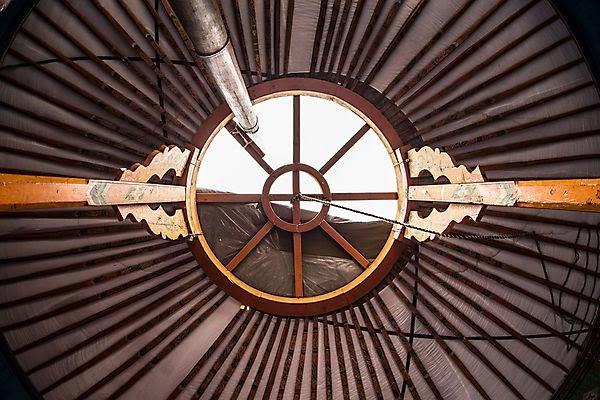
Tomorbat handcrafted the family’s own ger. Its wooden structure, furniture, carving, painting and decoration reflect skills that remain part of the cultural heritage of this part of Mongolia.
Inside, traditional motifs and auspicious symbols sit alongside the practical objects of daily family life.
For us, this is one of those small details that says a great deal about the family and the region. The ger is not something created as a display for guests. It is their home, made using skills connected to the place in which they live.


Horses, Knowledge and the Next Generation
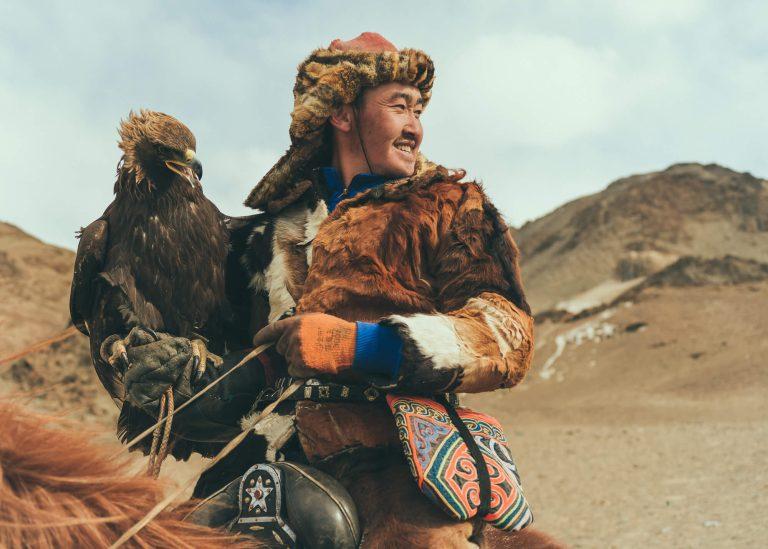
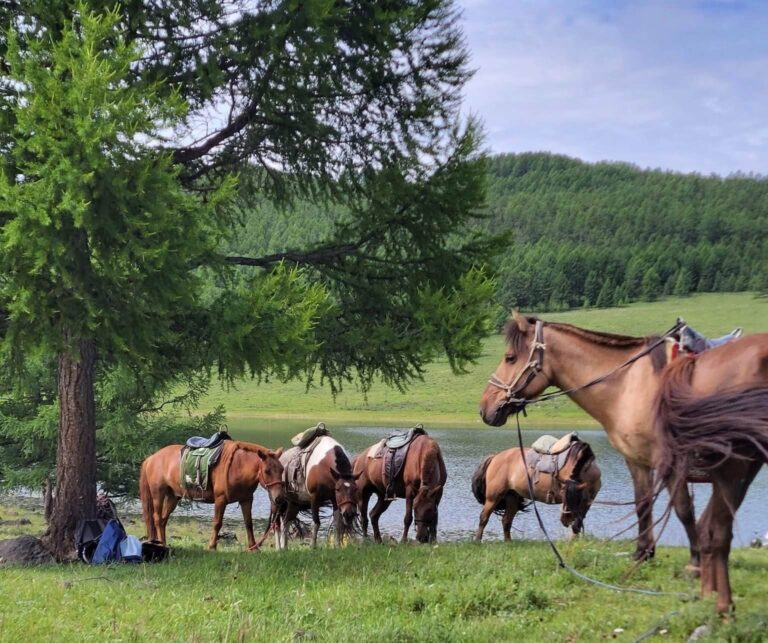
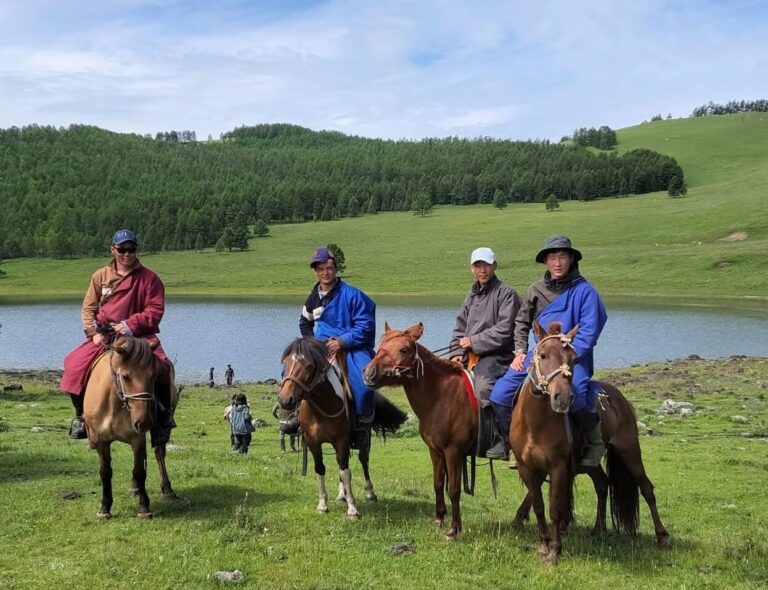
For many years, Tomorbat also led horse treks through the Upper Orkhon and towards the Eight Lakes region.
Today, much of that responsibility has passed to his adult son, Ma’am.
We have watched Ma’am grow from a young boy riding alongside his family into an experienced horse guide in his own right. He has spent much of his life on horseback and, like his father, knows the surrounding landscapes through practical experience rather than through a mapped tourist route.
That knowledge is not always expressed through formal explanations. Instead, you see it in the way a route is chosen. In knowing which ground will be difficult after rain. In deciding where the horses can graze. In reading a river crossing. In selecting somewhere suitable to camp. In understanding when conditions mean that the original plan needs to change.
Tomorbat has passed a great deal of his knowledge to Ma’am, but Ma’am has also built his own relationship with the landscape and the horses.
That continuity is one of the reasons we value our partnership with the family.
Horse Trekking Into Khuisiin Naiman Nuur
The Tomorbat family’s home close to Ulaan Tsutgalan also sits naturally at the gateway to the mountain landscapes of Khuisiin Naiman Nuur — Mongolia’s Eight Lakes.
There are only a handful of practical routes into and through the lakes region. We don’t claim to have discovered a hidden trail or created a route nobody else uses.
What matters to us is who you travel with. Our Wild Eight Lakes Trails journey is led by Ma’am using horses belonging to the family. Much of what supports the trek — knowledge of the terrain, weather, horses and suitable places to camp — comes from the experience accumulated by the family over many years.
We have chosen to make the riding section five days rather than compressing it into the shorter two- or three-day versions commonly offered.
That does not necessarily mean seeing more lakes or travelling further each day. It simply means more time on horseback, more time to get to know your horse, more time travelling alongside Ma’am, and more space for the rhythm of the trek to be shaped by weather, terrain and circumstance rather than by the need to move quickly between recognised points.
The horses and pack animals carry what is required, so comforts are limited and facilities are basic. The journey asks for flexibility. But simplicity is part of travelling through this landscape by horse.
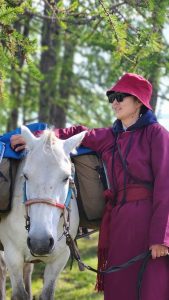
For our trip assistant Nyampurev, Eight Lakes is a favourite place to ride.
She comes from ShiveeGobi, a dry and dusty community in the Gobi, but grew up in a herding family where horses were part of everyday life. Riding remains one of her greatest loves and, for Nyampurev, being on horseback means freedom.
That is why the contrast of the Upper Orkhon appeals to her so much — greener valleys, forest, mountain trails and the lakes themselves. Riding here with Ma’am, through a landscape he knows so well, brings together many of the things she values most: horses, open space, movement and the simple freedom of being outdoors. Of all the places she rides with us, this is the one that gives her the greatest sense of enjoyment.
Why We Continue to Work With the Tomorbat Family
Tourism around the Orkhon Waterfall has changed considerably since we first stayed with the family. There are more camps. More vehicles. More visitors.
But, our response has never been to look for a supposedly untouched replacement and move on. Instead, we value the depth that comes from maintaining relationships over time.
The Tomorbat family know their region because they have lived within it through changing seasons, changing weather, changing livelihoods and now changing tourism.
They milk their yaks. They run their camp. They work with horses. They remain connected to Bat-Ölzii and the surrounding community. Their children and grandchildren are part of the story too.
And when guests stay with them, they step briefly into that ongoing family life. For us, this is what a long-term community partnership should look like.
Not creating an experience around a family and then leaving when somewhere else becomes more fashionable or more ‘authentic’, but continuing to work together as circumstances change — finding ways for tourism to remain useful, personal and rooted in the people and landscapes that make the journey possible.
The Upper Orkhon may be busier than it was when we first came here more than two decades ago. But through the Tomorbat family, it remains somewhere we continue to understand differently each time we return.
Jess @ Eternal Landscapes