
Horse Trekking in Mongolia: A Practical Guide
‘When your horse is young, travel to see places’
There are few better ways to experience Mongolia than on horseback.
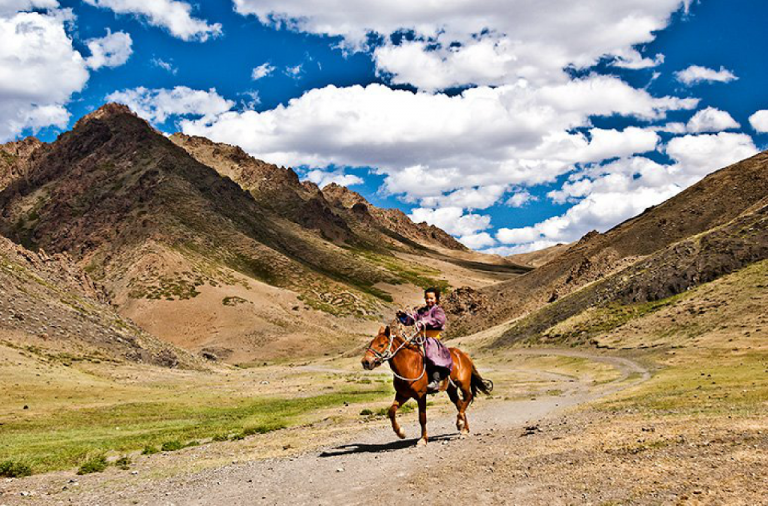
Horses remain part of everyday life across much of rural Mongolia — used for herding livestock, travelling between pastures, racing, hunting and simply getting from one place to another. Riding therefore offers more than a different way of seeing the landscape. It gives you an introduction to one of the world’s great horse cultures from within it.
But horse trekking in Mongolia can also be very different from riding at home.
The horses are different. The tack is different. The style of riding is different. Routes can be flexible, weather can change plans and conditions are often simple.
This guide explains what to expect from horse trekking in Mongolia and, more specifically, from one of our Eternal Landscapes horse trekking journeys.
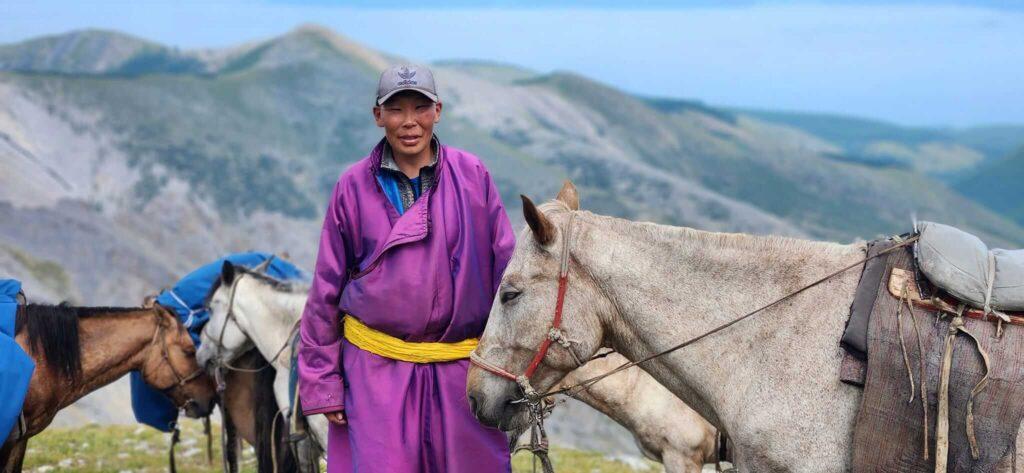
Table of Contents
Horse Trekking in Mongolia With Eternal Landscapes
Our horse trekking journeys are deliberately small and personal.
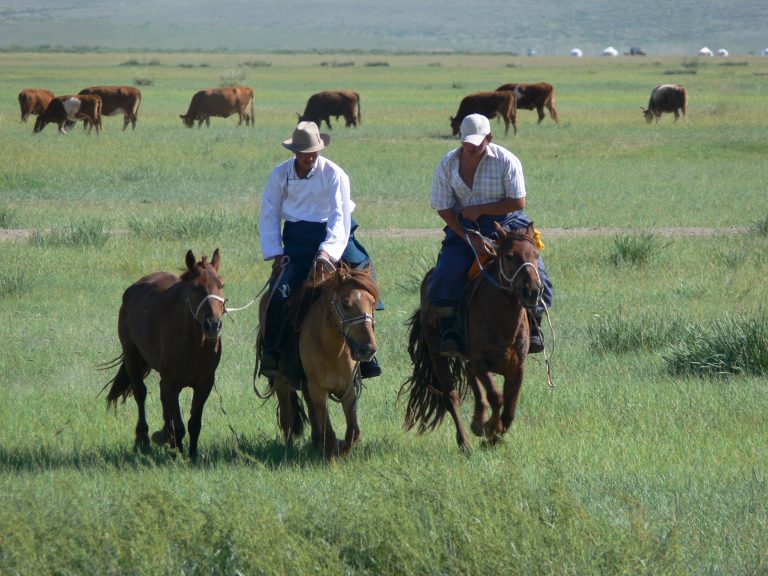
At the heart of each experience are local herders with whom we have developed long-term community partnerships. You stay with them, ride alongside them and travel on horses they own and care for.
These are not horses brought into an area purely for tourism, and our herder partners are not simply guides following predetermined tourist routes. They live within the landscapes you explore and bring their own knowledge of the horses, weather, terrain, river conditions and local trails.
That knowledge shapes the journey.
Some routes naturally have to follow established trails or mountain passes — there may only be one sensible way across a river or into a particular valley. But the detail of each day remains flexible.
A herder may change the route because of weather, choose a different campsite because of grazing or water, or decide that the ground is better suited to another trail.
This means no two journeys unfold in quite the same way, giving each trek its own sense of discovery and personal adventure.
Horse Riding Tours With Eternal Landscapes (at a glance)
- Experience: Previous trail-riding experience is recommended. You may not ride every week, but you shouldn’t need to think about the basic mechanics of mounting, stopping, steering, rising trot or balancing in the saddle.
- Daily riding: Typically around 4–8 hours depending on the trek, terrain, weather and distance to the next camp.
- Pace: Mainly walk and trot, with opportunities to canter where the terrain, horses and conditions allow.
- Terrain: Natural and varied. Expect uneven ground, open pasture, forest tracks, mud, rocks, river crossings and mountain terrain depending on your chosen trek.
- Horses: Small, strong Mongolian horses owned by the local herders we work with.
- Tack: Simple Russian or Mongolian-style working tack rather than Western leisure-riding equipment.
- Camping: Some journeys include simple wild camping and pack horses; others combine camping with homestays or small ger camps.
- Weight: For the welfare of the horses, we prefer riders to weigh 95kg or under.
- Insurance: Your travel insurance should specifically cover horse trekking and the conditions involved.
- Best suited to: Riders who are adaptable, comfortable with simple conditions and happy to travel at the pace of the horse.
What Are Mongolian Horses Like?
Stanley Stewart described Mongolian horses wonderfully in In the Empire of Genghis Khan:
“They looked like outlaws of the equine world. What they lacked in stature they made up for with attitude. They were tough, wilful, unsentimental characters.”
That sense of character is important.
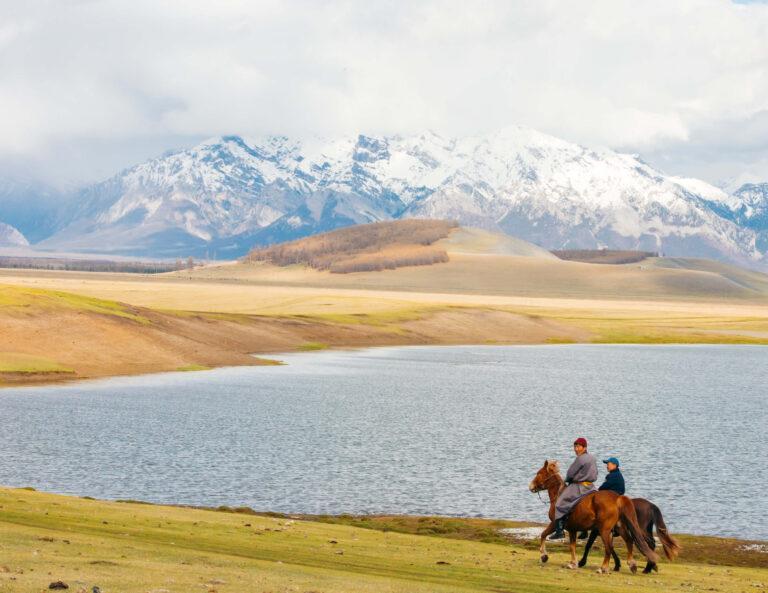
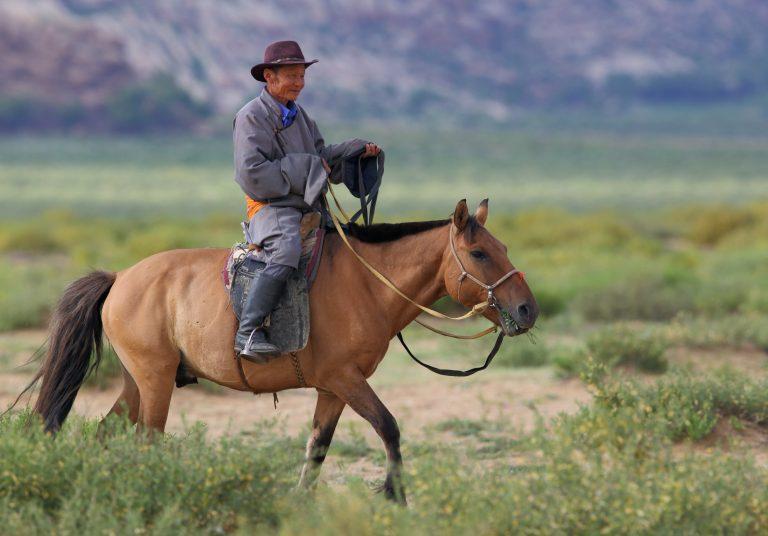
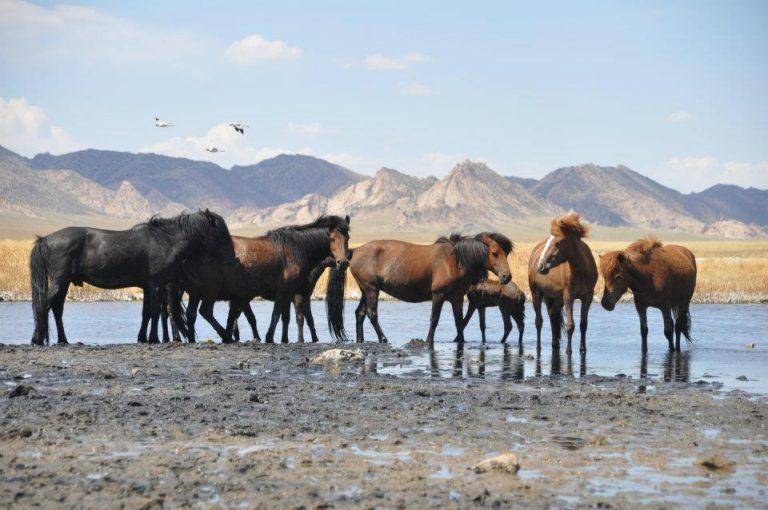
Mongolian horses are typically around 13–14 hands high. They may be small compared with many European riding horses, but ponies they are not. They are compact, powerful, remarkably sure-footed and extraordinarily well adapted to the landscapes in which they live.
Primarily used for herding, travel, hunting and sport — as well as historically and practically as a source of food and drink — Mongolian horses share some of the qualities valued in the herders who own them: independence, toughness and an ability to cope with difficult conditions.
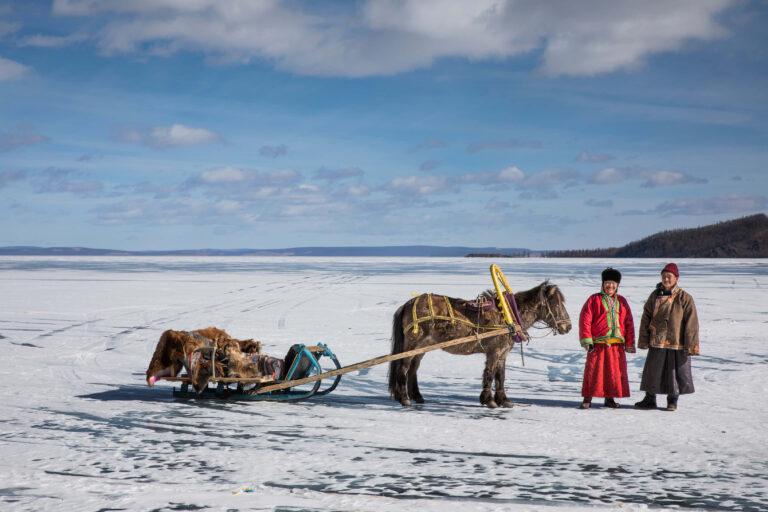
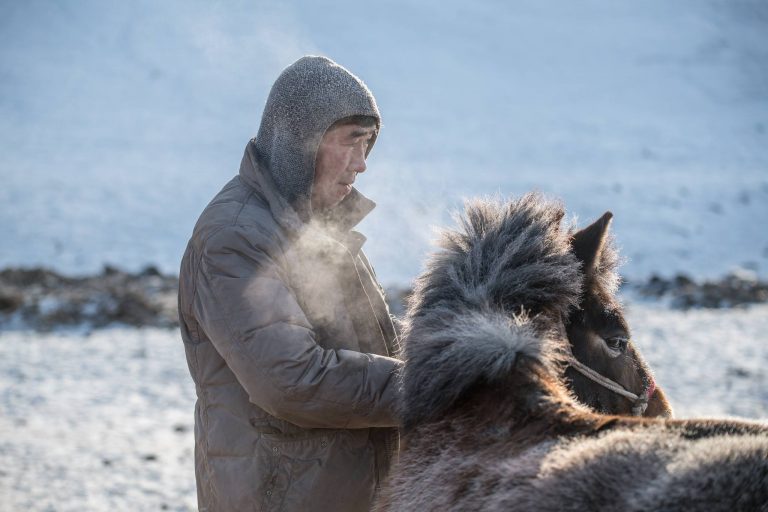
For much of the year they live outdoors in free-ranging, almost semi-wild herds, usually under the direction of a stallion. They find their own grazing, water and shelter and cope with an extraordinary range of conditions, from summer heat to temperatures far below freezing. In winter they can paw and scrape through snow to reach the grass beneath.
This independence is very noticeable when you ride them.
They are not polished riding-school horses waiting for every instruction. They have their own opinions, know the terrain extremely well and are quite capable of making decisions for themselves. They can also be wonderfully unpredictable. A horse that has calmly crossed a rocky mountain pass may suddenly object to the rustle of your waterproof jacket, the appearance of a plastic bag or, apparently, the fact that a fly has annoyed it.
Learning to ride a Mongolian horse therefore involves a degree of humour as well as trust.
Most belong to herding families and are identified through traditional livestock markings and brands. Young horses are gradually introduced to work, with different animals within a herd used for riding, herding, racing or breeding. Mares are also milked during the summer months to produce airag, fermented mare’s milk and one of Mongolia’s best-known traditional drinks.
Within a larger herd, families often have particular horses they favour for everyday riding or specific tasks. Other horses may be bred, raced, exchanged or given as gifts, and the size and quality of a herd has traditionally been associated with wealth and standing.
The horses used on our treks belong to the local herders we work with. They are part of their everyday lives rather than animals maintained purely for visitors.
That is part of what makes riding in Mongolia so different. You are not simply being given a horse for a trekking holiday. You are being introduced to an animal shaped by the same landscape, weather and way of life as the people travelling alongside you.


Camping and Pack Horses
The style of accommodation depends on the journey.
Some of our horse treks combine riding with stays in family homes or small ger camps. Our more remote journeys involve wild camping, sometimes for several consecutive nights.
Where vehicles cannot follow the route, pack horses carry the equipment required for the trek.
This means travelling simply.
There is a limit to how much horses should be expected to carry, so we cannot recreate a fully equipped vehicle-supported camp in areas where everything has to move by pack animal.
Expect straightforward meals, simple tents and basic facilities.
There are no specialist camp chefs. The team prepares the food and deals with the everyday practicalities of travelling with horses and equipment.
The more remote the trek, the more important it is to be comfortable with simplicity.
Weather, Terrain and Altitude
Mongolia’s horse trekking landscapes vary enormously.
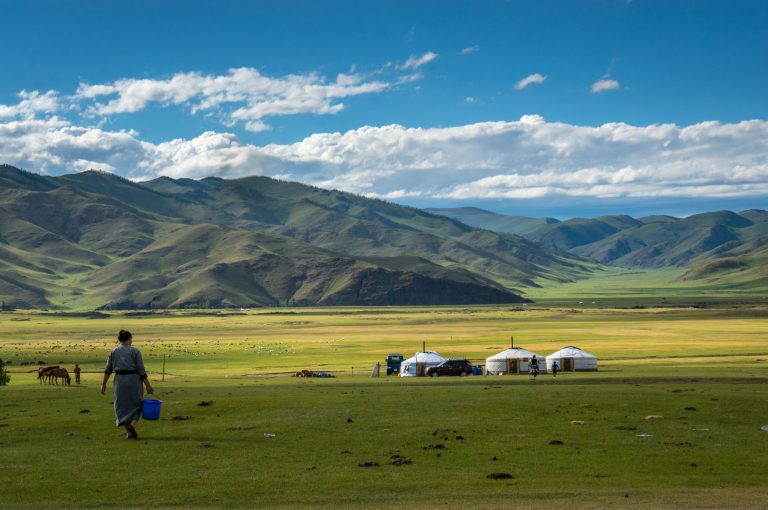
One journey might follow river valleys, woodland and open pasture in Gorkhi-Terelj National Park. Another might cross the mountain and lake landscapes of the Altai, ride into Khuisiin Naiman Nuur or travel for days through the forests and valleys of northern Mongolia.
Altitude therefore depends entirely on the trek.
For many of our central Mongolia journeys, altitude is not the main physical challenge. The cumulative effect of consecutive days in the saddle, uneven terrain and changing weather is usually more significant.
Our Altai and other mountain journeys involve higher and more demanding terrain.
Wherever you ride, prepare for changeable weather. Even in summer, Mongolia can deliver strong sun, wind, cold nights, rain and sudden drops in temperature.
Being comfortable outdoors in less-than-perfect conditions matters.
Safety and Support
Horse trekking involves risk, particularly in remote areas.
Outside Ulaanbaatar, medical facilities can be limited and reaching appropriate medical care may take time. This is one reason why suitable travel insurance is essential.
Our journeys are supported by our Mongolian team and the local herders responsible for the horses. The precise logistics vary according to the route: some treks have vehicle support where roads allow, while more remote journeys rely on pack animals.
Our herder partners select and look after the horses and help with saddling and equipment. You are always welcome to get involved where appropriate.
However, you remain responsible for riding within your own ability and following the instructions of the team.
Horses are animals and can react unexpectedly. Mongolia’s open landscapes do not remove that risk.
We strongly recommend wearing a riding helmet and bringing your own from home so you know that it fits properly and meets a recognised safety standard.
What Should I Pack?
We provide a detailed packing list when you book, tailored to the particular journey.
As a general rule, bring proper riding footwear that is secure but unlikely to become trapped in a stirrup, comfortable riding trousers, layers for changing temperatures, and good waterproof and windproof outer clothing — ideally something that doesn’t rustle too much around the horses.
If possible, bring your own riding helmet and carry it with you rather than placing it in checked luggage. If you don’t own one, we can provide a helmet in Mongolia, although these are locally purchased and do not carry the international safety certifications you are used to at home.
For longer treks, comfort matters. Clothing that feels perfectly fine for an hour in the saddle can become irritating after several consecutive hours, especially over multiple days.
Think practical, layered and comfortable rather than stylish.
Horses and Mongolian Culture
Horses are one of Mongolia’s five traditional livestock species and remain deeply connected to pastoral life, history and cultural identity.
Their role extends far beyond tourism or recreational riding. Horses are still used for herding livestock and local travel; mares provide the milk used to make airag; and horse racing remains one of the three traditional disciplines of Naadam, alongside Mongolian archery and wrestling.
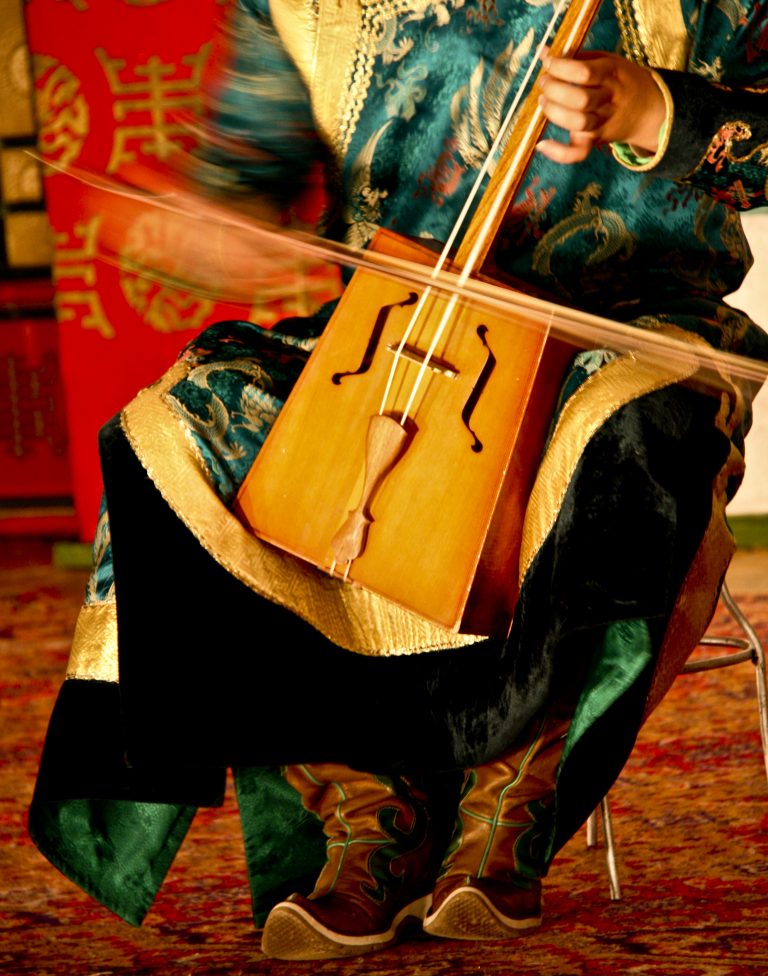
The horse also runs through Mongolia’s music, stories and traditions. Perhaps the best-known example is the morin khuur, or horse-head fiddle, one of Mongolia’s most important traditional instruments, whose shape, sound and symbolism are closely associated with the horse.
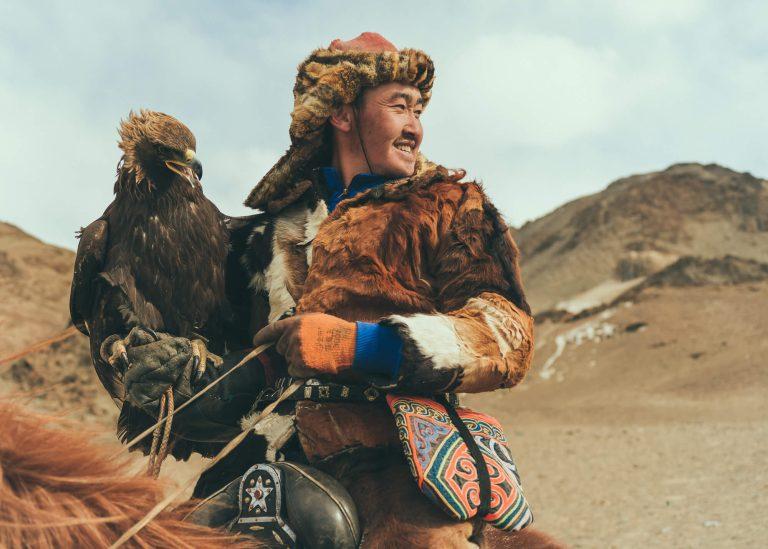
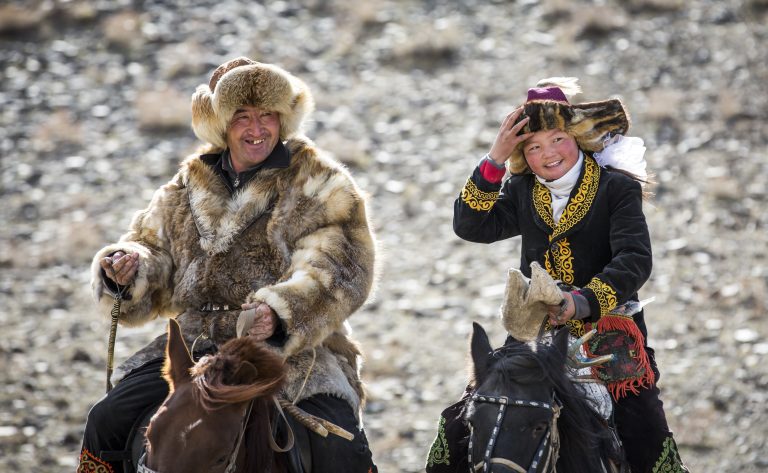
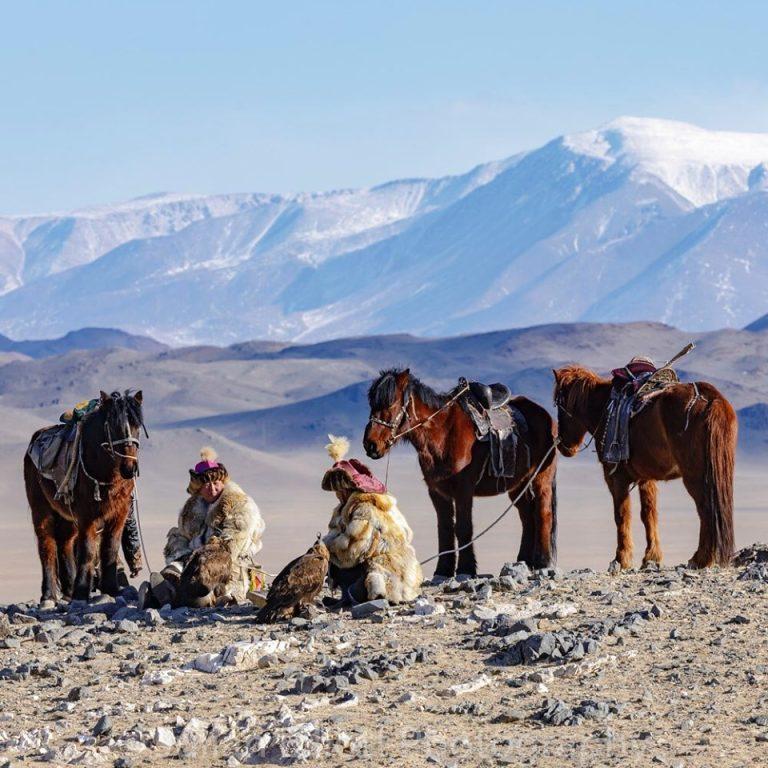
In western Mongolia, horses are also part of the traditions surrounding Kazakh eagle hunting. Hunters have historically travelled on horseback with their golden eagles across the mountain landscapes of Bayan-Ölgii, a relationship celebrated each autumn at Mongolia’s eagle festivals.
But there is no single relationship with horses across Mongolia.
Darkhad herders in the north, Kazakh families in Bayan-Ölgii and herding communities across the central steppe live within very different landscapes, each with their own traditions, knowledge and relationship with their horses.
That variety is one reason we build our horse journeys around individual local partnerships rather than trying to create one standardised version of a “Mongolian horse trek”.
Choosing a Horse Trek in Mongolia
Think beyond the number of riding days.
Ask yourself what sort of experience you actually want.
Do you want a shorter introduction to riding through a lived herding landscape? A mountain and lake journey? Several days of genuinely remote camping? A culturally focused journey combining riding with family stays? Or a physically demanding expedition where weather and terrain will play a much greater role?
Our own horse trekking collection includes both private tailor-made journeys and set-date small-group departures, from shorter rides in central Mongolia to longer expeditions through the Altai, Khangai and northern Mongolia.
Whichever you choose, the principle remains the same.
You travel on horses owned by local people, alongside people who know the landscape as home, with enough flexibility for the journey to unfold according to the horses, weather, terrain and circumstances.
Horse trekking in Mongolia is not always comfortable, predictable or polished.
That’s part of its appeal.
It is the simple pleasure of travelling under your own momentum, at the pace of a horse, through a landscape that gradually becomes more than something you’re looking at.
It becomes somewhere you are moving through and, for a short while, participating in.
Jess @ Eternal Landscapes