

Mongolia’s 4×4 Furgon Van – Part of the Journey
Oh, how we love Mongolia’s 4×4 Furgon van. So much so that we’ve even celebrated birthdays with cakes made in its likeness.

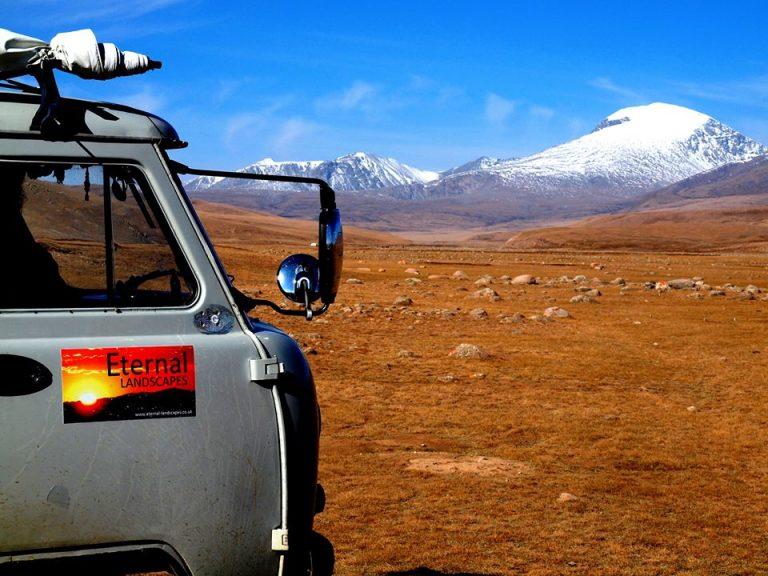
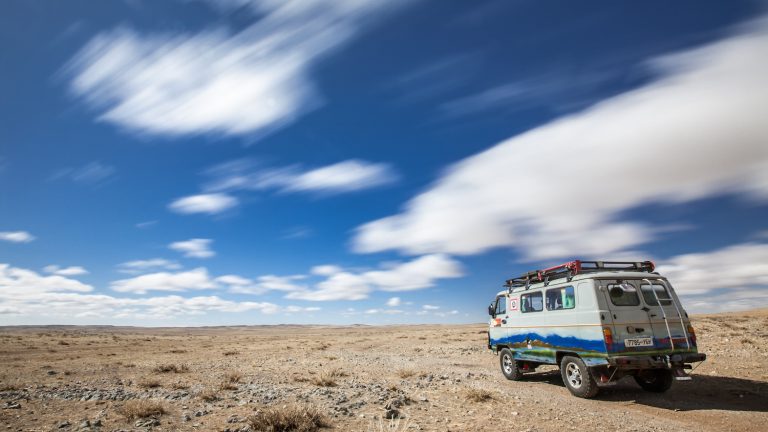
These distinctive, box-shaped vehicles are actually Russian. Known as UAZ (УАЗ) vans, or simply Furgons in Mongolia, they have been part of the country’s roads and landscapes for decades. Whether you’re travelling across the steppe, through the Gobi Desert or into the mountains, there’s a good chance you’ll encounter one along the way.
Since I first started working in Mongolia in 2006, tourism has changed considerably. Land Cruisers and other modern 4×4 vehicles have become increasingly common, but the Furgon remains something of a legend — a workhorse of rural Mongolia and, for us at Eternal Landscapes, an important part of the journey.

A Vehicle Built for Challenging Conditions
The UAZ takes its name from Ulyanovsky Avtomobilny Zavod, meaning Ulyanovsk Automobile Plant. The factory was established in Ulyanovsk, Russia, in 1941, during the Second World War. The distinctive Furgon belongs to the UAZ-452 family of vehicles, whose origins date back to the 1960s.
Its practical, uncomplicated design has changed remarkably little over the decades.
To understand why the Furgon has become so closely associated with Mongolia, it helps to understand the country’s geography.
Mongolia covers approximately 1.56 million square kilometres — roughly the size of Western Europe. According to a 2026 OECD report, the country’s road network extends for more than 112,000 kilometres, of which only around 9% is paved.
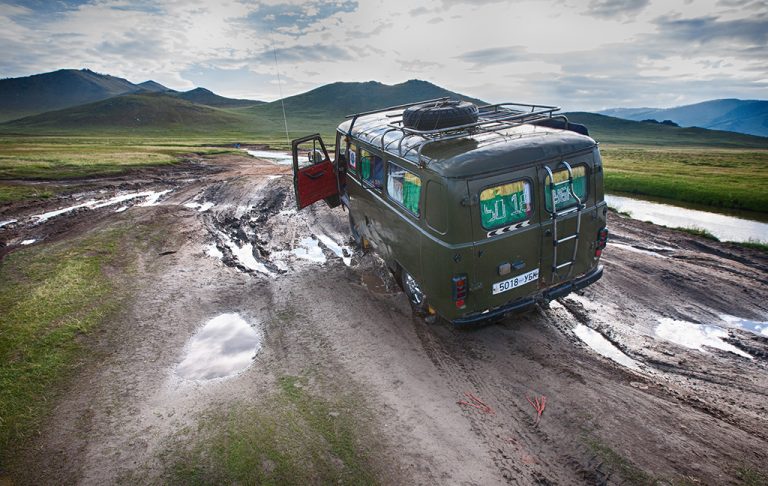
Although paved roads now connect Ulaanbaatar with all the provincial capitals, travel beyond these main routes often involves gravel roads, dirt tracks, river crossings and sometimes little more than wheel marks across open grassland.

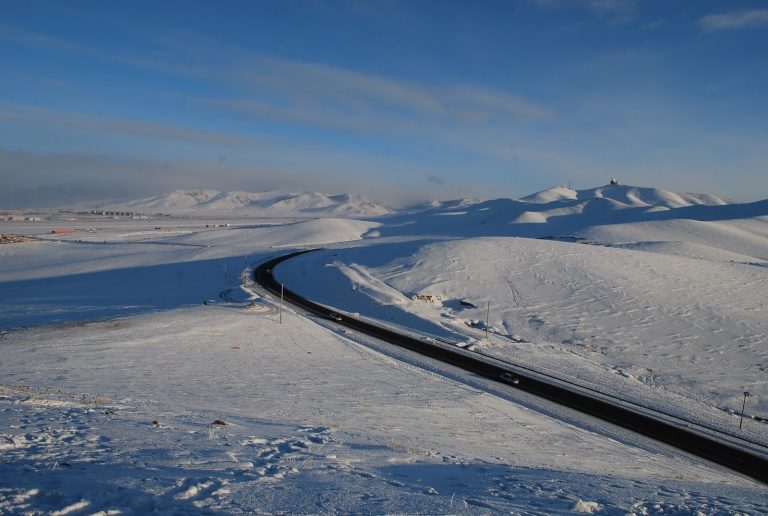
Road conditions can change dramatically with the seasons. Summer rain can turn tracks into mud, while winter brings snow, ice and extreme temperatures. Even paved roads are subject to considerable wear from Mongolia’s climate and heavy vehicles.
This is where the Furgon comes into its own.
With four-wheel drive, generous ground clearance and a rugged mechanical design, the Furgon has earned its reputation for getting through terrain that presents serious challenges to other vehicles.
It may not be particularly refined, but refinement was never really the point.
Why Our Mongolian Drivers Love the Furgon
Ask our Mongolian drivers what they appreciate about the Furgon and one answer comes up repeatedly: its simplicity.
Unlike many modern vehicles, the Furgon has relatively straightforward mechanical systems, making it easier to maintain, repair and adapt when travelling far from workshops and specialist equipment.
The UAZ has been produced in several configurations, including vans, minibuses and utility vehicles. Many Furgon models have two separate fuel tanks, providing useful flexibility for long-distance journeys. Some of the Furgons used by our drivers are diesel-powered, another practical consideration when travelling across Mongolia.
There’s an old saying:
A UAZ will break down where no other car can go.
It’s a wonderfully accurate description of the vehicle’s reputation. The Furgon can take you remarkably far, but that doesn’t mean it never breaks down.
And that’s where the skill of its driver becomes so important.
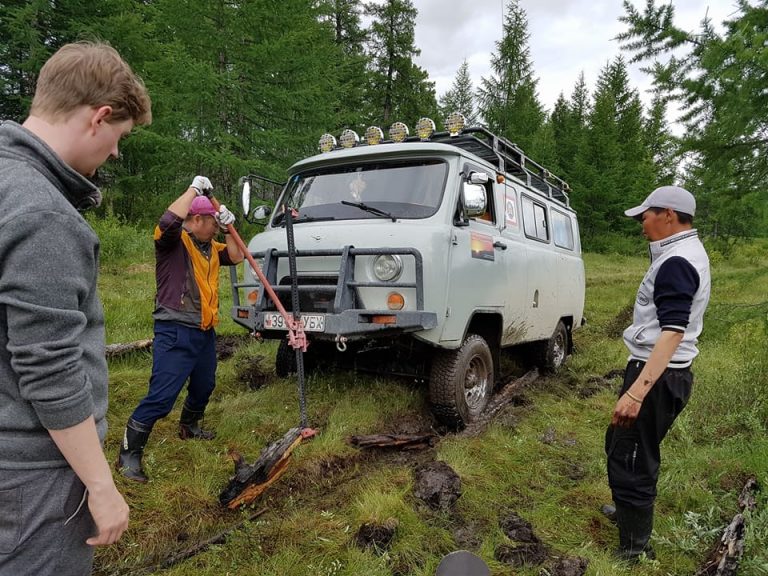
Most experienced Furgon drivers are as comfortable working underneath their vehicle as they are sitting behind the steering wheel. They know the sound of their engine, recognise when something isn’t quite right and understand how to keep their vehicles moving in challenging conditions.
Travel writer Tim Severin described a process of Mongolisation — salvaging, adapting and modifying parts to keep machinery functioning.
In Mongolia, there’s also the idea of mongolchilokh: finding a practical solution using whatever is available.
Anyone who has travelled extensively through rural Mongolia will probably have a roadside repair story. A mechanical problem might be solved with a piece of wire, an improvised bracket, a borrowed tool or a spare part adapted from something entirely different.
The ability to improvise is not simply a useful skill. In remote parts of Mongolia, it can be essential.
The writer and Mongolia scholar Owen Lattimore recognised this resourcefulness in his own driver:
“Like so many Mongols, used from childhood to coaxing and controlling live things and to adaptation and makeshift in keeping camp equipment and travelling gear in working order, he had a talent for machinery that only needed opportunity.”
It’s a description that still resonates with us today.
Our drivers’ mechanical skills, experience and ability to adapt are among the reasons we value them so highly. Their knowledge has been developed over years of driving, repairing vehicles and navigating the realities of rural Mongolia.
What Is It Like to Travel in a Furgon?
A Furgon isn’t a luxury vehicle, and we wouldn’t suggest otherwise.
It’s practical, robust and built for a purpose. There will be bumps, rattles and plenty of dust. Long journeys can be tiring, particularly on rough tracks.
But there are real advantages. The spacious interior, large windows and sociable seating arrangement make it well suited to small-group journeys, with room for passengers and luggage.
Our vehicles also carry a simple mobile kitchen, sunshade and charging facilities. In winter, their powerful heaters make a considerable difference when temperatures outside fall well below freezing.
They’re versatile vehicles, too. We’ve used them as support vehicles for mountain biking and trekking experiences where we don’t use pack animals.
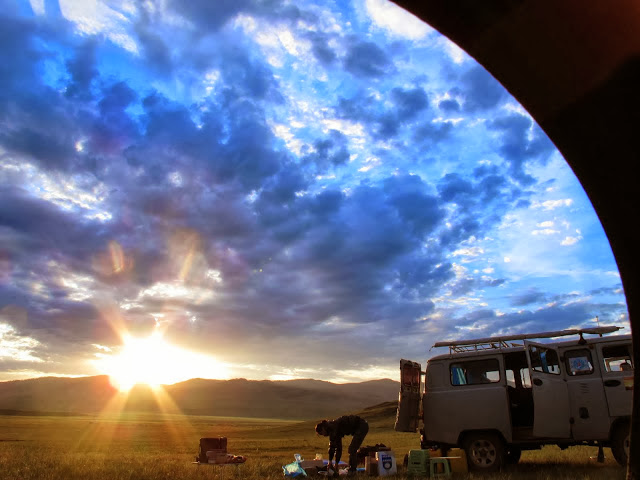
Over the course of a journey, the Furgon becomes much more than transport. It’s somewhere to shelter from the wind, make tea, unpack lunch, warm up on a freezing day or simply sit and watch the changing landscape.






The People Behind the Wheel
There’s another important reason we continue to work with Furgon drivers, and it has very little to do with the vehicles themselves. It’s about the people who own and drive them.

At Eternal Landscapes, we believe tourism should create meaningful, long-term employment opportunities for Mongolian people. Rather than outsourcing our journeys to whichever vehicles and drivers are available, we’ve built lasting working relationships with our own community of owner-drivers. Many have worked with us for years, and we know them and their families personally. They bring decades of experience, particularly of rural Mongolia, and an understanding of the roads, landscapes, changing weather and practical challenges of travelling across their country.
However, as Mongolia’s tourism industry increasingly favours expensive, modern vehicles, experienced rural drivers who own and maintain older Furgons can find themselves overlooked. We believe their skills and knowledge deserve recognition, and providing opportunities for these drivers is an important part of how we operate.
Our approach also brings together different generations and perspectives. Our experienced male drivers work alongside our female Mongolian trip assistants, who help facilitate experiences, support communication and connect our guests with everyday life in Mongolia. They have different roles and backgrounds, but work together as one team. Not all our drivers speak fluent English, but their professional expertise isn’t measured by the number of languages they speak. It lies in their knowledge, judgement, driving skills and ability to respond to the challenges of the road.
Spend time with them, share a cup of tea at a roadside stop or watch them deal calmly with an unexpected mechanical problem, and you’ll begin to understand why they’re such an important part of our manaikhan — our extended EL family.
Why We Choose to Travel by Road
Mongolia is a country of enormous distances, and domestic flights can certainly be useful when time is limited. But we don’t want our journeys to become a series of flights between a checklist of destinations.
We prefer to travel overland wherever it makes sense, making considered choices about the environmental impact of our journeys and allowing time to experience the places in between.
These are the small towns, roadside cafés, herding communities, changing landscapes and unplanned encounters that rarely appear in guidebooks.
A journey might involve stopping at a local market, sharing tea with a family, helping another driver or simply watching the light change across the steppe.
Not every day needs a major attraction or a carefully planned highlight. Sometimes, the journey itself provides the experience.
Would You Consider Travelling Differently?
We understand why travellers request modern 4×4 vehicles. When you’re planning a journey to Mongolia, often at considerable expense, it’s natural to want to travel in comfort. However, we’d like to challenge you to think a little differently about what makes a journey worthwhile and how much of our familiar expectations we should bring with us when travelling somewhere as different as Mongolia.
Does a newer, more expensive vehicle necessarily mean a better journey? A Furgon isn’t luxurious. It rattles, the ride can be bumpy, and you’ll certainly feel the road. However, it’s also spacious, sociable, capable in challenging terrain and, importantly, driven by someone who knows both the vehicle and the country exceptionally well.
There’s another consideration that often gets overlooked. When travellers insist on modern, high-end vehicles, experienced rural drivers who own and maintain their own Furgons can find themselves excluded from tourism opportunities. Their knowledge, experience and skills haven’t diminished, but the expectations of the tourism industry have changed. Choosing a vehicle isn’t always simply about comfort or convenience. It can also influence who benefits from tourism and whose skills and experience are valued.
We’re not suggesting that comfort doesn’t matter, or that everyone should choose a Furgon. Different travellers have different needs, and there are certainly journeys where another vehicle is more appropriate. However, we do believe there’s value in questioning our assumptions and considering whether we might be willing to exchange a little comfort for a different experience. Travelling in a vehicle with character, alongside a driver whose skills have developed over decades, can become an important part of the journey in itself, while also helping to support his livelihood.
The Furgon won’t be right for everyone, but perhaps that’s part of the point. Mongolia has a way of challenging expectations, and maybe the vehicle you travel in can be the first of them.
So, when you travel to Mongolia, will you choose the vehicle you already know you want — or will you consider something different?
The Journey Is Part of the Experience
We don’t promise that every day on Mongolia’s roads will be comfortable or straightforward. However, we do believe that the vehicle you travel in, the people you travel with and the unexpected moments along the way are as much a part of experiencing Mongolia as the destinations themselves.
We always encourage our guests to keep an open mind and allow the day to unfold. Rather than spending time in the vehicle asking ‘When will we get there?’, try thinking about the journey differently. You’re already there, surrounded by the landscapes, people and everyday life of Mongolia. Some of the memories that stay with us longest are the ones we never planned.
As we say in Mongolia, Sain Yavaarai — Journey well.
If you’d like to experience Mongolia with us, explore our Mongolia tours and experiences, including our Wild Tracks road trips, where the journey is as important as the destination.