At a Glance
Dates: May – September
Group Size: Priced 2-6 but we can increase for private trips
Duration: 7 days with 4.5 days of riding. Includes complimentary ‘Intro To Ulaanbaatar’ experience on date to suit you.
Trip Style: Cultural, active, adventurous, horse trek
Locations: Gorkhi Terelj National Park
Price: Between US$ 2,150 pp – US$ 1,745 pp depending on final group size
Key Experiences
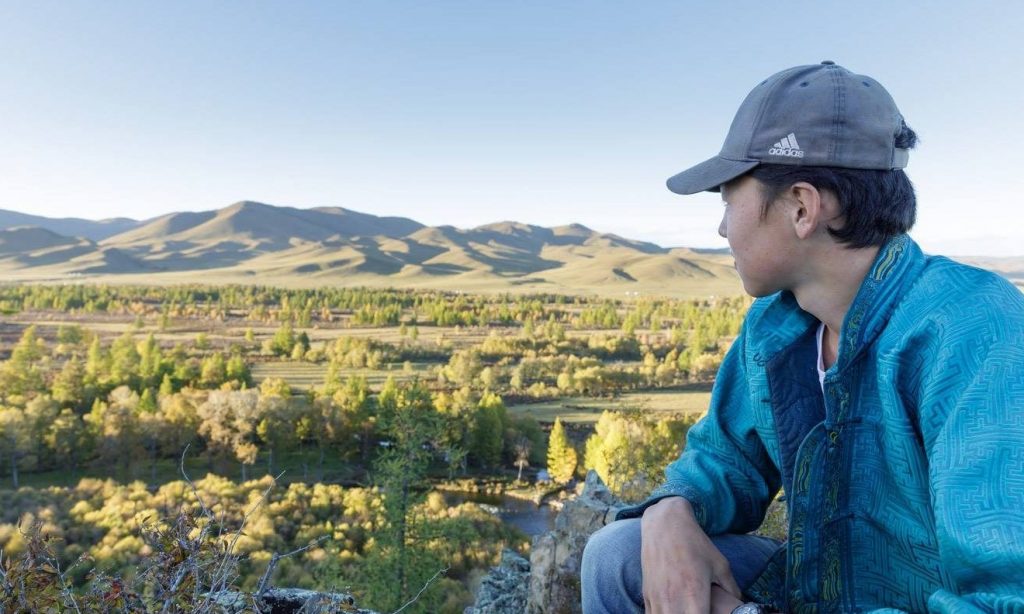
- Ride through the quieter valleys, woodland and open pasture of Gorkhi-Terelj National Park.
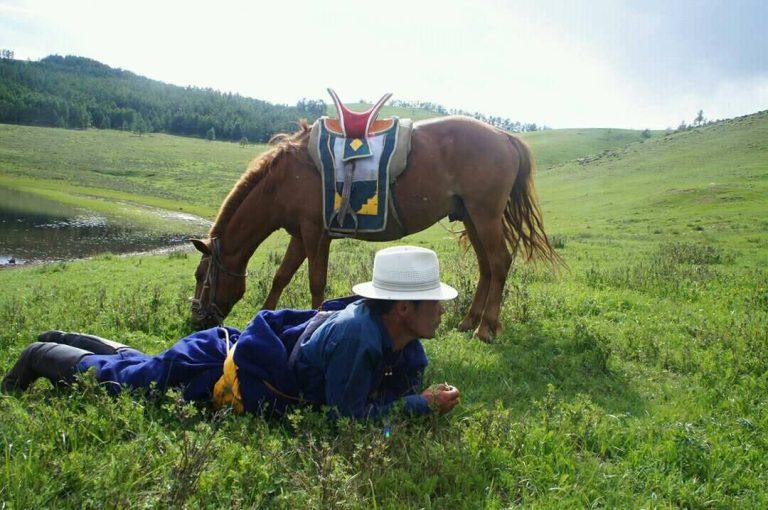
- Journey with Naraa, a local herder and long-term Eternal Landscapes community partner.
- Follow flexible trails shaped by weather, ground conditions, local knowledge and your riding experience.
- Stay with Naraa and Bujee at their simple homestay in the Baruun Bayan Valley.
- Wild camp within the wider Terelj landscape beneath Mongolia’s open night skies.
- Experience a working herding landscape from horseback, moving through pasture, river valleys and seasonal grazing areas.
- Spend time in local homes and experience everyday Mongolian culture as part of the journey rather than as staged activities.
- Travel in a way that directly supports local livelihoods and a long-term community partnership.
Meet Naraa & Bujee, Your Hosts On Our Wild Terelj Trails Horse Trek
Naraa and Bujee are part of our wider network of herding families across Mongolia, relationships we build slowly and carefully through long-term local community partnerships.
Their home is in the Baruun Bayan Valley of Gorkhi-Terelj National Park, in the quieter reaches of Terelj near a small tributary of the Tuul River.
Reached by crossing the Terelj River, their home offers a very different perspective on one of Mongolia’s most visited national parks. This is not the busy day-trip version of Terelj, but a working herding landscape shaped by livestock, river crossings, seasonal movement and the everyday rhythms of family life.




'"The hosts, the guides, your availability. It really felt like a local, pure, and honest visit. Our needs were met (the amount of riding, the stays, the food), but it didn't feel like we were disrupting local life. We absolutely LOVED it!'
Wild Terelj Trails Experience Details
-
Description
-
Riding: At A Glance
-
The Horse Trek & What To Expect
-
Map Of Route
-
Pricing
-
Accommodation, Toilets & Showers
-
Meals & Drinks
-
Transport & Road Travel
-
Included
-
Excluded
Gorkhi-Terelj National Park is one of Mongolia’s most visited landscapes. Its rock formations, forested slopes, river valleys and open grasslands sit within easy reach of Ulaanbaatar, meaning many travellers experience it as a short day trip or a quick stop on a wider itinerary.
But beyond the busiest areas lies a quieter side of Terelj — a working landscape shaped by herding families, seasonal movement and everyday rural life.
Wild Terelj Trails is designed to explore this side of the national park at a slower pace.
Your journey begins at the home of Naraa and Bujee in the Baruun Bayan Valley. Naraa is a local herder and one of our long-term community partners, whose family keeps livestock within the wider Terelj landscape. Together, Naraa and Bujee offer a simple slow-travel homestay, where you’ll spend your first night before setting out on horseback.
You’ll then ride with Naraa through the surrounding landscape. In his words, the herding way of life “has a very big freedom,” and travelling with him offers a glimpse of that freedom as you follow local trails through open steppe, woodland, river valleys and seasonal grazing areas.
Naraa speaks English, which allows conversations to happen naturally along the way. The route itself is deliberately flexible. Rather than following a fixed or staged itinerary, Naraa chooses each day’s trail according to the weather, ground conditions, the horses and your riding experience.
This means no two journeys unfold in quite the same way, giving each trek its own sense of discovery and personal adventure.
The focus is not on covering a particular distance or reaching a list of landmarks. It is on travelling at the pace of the horse, spending time within the landscape and experiencing Terelj as somewhere people live and work rather than simply somewhere people visit.
Terelj may be one of Mongolia’s most accessible national parks, but travelled in this way it can still offer space, quiet and a more layered understanding of the region.
- Riding experience: Previous trail-riding experience recommended. You may not ride every week, but the basics should feel familiar enough that you don’t need to think consciously about mounting, steering, stopping, rising trot, or balancing in the saddle.
- Daily riding: Around 4–8 hours
- Pace: Mostly walk and trot, with cantering where conditions allow
- Terrain: Natural trails, uneven ground, river crossings and changing conditions
- Horses: Small, strong Mongolian horses owned by local herders
- Tack: Russian or Mongolian-style saddles with simple working tack
- Camping: Basic tent camping with limited equipment carried by pack animals
- Weight guidance: Preferably 95kg or under
- Insurance: Must cover horse trekking
- Best suited to: Riders who are adaptable, comfortable with simple conditions and happy to travel at the pace of the horse
This is a quick overview and you can find out more in our journal post here.
Experience level
You should feel reasonably comfortable on horseback. Ideally, you will be able to mount and dismount independently, control a horse at a walk and rising trot, be willing and able to canter when appropriate, and feel comfortable spending several hours in the saddle.
We recommend previous trail-riding experience. Riding day after day over natural terrain is very different from an hour in an arena, and combining long hours in the saddle with camping and changing weather can be tiring.
Mongolian horses are also different from many horses riders may be familiar with at home. They are commonly ridden using one-handed neck-reining and are accustomed to being given a degree of independence rather than being ridden with constant rein contact. They are exceptionally sure-footed and often know how to negotiate the terrain better than their rider. Trying to control every step can work against them; part of the experience is learning to trust your horse and adapt to a different style of riding.
If you are relatively inexperienced but keen to join a trek, we strongly recommend taking a series of riding lessons before travelling. This will help with basic confidence and control, but just as importantly, it will prepare your body for consecutive days in the saddle and reduce saddle fatigue.
Please also check that your travel insurance covers horse trekking at the level and conditions involved in your chosen journey.
For the welfare of the horses, we prefer riders to weigh 95kg or under. Please talk to us if you are close to this limit.
The horses
The horses are as much a part of the journey as the landscape.
Mongolian horses are small, powerful and exceptionally well adapted to the environments in which they live. For much of the year they graze freely as part of a herd rather than living in stables or paddocks.
The horses used on our treks belong to the local herders we work in partnership with. They are working horses rather than dedicated trekking-school horses and, when they are not being ridden, they return to their normal lives within the herd.
As a result, they can feel quite different from horses trained specifically for leisure riding. They are independent, responsive and sure-footed, with distinct personalities of their own.
It can take a little time for horse and rider to understand one another. But that developing relationship — learning when to guide your horse and when to trust it — often becomes one of the most memorable parts of the journey.
Tack and equipment
You’ll typically ride in Russian-style or Mongolian saddles adapted with felt pads and cushioning for longer days in the saddle.
The tack is simple and functional. Stirrups are generally wide, helping provide support when standing in them, but they do not have the safety-release systems you may be familiar with at home. Bridles and reins are equally straightforward.
This is practical working equipment used in rural Mongolia rather than specialist Western trekking tack, so it can take a little time to get used to.
What to expect
These journeys suit travellers who are comfortable exchanging convenience for experience.
During the trekking sections, you’ll sleep in simple tents, eat straightforward meals prepared by the team and share in the practical rhythm of travelling with horses and pack animals. There are no chefs or elaborate camp set-ups.
Weather can change quickly. You may experience heat, rain, wind and cold within the same journey, and trails can include mud, rocks, river crossings and uneven ground. Routes and timings may need to change according to conditions.
On most trekking days, expect to spend roughly four to eight hours on horseback, although this varies according to terrain, weather and the distance to the next suitable campsite.
If you are patient, adaptable and happy with a simple, hands-on style of travel, the lack of polish becomes part of what makes the journey memorable.
Altitude and terrain
Gorkhi-Terelj National Park sits at a moderate elevation, with many of the main valleys and riding areas at approximately 1,500–1,700 metres above sea level. Surrounding ridges and forested slopes rise higher, but this is not a high-altitude trek in the same sense as journeys through the Mongolian Altai.
Most riding takes place through river valleys, open pasture, woodland and rolling mountain terrain rather than across high alpine passes.
Altitude is therefore unlikely to be the main physical challenge. More important are the consecutive hours in the saddle, uneven terrain, river crossings, changing weather and the cumulative tiredness that comes from travelling by horse for several days.
The pace of the riding
If your idea of horse trekking in Mongolia is galloping endlessly across the steppe, our journeys probably aren't for you.
These are exploratory journeys rather than fast-paced riding holidays. We travel according to the terrain, the horses and the conditions, and pack horses may accompany the group on longer treks.
There will be opportunities to move at different paces where the ground and circumstances allow, but speed is never the objective.
The pleasure comes from something different: travelling through the landscape at the pace of the horse, getting to know your own mount and gradually settling into the rhythm of life on the trail.
Map Of Route
Sliding Price Scale: Minimum group size of 2
- Final group size of 2-3 guests US$ 2,150 pp
- Final group size of 4 guests US$ 1,960 pp
- Final group size of 5 guests US$ 1,885 pp
- Final group size of 6 guests US$ 1,745 pp
- Two travellers booking together: 5% off per person. Three or more travellers booking together: 10% off per person.
During this journey, you’ll experience a variety of accommodation styles, each offering insight into daily life in Mongolia and shaped by the season and setting:
Kazakh Family Homes
During this experience, you’ll be welcomed into the homes of Kazakh families with whom we’ve developed long-standing, community-based partnerships.
Over the course of the tour, you’ll stay with several different families—including eagle hunters and their households. September is a transitional season, so your accommodation will vary depending on the weather. Some nights will be spent in Mongolian or Kazakh gers, shared as a group, while others will be in traditional, hand-built adobe brick homes at the families' winter encampments.
As a guest, you’ll likely share a private ger or room with fellow group members. Sleeping arrangements are simple and culturally authentic—most families sleep on the floor, and you’ll likely be provided with a comfortable floor mat, in keeping with local traditions.
Facilities are basic: showers are taken at the local public shower house every 2-3 days, and toilets are traditional outdoor short-drop latrines.
Showers
Running water is rare in rural Mongolia, so showers are limited. On this itinerary we use town shower houses—simple cubicles with plenty of hot water, which many travellers describe as a highlight! You will need to bring a towel.
We also provide bowls and soap powder for hand-washing clothes if needed. Just to be clear: there are no washing machines.
Toilets
Think: a loo with a view!
Mongolia has very few public toilets, so on drives it’s a case of finding a private spot in nature (your trip assistant will give what we call “the toilet talk”).
At host family homes, expect Asian-style squat or long-drop toilets.If squatting isn’t second nature, you may want to practice before travelling—several of our guests recommend it.
These toilets aren’t designed to shock you; they’re simply part of everyday rural life. We provide toilet paper (though not the aloe vera variety!).
Ölgii | Khovd
During your first night in Ölgii, you’ll be hosted by our trusted Kazakh partners, Jako and Bovka, at their family home. Again, this is a shared space, and sleeping arrangements will be on floor mats. Shower access is at the town shower house, and toilets are outdoor sit-down long drops.
For the second night in Ölgii and the one ht I Khovd. you'll stay in a twin-share en-suite hotel room.
Ulaanbaatar
Accommodation in Ulaanbaatar on September 4th and 15th is not included although we provide recommendations and can help with booking.
Meals
Each EL team travels with a simple mobile kitchen, and most meals outside Ulaanbaatar are either prepared by your trip assistant or eaten in local restaurants along the way. We also stop at guanz — local roadside cafés — and, where appropriate, share meals with the families we stay with.
We deliberately don't expect rural families to provide meals for our guests. Access to shops and fresh supplies can be limited, and dietary requirements have become increasingly varied. Preparing much of the food ourselves gives our host families less work and gives us more flexibility over what we can provide.
Our trip assistants are not trained chefs, but they cook for their own families and know how to keep you well fed on the road. Food is simple, filling and based around ingredients we can realistically buy as we travel. We grocery shop every few days in towns along the route, which helps us keep supplies fresh while also giving you a glimpse into everyday life in Mongolia.
Fresh fruit and vegetables can be limited outside Ulaanbaatar and larger towns, particularly in more remote areas and depending on the season. If five portions of fruit and vegetables every day are essential to you, rural Mongolia may be challenging.
We can usually accommodate vegetarians and a range of dietary requirements, including vegan, gluten-free and lactose-free diets, but please speak with us before booking. Choice can be limited and meals may become repetitive — there may be rather more boiled rice than you are used to! We would much rather explain the realities beforehand than promise a level of variety that isn't always possible once you are on the road.
In Ulaanbaatar, meals are generally not included unless specifically shown in the itinerary. On this journey, the included UB meal is lunch during your Intro to Ulaanbaatar day.
Vegetarian Options in Mongolia
Drinks & Drinking Water
We provide drinking water throughout the journey, collected from the water stations found in towns along our route. Rather than routinely buying single-use bottles, each team carries larger reusable water containers.
We recommend bringing a filtered reusable water bottle. We can provide a 15% discount, with details sent when you book and linked below. Alternatively, bring a standard reusable bottle and some Aqua Tablets for additional water purification.
If you would prefer bottled water, you can buy it yourself in shops along the way.
As well as drinking water, we provide tea and coffee with meals and at various times throughout the day.
Soft drinks such as juice and fizzy drinks are not included but are widely available. Alcohol is also excluded apart from the welcome drink during your Intro to Ulaanbaatar day. Beer, vodka and other drinks can be bought in shops and supermarkets along the route, although the choice becomes more limited in rural areas. Your team makes regular shopping stops during the journey.
Why We Ask Travellers to Bring a Reusable Water Bottle to Mongolia
Transport
Our driving team is made up of experienced Mongolian men we know personally and have worked with for many years. Their English is limited, but their driving knowledge is exceptional — from navigating rough terrain to mongolchlokh, improvising the Mongolian way when a tyre bursts or a vehicle breaks down.
And breakdowns can happen. Mongolia is hard on vehicles, particularly away from paved roads. What matters to us is having drivers who know their vehicles, understand the terrain and can usually deal with problems as they arise.
Each driver owns his own vehicle. Depending on the journey, this may include a UAZ Furgon 4×4 van, Hyundai Starex or Mitsubishi Delica. Because the vehicles are individually owned, interiors and seating layouts vary, including forward- and rear-facing seats. Vehicles are fitted with either lap belts or standard seat belts.
If you are expecting a luxury or high-end 4×4, that is not our style of travel. We choose our drivers first for their experience, reliability and knowledge, and then for the vehicle they own. Using driver-owned vehicles also helps provide long-term work and income for experienced local drivers and their families.
We contribute towards vehicle maintenance, and the vehicles used for our journeys undergo the required annual inspections and licensing for tourism use in Mongolia.
Learn more about our drivers and their tour vehicles here.
Travel Times
Road travel is a central part of experiencing Mongolia. It is a vast country, and getting from one place to another is very much part of the journey.
The daily travel times shown in the itinerary are estimates rather than promises. We deliberately allow generous timings because road surfaces, weather, traffic, river levels and occasional vehicle issues can all affect progress.
Average speeds are usually around 30–65 km/h, depending on conditions. On unpaved routes, the road may vary from relatively smooth gravel to corrugated tracks, rocky sections, mud, sand or uneven ground, sometimes all within the same day.
You really do need to be comfortable with road travel to enjoy this style of journey.
Drinking Water | Tea & Coffee
We provide drinking water collected from the water stations found in towns along the route. We recommend bringing a filtered reusable water bottle — we can provide a 15% discount, with details sent on booking. Alternatively, bring a standard reusable bottle and some Aqua Tablets for additional purification.Bottled water can also be purchased along the way if you prefer.As well as drinking water, we provide tea and coffee with meals and at various times throughout the day.
Meals
Entrance Fees
Accommodation Outside Ulaanbaatar
Please read the itinerary carefully so you understand the style of accommodation used throughout the journey, including where you will be expected to share as a group and the standard and style of toilets and showers available. We embrace using the local town shower houses so you'll have to forgo your power shower for a few days/weeks.We don't offer single supplements on our small-group trips. However, when staying in a hotel, you are welcome to pay the hotel directly for a private room if one is available.
Camel Riding
Where optional camel riding is mentioned in the itinerary, the cost is not included because not everyone wishes to take part.
Support From The EL Team
You'll travel with one of our intergenerational EL teams: an experienced male Mongolian driver and a female English-speaking trip assistant who acts as an informal cultural bridge throughout the journey. Jess and Tuya are also available via WhatsApp while you are travelling.Our complimentary 'Intro To Ulaanbaatar' experience:including a local lunch and welcome drink
Transportation to and from the airport or train station: on arrival and departure days
Our complimentary 'Intro To Ulaanbaatar' experience: including a local lunch and welcome drink
What’s Not Included & Other Costs to Consider
Travel Insurance
Travel insurance is mandatory. We provide detailed guidance on what your policy should cover when you book.
International Flights & Train Travel
International flights are not included and we do not book these on your behalf. The following links may be useful:
- Routes into Ulaanbaatar: FlightConnections
- Ulaanbaatar International Airport: Airport Website
- Airport code: UBN
If you are planning to travel to or from Mongolia by train, train tickets are also excluded. Let us know, however, as we can provide advice and help with booking.
Accommodation in Ulaanbaatar
Accommodation in Ulaanbaatar is not included in the trip price. Why? Everyone has different preferences when it comes to the standard and style of accommodation they want at the beginning and end of a journey.
UB now has a huge range of options, from homestays, guesthouses and apartments through to boutique and international hotels. By keeping this cost separate, you can choose what best suits your budget and travel style. Once you book, we provide a list of recommended options across a range of prices and can also help with reservations.
Bedding
Bedding is provided when staying in hotels and standard tourist ger camps. However, when staying in homestays or family-run camps, you will need to bring your own sleep kit from home: • a sleeping bag • a sleeping pad/mat if you want extra comfort • a travel pillow (optional, but recommended) We do have a small number of sleeping bags available for guests to borrow for free. But, they are purchased in Mongolia and are not expedition style and not temperature-rated.
Passport & Visa Fees
Let us know your nationality when booking and we will confirm whether you currently need a visa for Mongolia. Where a visa is required, the process is generally straightforward depending on nationality, and we can help with some of the formalities.
Any passport, visa, registration or related fees are not included in the trip price.
Personal Expenses
There is no food or tipping kitty on our trips.
We provide detailed guidance on likely personal spending when you book. Typical personal expenses include souvenirs, additional drinks and any optional horse or camel riding you choose to do.
You will also need to cover excess luggage for the domestic flight, where/if applicable. There is a 15 kg limit on checked bags and 5 kg limit on hand luggage Excess luggage charges are approximately 5,000 Mongolian Tugrik for every 1 kg over the weight limit.
Soft Drinks & Alcohol
Soft drinks such as juice and fizzy drinks are not included but are widely available.
Alcohol is also excluded, apart from the welcome drink included during your Intro to Ulaanbaatar day. Alcohol can be purchased in shops and supermarkets along the route, and your team will make regular shopping stops during the journey.
Tips & Gratuities
Every member of the EL team receives a fair salary and does not rely on gratuities to supplement their income. We also make sure that the people who work with us or provide services during our journeys are fairly paid for their time and work.
If, at the end of your journey, you would like to give a gratuity to the team, thank you. It is entirely optional but always appreciated. We provide more detailed guidance when you book.
Camera Tickets
Some locations, particularly the interiors of monasteries and museums, charge an additional fee for permission to take photographs. These fees vary by location and are not included in the trip price.
Lost Luggage
If your luggage does not arrive with you, don't panic. We can help with the retrieval process.
However, if you ask one of our drivers to make a separate journey to the airport to collect delayed luggage, an additional charge will apply. Ulaanbaatar's international airport is around 50 km from the city, so this involves additional driver time and fuel.
Wi-Fi & Mobile Data
Free Wi-Fi is available in many cafés, hotels and other locations in Ulaanbaatar, although speeds and reliability vary. Outside the city, Wi-Fi is much more limited.
If you would like more regular access to the internet during your journey, we recommend buying a Mongolian SIM card with mobile data. These are usually available at the airport or once you arrive in Ulaanbaatar.



Travelling With Our Team
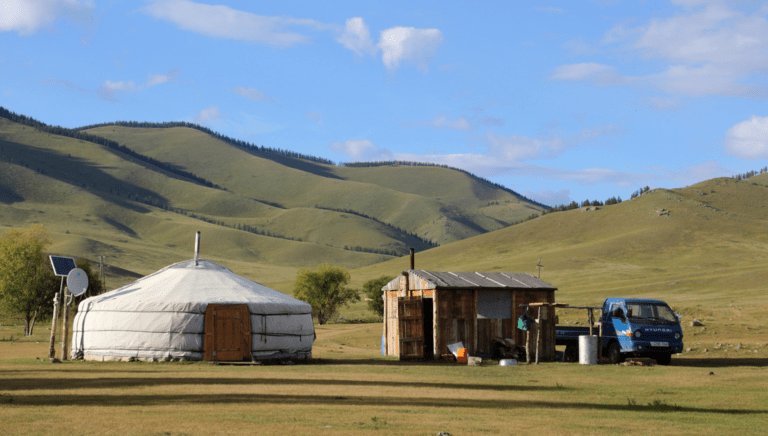
Every journey is accompanied by one of our intergenerational Mongolian teams — an experienced male driver and a female English-speaking trip assistant. They take care of the practical day-to-day running of the journey, but just as importantly, they bring their own personalities, experiences and perspectives to the time you spend together.
We deliberately employ women as our trip assistants, including women who can be overlooked by a tourism industry that often favours guides who have lived, studied or worked abroad. For them, tourism offers more than paid work. It can provide greater financial independence and stability, time away from family and social responsibilities, the chance to develop new skills, and an opportunity to explore more of their own country. It can also be challenging, asking them to step outside familiar roles and build confidence through experience.
Your booking helps us provide this work, together with ongoing support, on a long-term basis rather than simply hiring people when we need them.
Our drivers are typically older Mongolian men with years of experience on Mongolia's roads. Bringing different generations together works well. There can be very traditional expectations around age, gender and authority in Mongolia, but travelling and working together creates its own rhythm. Decisions are shared, people learn from each other and, over time, strong friendships develop.
We don't hire our team for a season and then start again the following year. We work with and support them throughout the year, and many have been part of EL for a long time. That familiarity matters when you're travelling together for days or weeks — the team aren't strangers assembled for your departure.
The same applies to many of the families you meet along the way. These are people with whom we have long-standing relationships, not hosts selected simply because they happen to be on an itinerary. You'll spend time with them as their everyday lives allow, rather than expecting them to perform an experience for you.
And there are people behind the journey too. Jess and Turuu remain closely involved, together with Tuya in our Ulaanbaatar office. Even when your team is several hundred kilometres away, they're still part of a wider EL network supporting the trip.


FAQs
We have a detailed FAQ page covering everything from packing lists to payments. Below are answers to a few of the most common questions our guests tend to have at this stage.
Booking Conditions & Payment
Deposit
- Deposit of US$ 600 pp with flexible payment options for the remaining balance
Booking Conditions
Our booking terms and conditions cover payments, cancellations, and other key details. You can read them here.
- If you decide to cancel your trip, by choice or necessity, up to 10 weeks before departure, we will fully refund your deposit (and balance if paid). Refunds will be made in GBP or US$ excluding fees we incurred to receive your payment and any cancellation fees we incur for domestic flights or accommodation booked at your request. The actual amount you receive may be lower or higher depending on the exchange rate used by your bank.
- If you decide to cancel between 10 and 31 days before departure, we will fully refund your balance (if paid), and your deposit will be held as credit to be used on a different trip instead (with no cut off date. This can be transferred to a friend or family member). Refunds will be made in GBP or US$ excluding fees we incurred to receive your payment and any cancellation fees we incur for domestic flights or accommodation booked at your request. The actual amount you receive may be lower or higher depending on the exchange rate used by your bank.
- If you cancel within 30 days of departure, we will retain the following percentage of your deposit and balance.
- 30 days before departure – 50% of holiday cost
- 29 – 15 days before departure – 90% of holiday cost
- Less than 15 days before departure – 100% of holiday cost
Notes
- There is no time limit on when you may use your deposit credit, but it is non-refundable if you decide to cancel in future.
- Failure to join the tour will also mean you forfeit the tour cost. We will deduct the cancellation charge(s) from any monies you have already paid to us.
Do I need to know anything about Mongolian cultural etiquette?
You don’t need to arrive in Mongolia knowing every custom. On booking, we provide all our guests with an introduction to Mongolian culture, traditions, and customs. Once you arrive, your trip assistant will also help guide you informally through everyday etiquette as you travel.
If you’re interested in learning more now though explore our Journal here.
What matters most is travelling with awareness and respect. In Mongolia, small gestures can carry meaning — stepping over rather than on the ger threshold, accepting tea or food with your right hand, being mindful of where you point your feet, and showing care around the stove, family altar, and central supports inside a ger.
Please don’t worry about getting everything right. Mongolians are generous hosts, and visitors are not expected to know every custom. A willingness to listen, observe, and follow gentle guidance goes a long way.
What Should I Pack?
Mongolia’s weather, road conditions, and accommodation styles vary widely by season and region, so packing well makes a real difference to your comfort.
We send all guests detailed packing information on booking, but you can also use our seasonal guides as a starting point. For summer journeys including autumn, see our Mongolia summer packing list. For colder months, see our Mongolia winter packing list.
Explore More: Connected Tours & Journal Posts

Guest Reviews


 Verified
 Verified
 Verified
 Verified
 Verified
 Verified

 Trustindex verifies that the original source of the review is Google.
 Verified
 Verified
 Verified
 Verified
 Verified
 Verified
 Verified
 Trustindex verifies that the original source of the review is Google.

 Verified