
Discover Genghis Khan’s Legacy In Mongolia
Few historical figures are as closely associated with Mongolia as Chinggis Khan (Genghis Khan). Born Temüjin around 1162, he united the Mongol tribes and established the Mongol Empire in 1206, laying the foundations for what would become the largest contiguous land empire in history.
At its height, under his descendants, the Mongol Empire stretched from East Asia into Europe, reshaping political boundaries, trade routes and cultural connections across much of Eurasia. Its history is one of extraordinary military achievements and innovation, but also conquest, destruction and immense human suffering.
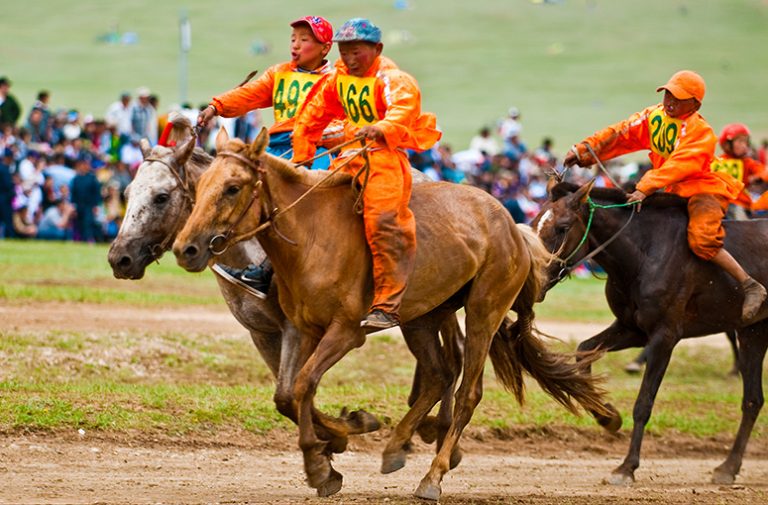
Yet, in Mongolia, Chinggis Khan is far more than a historical conqueror. He remains a powerful symbol of national identity, independence and unity. His influence can be found in everything from public monuments and national celebrations to sacred mountains, oral histories and the continued importance of the horse in Mongolian culture.
For travellers interested in discovering Genghis Khan’s legacy in Mongolia, there are numerous opportunities to explore this history. Some are found in the museums and monuments of Ulaanbaatar, while others lie in the landscapes of eastern Mongolia, where the stories of his early life continue to be told.
Here are some of the places and experiences we recommend.
At a Glance: Discovering Genghis Khan’s Legacy in Mongolia
Sukhbaatar Square: Discover the monumental statues of Chinggis Khaan, his generals and successors in the heart of Ulaanbaatar.
National Pride Day: Experience Mongolia’s annual celebration of Chinggis Khaan’s birthday and its national heritage.
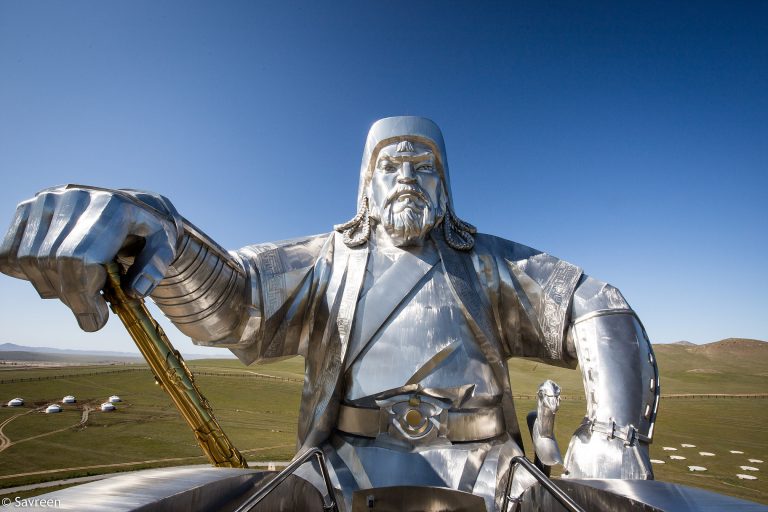
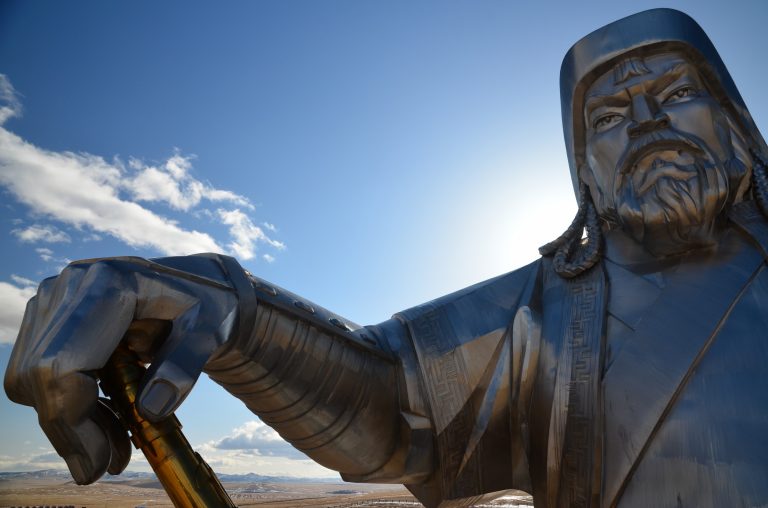
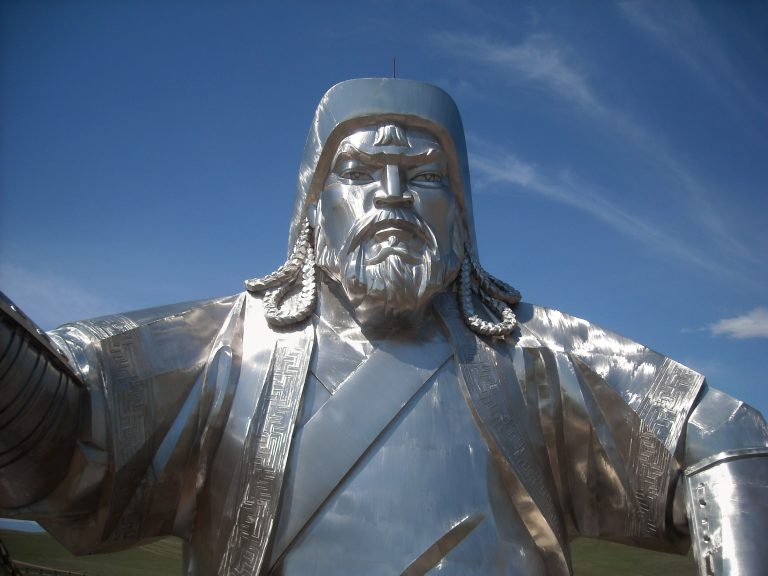
Chinggis Khaan Equestrian Statue: Visit the enormous stainless-steel monument at Tsonjin Boldog, surrounded by open steppe.
Chinggis Khaan National Museum: Explore more than 2,000 years of Mongolian history, from ancient nomadic states to the Mongol Empire.
Khentii Province: Travel through the landscapes associated with Chinggis Khaan’s birth, early life and rise to power.
A Note on the Name: Genghis Khan or Chinggis Khaan?
You may notice different spellings of his name when reading about Mongolia. Genghis Khan is the spelling most familiar to English-speaking audiences, while Chinggis Khaan (Чингис хаан) reflects the modern Mongolian form. The variation has its origins in the way his name was recorded and translated across different languages over the centuries, particularly through Persian and other historical sources before entering European languages. The title Khan refers to a ruler, while Khaan is associated with a supreme ruler or emperor. Born Temüjin, he received the title Chinggis Khan in 1206 when he united the Mongol tribes. Throughout this article, we use Chinggis Khaan, reflecting the name commonly used in Mongolia today.
Table of Contents
Sukhbaatar Square, Ulaanbaatar
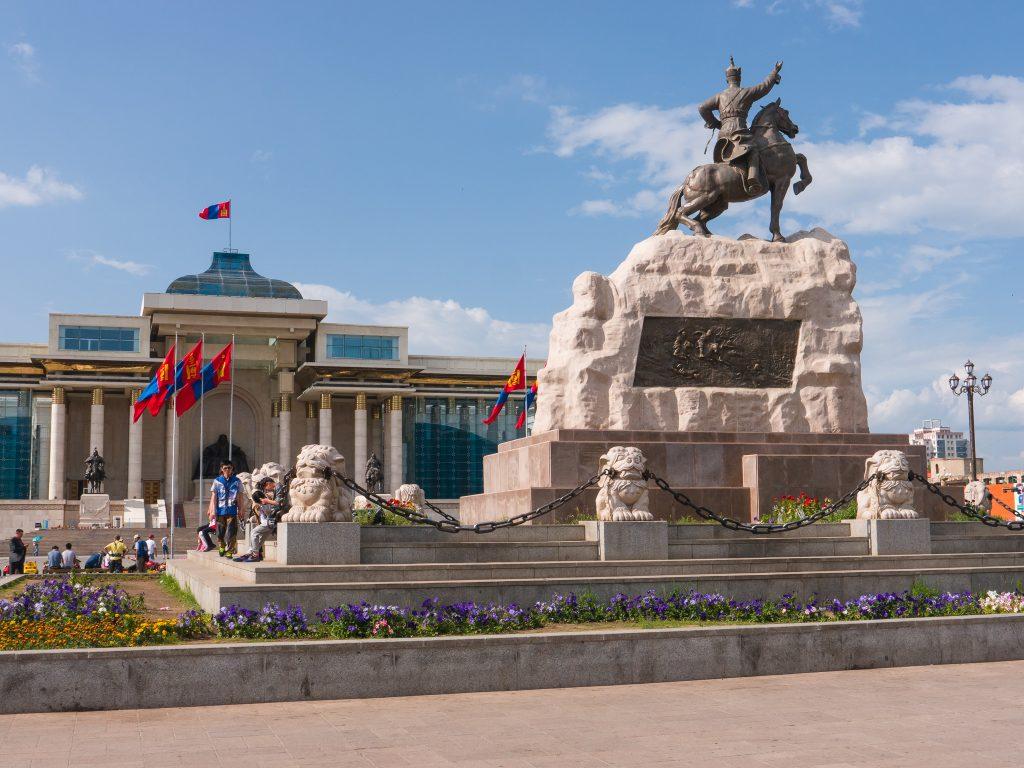
In the heart of Ulaanbaatar, Sukhbaatar Square provides one of the most accessible introductions to Chinggis Khaan’s place in contemporary Mongolia.
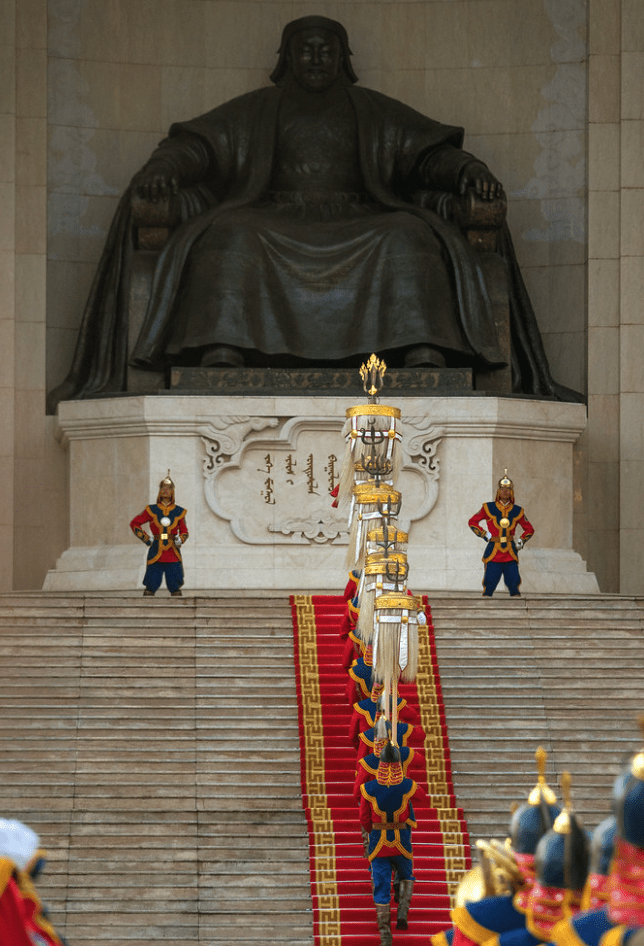
Dominating the northern side of the square is the Government Palace, home to Mongolia’s parliament, the State Great Khural. Its impressive frontage includes a monumental seated statue of Chinggis Khaan, flanked by mounted statues of two of his trusted generals, Bo’orchu and Muqali. Statues of his son Ögedei Khan and grandson Kublai Khan complete the ensemble.
Unveiled in 2006 to commemorate the 800th anniversary of the founding of the Mongol Empire, the monument reflects the importance of Chinggis Khaan in Mongolia’s national consciousness.
But Sukhbaatar Square is more than a place to admire historical statues. It is also part of everyday life in the capital, where families gather, children play, wedding photographs are taken and important national ceremonies are held.
For us, this is one of the most interesting aspects of visiting the square: the way Mongolia’s extraordinary history remains part of its contemporary identity.
Experience Chinggis Khaan’s Birthday – National Pride Day
Although Chinggis Khaan is generally believed to have been born around 1162, the precise date of his birth remains uncertain.
In 2012, Mongolia introduced an annual national celebration of his birthday, known as National Pride Day. It takes place on the first day of the first winter month according to the Mongolian lunar calendar, meaning the date changes each year.
The occasion brings together representatives of Mongolia’s government, military, cultural institutions and wider society. Ceremonies in Sukhbaatar Square traditionally include paying respect to the statue of Chinggis Khaan and honouring the Nine White Banners, symbols historically associated with the Mongol state and its unity.
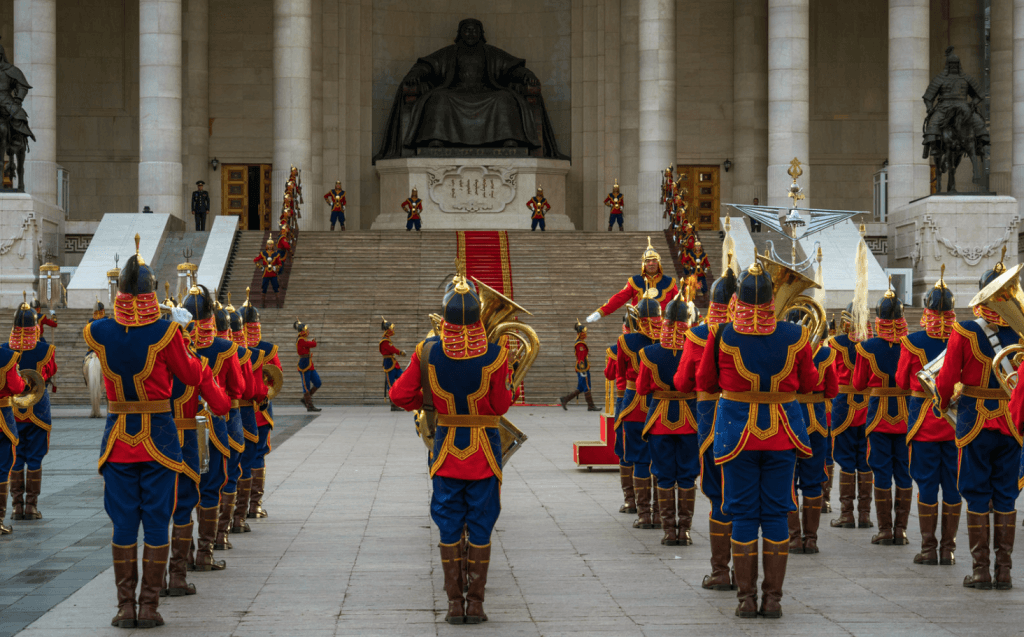
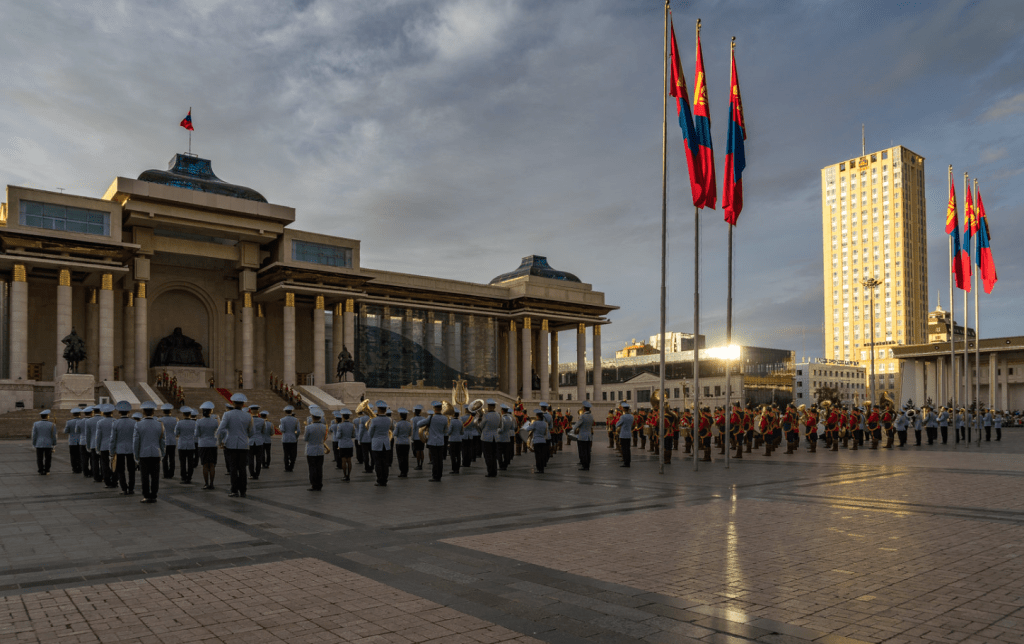
National Pride Day also provides an opportunity to recognise contemporary Mongolian achievements through the presentation of the prestigious Chinggis Khaan Order.
Previous recipients include Mongolian folk-metal band The HU, internationally acclaimed opera singer Ariunbaatar Ganbaatar and poet, writer and calligrapher Gombojav Mend-Ooyo.
Chinggis Khaan Equestrian Statue – Tsonjin Boldog
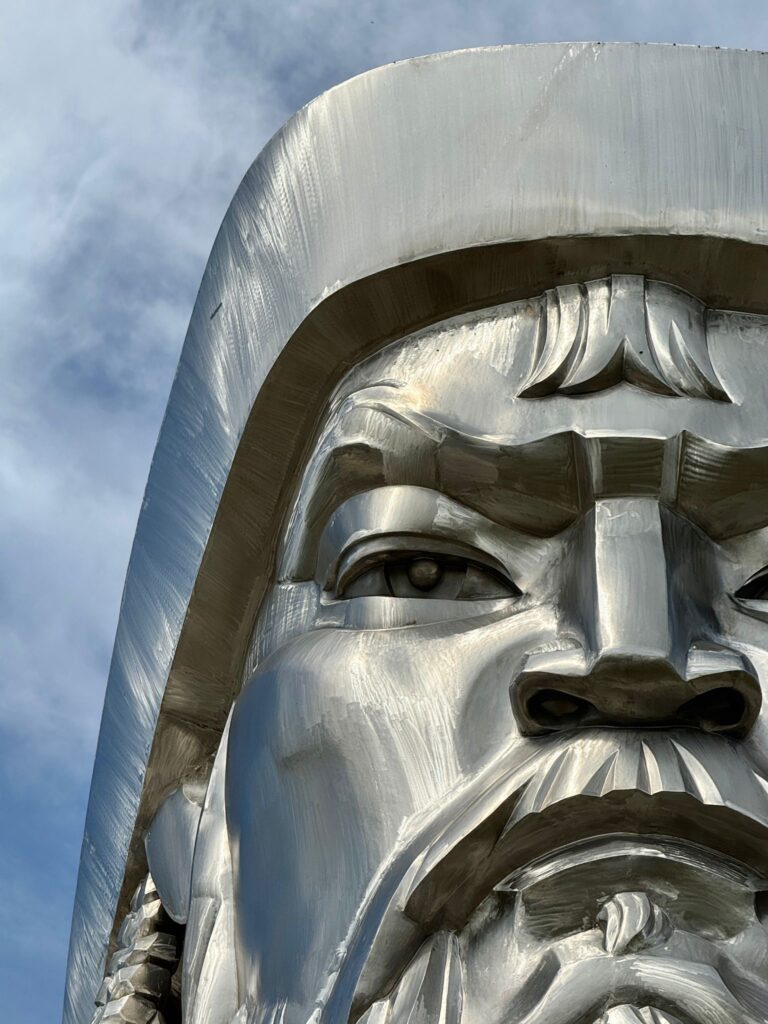
Approximately 54 kilometres east of Ulaanbaatar, the enormous stainless-steel Chinggis Khaan Equestrian Statue rises above the surrounding countryside.
Standing 40 metres high, the statue depicts Chinggis Khaan on horseback, facing east towards the region associated with his birthplace.
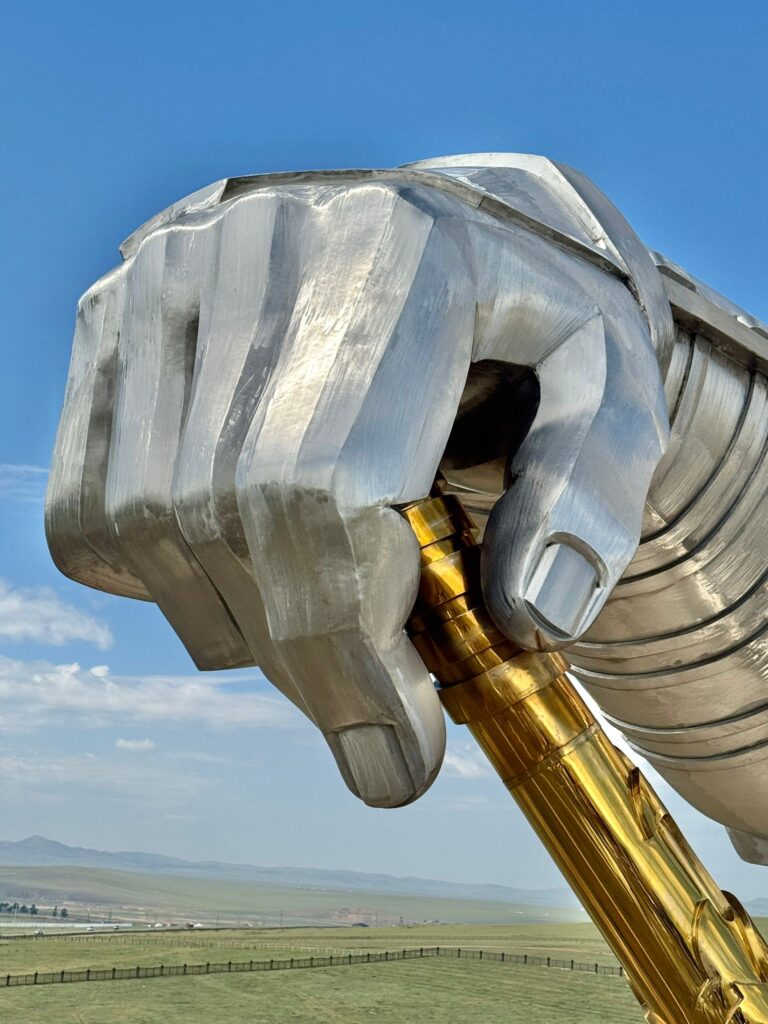
According to local legend, Tsonjin Boldog is where the young Temüjin discovered a golden whip, an object traditionally associated with good fortune and authority. Although the story belongs to folklore rather than established historical fact, it adds another layer to the monument’s significance.
Visitors can explore the small museum housed within the monument, which introduces aspects of Mongolia’s history and cultural heritage, before climbing to the viewing platform at the horse’s head for panoramic views across the surrounding steppe.
Step Back in Time at the 13th Century Park
For a more hands-on introduction to the world of Chinggis Khaan, the seasonal 13th Century Park offers a glimpse into life during the Mongol Empire. Set in the countryside east of Ulaanbaatar, the park recreates aspects of thirteenth-century Mongolian life through traditional camps, demonstrations and activities inspired by the period. Although very much a visitor attraction rather than an authentic historical settlement, it provides an accessible and engaging way to explore the clothing, crafts, food, military traditions and everyday practices associated with the era.
Chinggis Khaan National Museum, Ulaanbaatar
For anyone interested in understanding Mongolia beyond the familiar stories of Chinggis Khaan’s conquests, the Chinggis Khaan National Museum in Ulaanbaatar is an excellent place to begin.
The museum explores more than 2,000 years of history, tracing the development of ancient nomadic states, the rise of the Mongol Empire and the dynasties that followed.
Its extensive collections include archaeological discoveries, historical documents, clothing, weapons, ceremonial objects and artefacts associated with Mongolian rulers and aristocratic families.
It’s a superb museum and its interactive displays and multimedia presentations bring different aspects of this history to life.
We recommend allowing several hours for a visit rather than trying to rush through the collections.
Explore Khentii Province – The Landscapes of Chinggis Khaan
While the monuments and museums of Ulaanbaatar provide an introduction to Chinggis Khaan’s legacy, travelling through Khentii Province in eastern Mongolia offers something altogether different: the opportunity to explore the landscapes where his story began.
This is the region most closely associated with his early life, where Temüjin is traditionally believed to have been born and raised, and where many of the events that shaped his rise to power took place.
Khentii is also home to the sacred Burkhan Khaldun Mountain, part of a UNESCO World Heritage landscape associated with Chinggis Khaan’s life, spiritual beliefs and possible burial place. The precise location of his tomb remains unknown.
But what makes Khentii particularly compelling is not simply its historical associations.
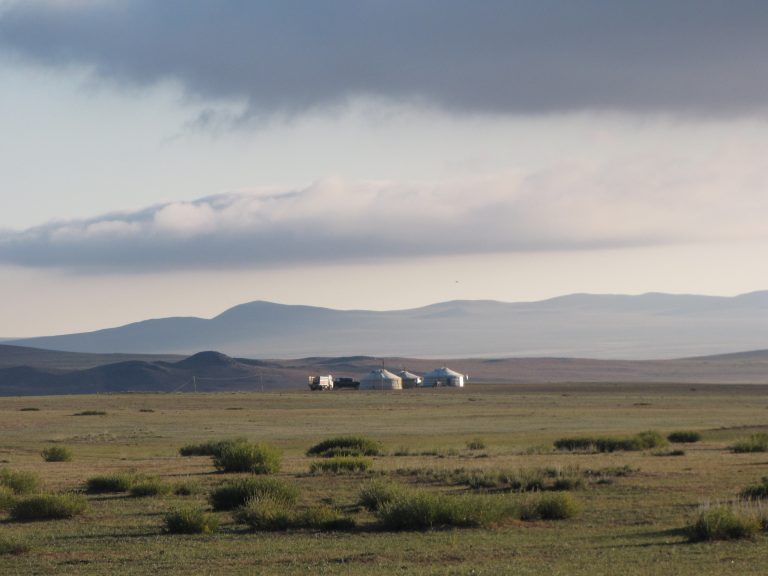
Here, the open steppe gives way to wooded valleys, winding rivers and the forested slopes of the Khentii Mountains. These are landscapes that have supported nomadic pastoral communities for centuries and continue to shape the lives of the families who call them home.
Dadal and the Temüjin Childhood Museum
One of the most significant places to visit is Dadal, a small settlement in northeastern Khentii, close to the confluence of the Onon and Balj rivers. The surrounding area is traditionally regarded as the birthplace of Temüjin, and its forests, rivers and lakes provide a strikingly different perspective on Mongolia from the vast open grasslands more commonly associated with the country.
Nearby Delüün Boldog is traditionally identified as his birthplace, while Khajuu Bulag, a small spring, is connected through local stories to his childhood and family.
In Dadal itself, the Temüjin Childhood Museum (Тэмүүжиний бага нас музей) offers an introduction to his early years and the wider history of the region. Its displays include archaeological finds from the Onon-Balj river basin, representations of Temüjin’s childhood and objects reflecting the traditions and symbolism of the Mongol Empire. Although modest compared with the national museums in Ulaanbaatar, it provides valuable local context to the historical sites and landscapes visitors encounter.
Dadal also has a local history museum exploring the area’s wider cultural heritage, making it an interesting place to spend time rather than simply passing through on the way to a monument.
Understanding the History Beyond the Landscapes
For those interested in exploring this history in greater depth, we recommend reading The Secret History of the Mongols, particularly the translation by Mongolian scholar Urgunge Onon.
Written in the thirteenth century, it is one of the most important surviving sources on Chinggis Khaan’s life and the early Mongol Empire, combining historical accounts with oral traditions and literary storytelling.
Another accessible introduction is Jack Weatherford’s Genghis Khan and the Making of the Modern World, which explores the wider historical influence of the Mongol Empire.
Both offer perspectives that help bring greater meaning to the places you visit, particularly in a region where so much of the history is connected to landscapes rather than surviving buildings.
There is something compelling about standing in the landscapes where Chinggis Khaan once lived, travelled and began his rise to power. Looking across the wide steppe, following the course of rivers or standing beneath the forested slopes of the Khentii Mountains, it is extraordinary to consider that these same landscapes helped shape the life of a man whose actions would change the course of world history.
You can learn more about the region in our guide to Khentii Province in eastern Mongolia.
Discovering Chinggis Khaan’s Legacy
Chinggis Khaan’s legacy is not confined to Mongolia’s museums and monuments. It remains part of the country’s national identity, its stories and its connection to the landscape. And while the history is fascinating, we believe it’s just as important to get to know the Mongolia of today.
For those interested in exploring further, our tailor-made In the Footsteps of Chinggis Khan journey offers an opportunity to spend time in the historical landscapes of eastern Mongolia, while getting to know some of the people and communities who call the region home.
Jess @ Eternal Landscapes