
Experience Spring In Mongolia
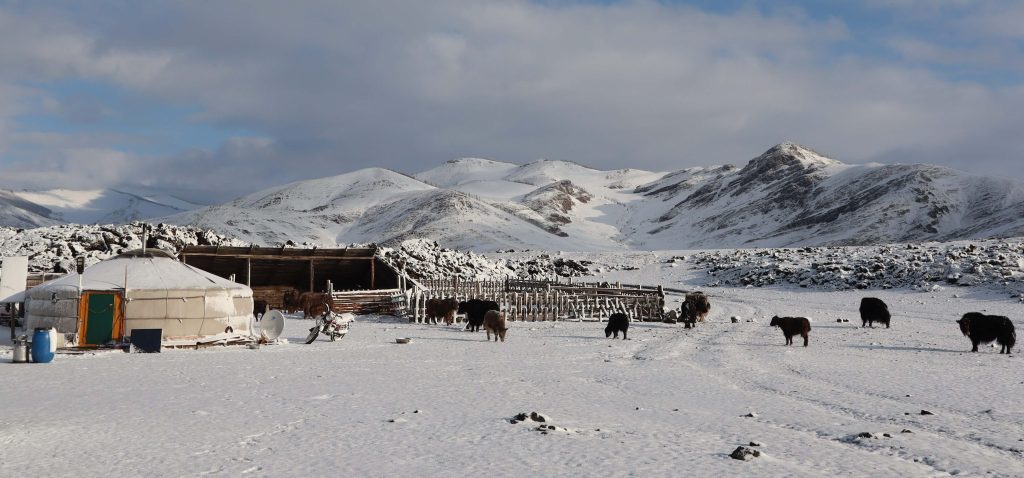
Spring in Mongolia is not the season most commonly promoted by tour companies. Yet it is one of the most important times of year for Mongolia’s herders — and one of the most revealing for visitors.
Of Mongolia’s four distinct seasons, spring is perhaps the most unpredictable. Mongolians often say someone is “like a spring sky” (хаврын тэнгэр шиг) — a phrase used to describe changeable, moody behaviour. Dry winds can give way to sudden snowfall. Blue skies can quickly turn to dust storms. It is a season of movement and instability — but also renewal.
Pack a windproof and waterproof jacket, good thermals, and sunglasses. Then embrace it.
Because beneath the shifting weather, spring is when Mongolia begins again.
Table of Contents

Why Visit Mongolia in Spring?
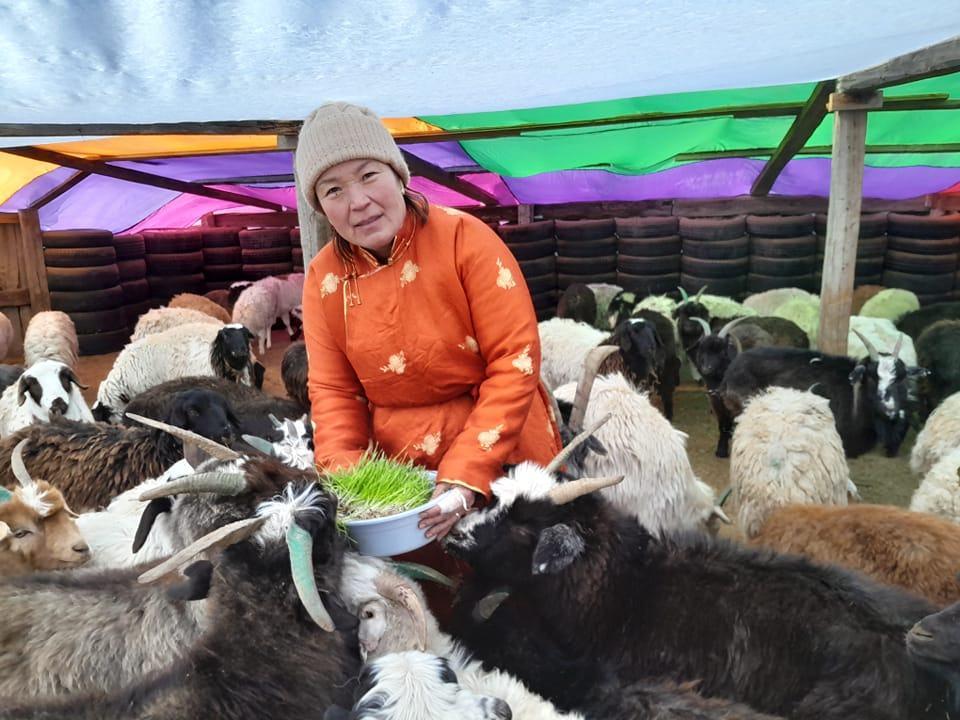
Life for Mongolia’s roughly 150,000 herder households changes dramatically with the seasons. Daily routines are shaped by livestock and landscape, and in March and April, the focus turns to birth.
Lambs, kids, calves, foals, and camel calves arrive — often in extraordinary numbers. In 2018 alone, more than 4.3 million livestock were born in under a month. For herding families, these weeks are intense, exhausting, and vital. Survival rates matter. Weather matters. Observation matters.
For travellers, it is one of the most industrious and illuminating times to be present.
Newborn animals are not staged moments; they are part of daily life. You may see lambs warming beside a stove, herders checking mothers in biting wind, or children quietly carrying newborn goats inside at night.
Spring is work. But it is also hope.

Cashmere Combing in Mongolia
Animal husbandry underpins Mongolia’s economy, and one of its most significant products is cashmere. Mongolian cashmere is globally respected for its quality and is typically not blended with lower-grade fibres.
Cashmere gathering begins in early spring as goats naturally shed their soft undercoat. Herders hand-comb each goat individually — a precise and labour-intensive process. The fine undercoat is gently separated while protective guard hairs remain intact to shield the animal from wind and rain.
Each goat produces around 250–300 grams of raw cashmere annually. Once cleaned and processed, only about half that weight remains as usable fibre.
Despite Mongolia’s demanding climate, goats here produce some of the longest and finest fibres in the world.
Cashmere combing is often communal. Families assist one another, moving from ger to ger. After a long winter, this work provides essential income — linking remote pastoral households to international markets.
Several respected Mongolian brands, including Gobi, have worked to improve traceability and sustainability within the industry. Increasingly, partnerships with organisations such as the Sustainable Fibre Alliance and pasture user groups aim to strengthen transparency and long-term pasture management.
If you’d like to understand more about choosing responsibly made cashmere, you can read our detailed guide to buying cashmere in Mongolia.
Castration of Livestock in Mongolia
Spring is also when herders carry out khungulakh — the castration of young male livestock.
This practice allows families to manage breeding carefully, ensuring only the strongest animals reproduce. It is conducted according to tradition, using simple tools and methods passed down through generations. The procedure is swift, practical, and purposeful.
Nothing is wasted. The removed testes are typically boiled and eaten, reflecting Mongolia’s long-standing ethos of using every part of an animal.
For visitors, witnessing such practices can be confronting — but they offer insight into the realities of pastoral life. Herding is not symbolic; it is economic, practical, and deeply tied to survival.
Spring Migration
Migration patterns vary across Mongolia. Some families move vast distances between seasonal pastures; others relocate only a few kilometres.
Spring often marks departure from winter camps where animals have sheltered in more protected terrain. The timing is not fixed. Herders consult the lunar calendar, choosing auspicious days based on combinations of earth, air, fire, and water. These calculations guide decisions about moving camps, combing cashmere, or conducting livestock work.
Migration is not random — it is considered, seasonal, and responsive to pasture conditions.


A Family in the Southern Gobi
One example is the young Batsuuri family, with whom we work through long-term local partnerships. They live in Bayandalai district near Gobi Gurvan Saikhan National Park.
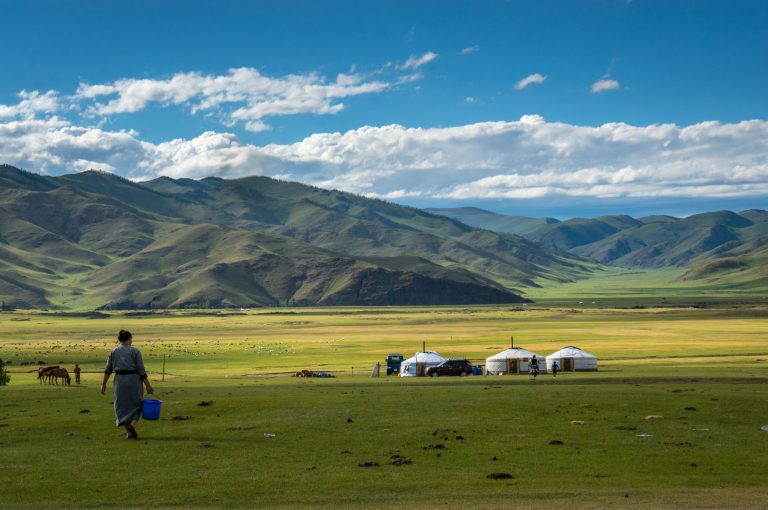
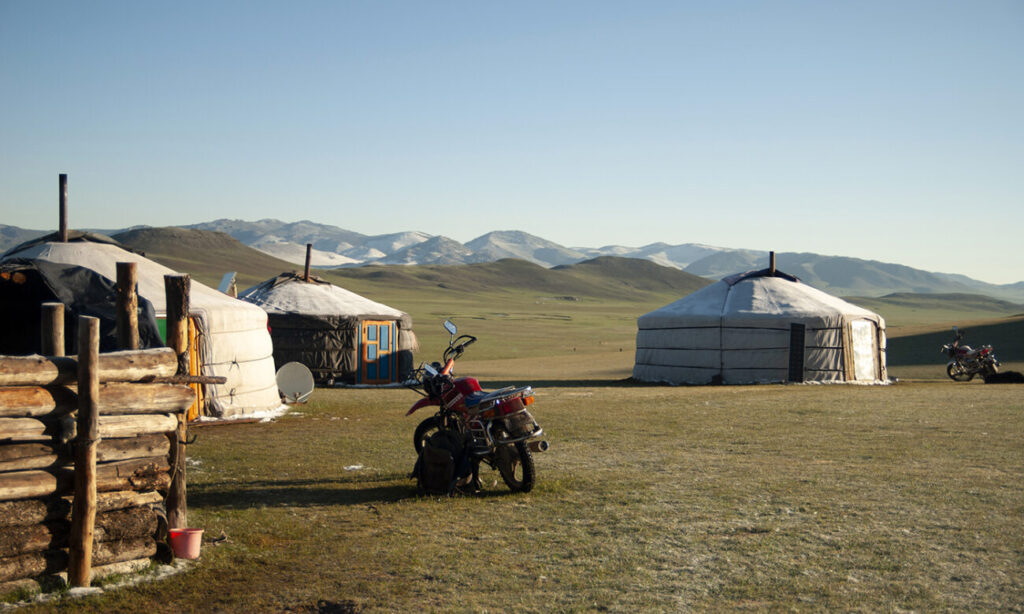
During winter, their ger is sheltered in the foothills of the mountains. In summer, they move to broader gravel plains that turn green after rainfall. Their spring migration — usually in April or May — may cover only a few kilometres, typical for the Gobi region. Yet even a short move represents a major seasonal transition.
It is a lifestyle shaped by attentiveness and adaptability.
Spring in Western Mongolia: Eagles and Nauryz
In western Mongolia, spring carries a different rhythm.
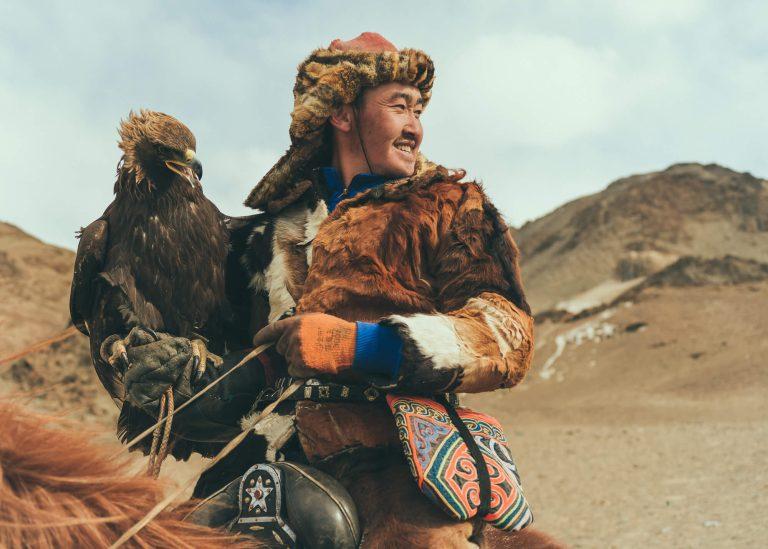
The Mongol Kazakh eagle hunters end their hunting season by mid-February, allowing prey animals to raise their young. But the partnership between hunter and eagle continues.
March can be a compelling time to visit. The eagles remain close to their human companions, flying, training, and exercising without the intensity of winter hunts. It is a quieter moment to observe the bond between bird and handler.
Spring also brings Nauryz — the ancient celebration of renewal observed across Central Asia. In western Mongolia, it is marked with family gatherings, hospitality, traditional food, and community celebration.
You may even encounter small local gatherings of eagle hunters during this time, where skills are demonstrated in a more intimate setting.
These experiences offer insight beyond festival spectacle — into continuity, family life, and seasonal change.

What Spring Offers Travellers
Spring travel in Mongolia is not about comfort or predictability.
Dust storms can sweep across the steppe. Roads can be rough. Weather can shift quickly. Families are busy.
But that is precisely why it matters.
Spring reveals Mongolia in motion — in work, in birth, in fibre gathering, in migration, in preparation for the year ahead. It allows you to witness daily life not as performance, but as lived reality.
Our spring journeys — from Nauryz experiences in the west to homestays and seasonal herding life — are developed in close collaboration with the families and communities we work alongside.
These are not trips designed around highlights. They are shaped by season, by people, and by participation.
If you are curious about travelling in Mongolia at a time when life is beginning again, we would be glad to help you explore what spring could look like for you.
Jess @ Eternal Landscapes