

Gobi Gurvan Saikhan National Park Mongolia – Our Guide
One of the things I have always appreciated about Mongolia’s Gobi Desert is how quickly the landscape can change. Gobi Gurvan Saikhan National Park is one of the best places to experience these contrasts.
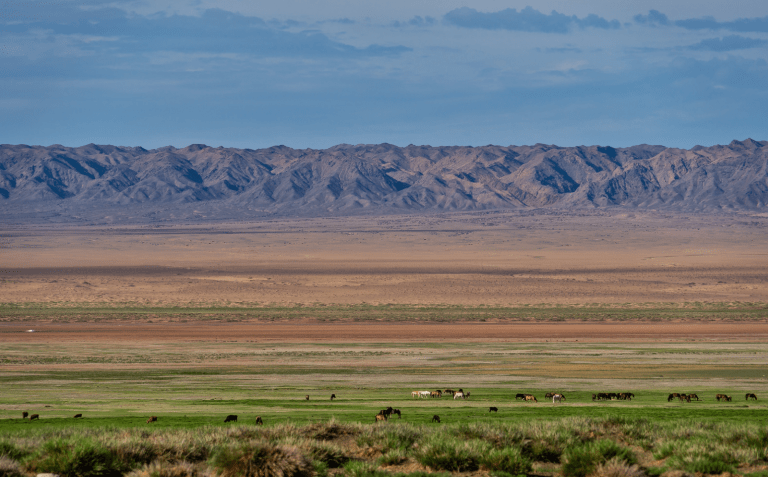
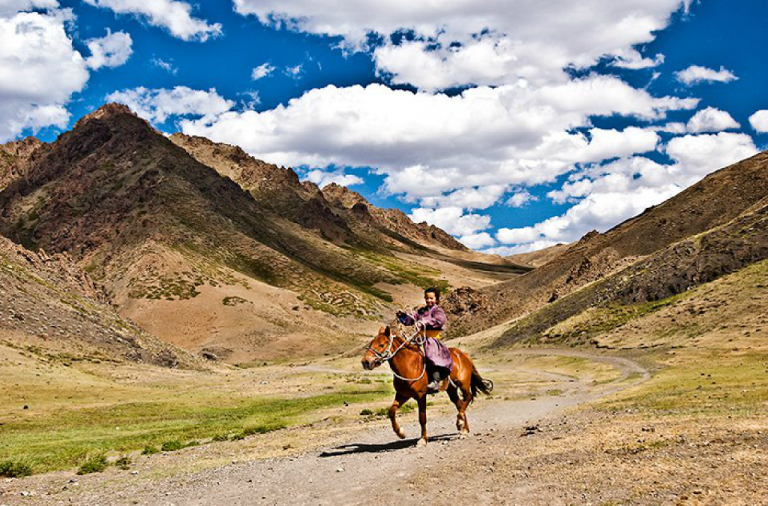
Located in Ömnögovi Province in southern Mongolia, Gobi Gurvan Saikhan is the country’s largest national park. Its landscapes include rugged mountains, narrow gorges, desert plains, natural springs, areas of alpine vegetation and the enormous Khongoryn Els Sand Dunes.
The park takes its name from the Gurvan Saikhan mountains – the Three Beauties – which rise dramatically from the surrounding Gobi. But its boundaries extend far beyond these well-known ranges.
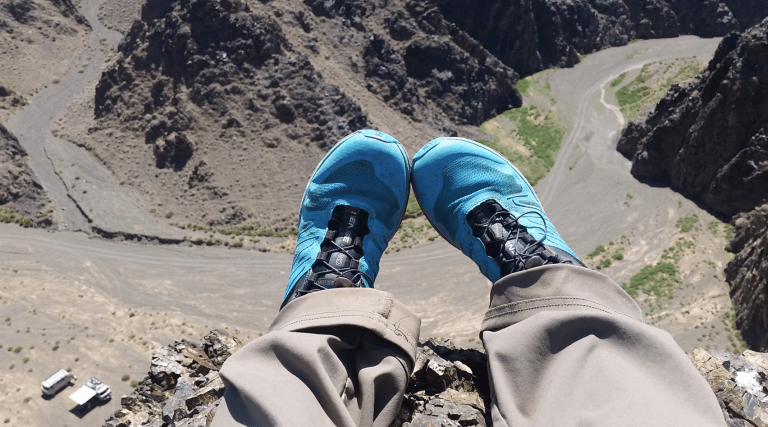
Many visitors come specifically to walk through Yolyn Am, one of the Gobi’s best-known natural landmarks. And although this gorge is certainly worth exploring, there is much more to the national park than its most frequently visited location.
For us at Eternal Landscapes, Gobi Gurvan Saikhan is a reminder that the Gobi is not one uniform desert environment. It is a collection of different landscapes, ecosystems and places that have supported wildlife and human activity for generations.
Gobi Gurvan Saikhan National Park – At a Glance
- Gobi Gurvan Saikhan National Park was established in 1993 and is located in Ömnögovi Province in southern Mongolia.
- Its name refers to three mountain ranges – Zuun Saikhan, Dund Saikhan and Baruun Saikhan – which form part of the Gobi Altai mountain system.
- The park is known for Yolyn Am (Vultures’ Gorge), Dungenee Am, the Khongoryn Els Sand Dunes and its varied habitats, from rocky mountains and springs to desert plains and saxaul woodland.
- Wildlife includes Siberian ibex, argali sheep, bearded vultures and elusive predators such as snow leopards.

Table of Contents
The Three Beauties – Mountains Rising From the Gobi
The name Gobi Gurvan Saikhan translates as the Three Beauties of the Gobi, referring to three principal mountain ranges:
Zuun Saikhan – Eastern Beauty
Dund Saikhan – Middle Beauty
Baruun Saikhan – Western Beauty
These mountains form part of the wider Gobi Altai system, with peaks reaching approximately 2,800 metres above sea level. They rise dramatically from the surrounding plains, creating a striking contrast between the relatively open desert landscapes and the more rugged terrain of the mountains.
The geology of this region is closely connected to the enormous tectonic forces that shaped Central Asia, including the continuing effects of the collision between the Indian and Eurasian plates. Over millions of years, uplift, faulting and erosion have helped create the mountains, valleys and gorges visible today. But the park is not confined to the three mountain ranges.
Covering approximately 27,000 square kilometres, it extends across a much wider area of the southern Gobi, incorporating different desert ecosystems and landscapes, including Khongoryn Els.
This is one reason I love looking at Gobi Gurvan Saikhan on Google Maps. Seeing the region from above gives you a much better sense of just how vast and complex the landscape is, far beyond what a short visit to Yolyn Am might suggest. I particularly love the enormous outwash plains spreading out from the mountains, where centuries of erosion and the movement of water have carried sediment down from the higher slopes, creating great fans of gravel and sand across the desert floor.
Yolyn Am – Vultures’ Gorge
Yolyn Am is probably the best-known location within Gobi Gurvan Saikhan National Park. Its name is commonly translated as Vultures’ Gorge, referring to the yol, the Mongolian name for the bearded vulture or lammergeier.
These enormous birds can sometimes be seen soaring on the thermals above the surrounding mountains, and they are one of the reasons I always encourage visitors to look upwards as well as down at the path in front of them.
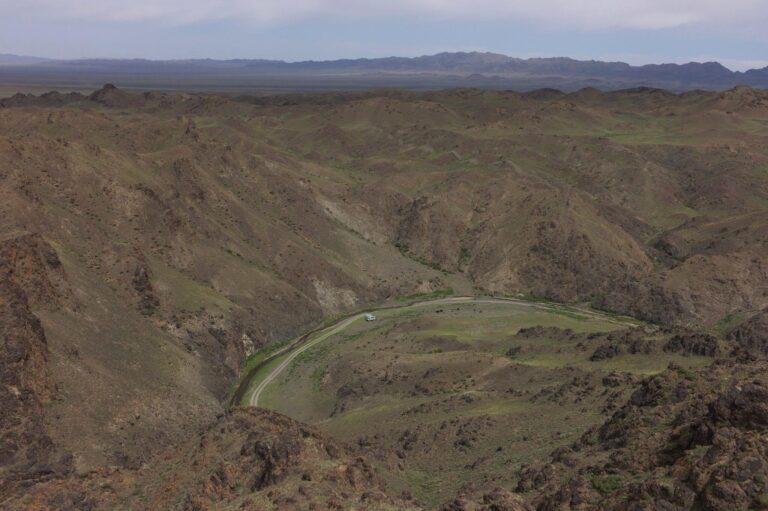
Yolyn Am begins as a relatively open valley before narrowing into a rocky gorge, where steep cliffs rise on either side.
One of its most unusual features is the ice that forms during winter. Because parts of the gorge receive very little direct sunlight, ice can accumulate and sometimes remain into early summer. Historically, the gorge was particularly well known for its thick ice formations.
However, visitors should not expect to see a continuous sheet of pristine ice throughout the warmer months. Its extent varies from year to year, depending on winter conditions and the timing of the spring thaw. In some years, there is little or no ice remaining by the time summer visitors arrive.
And even when ice is present, it may be mixed with dust, gravel and sediment rather than appearing as a clean white surface. So, if this is your first experience of seeing ice, you might be a little disappointed!
Dungenee Am and the Lesser-Visited Gorges
Although Yolyn Am receives much of the attention, it is not the only gorge within Gobi Gurvan Saikhan National Park. Dungenee Am is another remarkable area, with a narrow passage through the mountains and steep rock formations on either side. Its name is associated with the humming or whistling sound of the wind as it moves through the gorge.
In suitable conditions, the route through Dungenee Am provides a passage between the landscapes on either side of the mountains. There is something quite extraordinary about travelling through such a narrow rocky corridor and then emerging back into the open expanses of the Gobi.
Another lesser-known gorge is Gegeettyn Am, a narrow passage through the western part of the Saikhan mountain system.
These places are interesting not just for their scenery but also for the ways in which people have used the mountains over time. For example, near the southern entrance to Dungenee Am are the remains of a monastery, a reminder that the landscape has a cultural and religious history alongside its natural history.
Wildlife and Plant Life in Gobi Gurvan Saikhan National Park
One of the things that makes Gobi Gurvan Saikhan National Park particularly interesting is its biological diversity. The park supports a surprising range of wildlife and plant species, each adapted to the different conditions found within its mountains, gorges, desert plains and sandy areas.
Among the larger mammals recorded in the park are Siberian ibex, argali sheep, grey wolves, Eurasian lynx and snow leopards. Although the larger predators are rarely seen, their presence is a reminder of the importance of these mountain ecosystems.
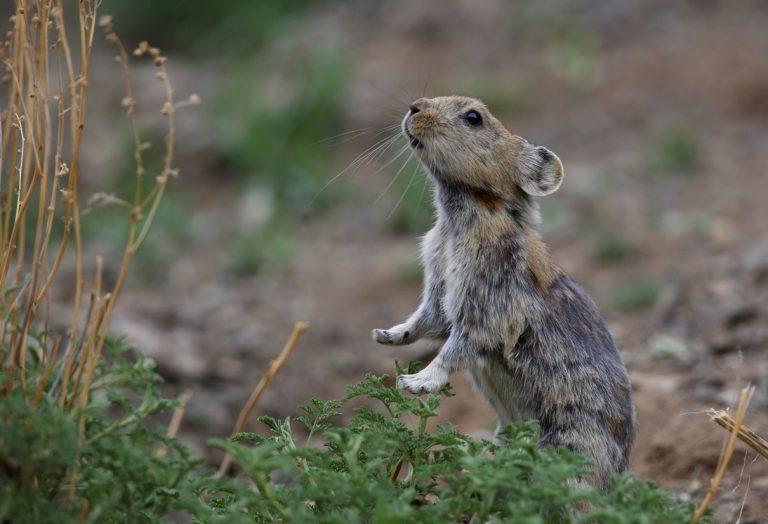
But it is often the smaller wildlife that I find just as interesting. The Gobi is home to various rodents and other small mammals, including gerbils, jerboas, hamsters and pikas. These animals play an important role in the food web, providing prey for larger species and contributing to the wider ecosystem.
The mountains and gorges also provide habitat for a variety of birds. One of the most impressive is the bearded vulture, or lammergeier, with its enormous wingspan and distinctive silhouette. These birds can sometimes be seen soaring above the cliffs of Yolyn Am, alongside Himalayan griffon vultures. Look more closely at the rocky slopes and cliff faces and you may also spot white-winged snowfinches or the wonderfully distinctive wallcreeper, with flashes of crimson on its wings.
The park’s plant life is equally varied. Among the species found here are juniper, asters, wild onions, mountain herbs and the Saikhan poppy. Juniper, known locally as arts, has a particular cultural significance in Mongolia and is traditionally burned as incense during Buddhist ceremonies and other spiritual practices.
In sandier areas, saxaul, or zag, is an important part of the desert ecosystem. These hardy trees and shrubs provide shelter and habitat for wildlife and are well adapted to the Gobi’s dry conditions.
Wild onions are another interesting feature of the region. Several species grow in the Gobi, providing seasonal grazing for livestock. Local herders sometimes comment on how the plants their animals eat influence the flavour of meat and milk. It is one of those small details that illustrates the close relationship between vegetation, livestock and the lives of herding families.
Much of this biological diversity is connected to the park’s geology, altitude and availability of water. Rain and snowmelt can enter the ground through fractures in the rock, sometimes emerging as springs that support vegetation in otherwise dry areas. The mountains also create local variations in temperature, sunlight and moisture.
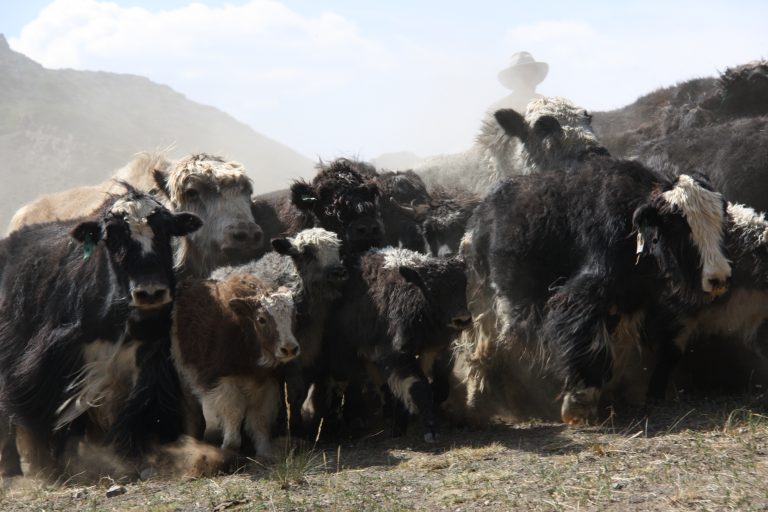
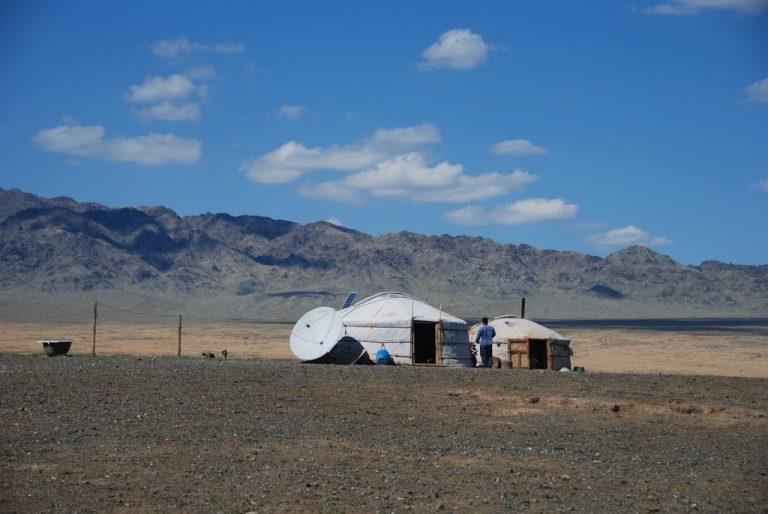
Within a relatively short distance, you can move between exposed rocky slopes, sheltered valleys, patches of alpine vegetation and dry desert plains. These differences also influence how herding families use the landscape. In some of the higher, cooler areas, where there is sufficient moisture and grazing, families are able to keep yaks – an animal more commonly associated with Mongolia’s mountain and highland regions than with the Gobi.
And this is one of the things I particularly appreciate about Gobi Gurvan Saikhan. It challenges your assumptions about what a desert should look like. From a distance, parts of the landscape can seem almost devoid of life. But spend time walking through the gorges, looking among the rocks or noticing the plants growing at your feet, and you begin to appreciate just how much life is supported by this apparently harsh environment.

Khongoryn Els – The Singing Sands
One of the most remarkable landscapes within Gobi Gurvan Saikhan National Park is Khongoryn Els, one of Mongolia’s largest sand dune systems.
Stretching approximately 180 kilometres, the dunes rise more than 200 metres above the surrounding valley floor in places. They are also known as Duut Mankhan, or the Singing Sands, because of the deep humming sound that moving sand can sometimes produce.
Although Khongoryn Els and Yolyn Am are often treated as separate destinations on Gobi itineraries, they are part of the same extensive protected landscape. The contrast between the enormous sand dunes and the rugged mountain gorges is a wonderful example of the geographical diversity found within the national park.
Read more about Khongoryn Els and the Singing Sands.
The Gobi Museum of Nature and History in Dalanzadgad
One place I particularly recommend including when exploring this region is the Gobi Museum of Nature and History in Dalanzadgad, the provincial capital of Ömnögovi.
Many visitors pass quickly through Dalanzadgad on their way to or from the national park, but I think both the museum and the town deserve a little more time.
I have always liked Dalanzadgad. It isn’t simply somewhere to refuel, buy supplies or spend a night between destinations. It is a busy provincial centre where people live, work, study, meet friends, run businesses and go about their everyday lives. And that, for me, is just as much a part of experiencing the Gobi as visiting its famous natural landmarks.
The museum itself is excellent. Its collection of more than 4,000 exhibits and artefacts introduces the natural history, geology, palaeontology and cultural heritage of the region. Alongside its dinosaur discoveries are archaeological finds, traditional utensils, religious objects and musical instruments, including items dating from the Stone, Bronze and Iron Ages.
The Gobi’s dinosaur fossils are, of course, an important part of its history, but there is much more to the region than its prehistoric past. The museum helps put those discoveries into a wider context and provides an opportunity to learn something about the people, cultures and landscapes of southern Mongolia.
You can find more information through the Gobi Museum of Nature and History’s Facebook page.
Exploring Gobi Gurvan Saikhan National Park With Eternal Landscapes
Gobi Gurvan Saikhan National Park is one of those places that challenges the idea of what a desert should look like. There are high mountains, narrow gorges, springs, desert plains, wildlife habitats and enormous sand dunes, all within one extensive protected area.
But it is also a cultural landscape, shaped by the presence and movement of people over generations.
I particularly like thinking about the Gobi as a landscape that has connected people rather than kept them apart. When we look at the Gobi on a map, it is easy to imagine it as a barrier. But people have been travelling through the Gobi for centuries.
Herders have moved livestock between seasonal pastures. Traders followed caravan routes linking Mongolia with China and Russia. Religious communities established monasteries, while other travellers used routes connecting wells, springs and settlements. The mountain passes of Gobi Gurvan Saikhan formed part of this wider network of movement.
There are even historical accounts suggesting that Mongol armies used routes through the region during their campaigns to the south, although the precise routes are not always certain.
Today, vehicles have replaced the old caravan traffic, but understanding the terrain remains important. Water sources, weather, road conditions and the shape of the landscape continue to influence how people travel through this part of Mongolia.
And that is one of the things I find so interesting about the Gobi. Even when the landscapes appear almost empty, they hold histories of movement, work, settlement and everyday life.
Jess @ Eternal Landscapes Mongolia