
Setting the Scene: Khövsgöl Nuur
The Khövsgöl Ice Festival takes place each year on or around March 3rd–4th in northern Mongolia, at the edge of one of the country’s most celebrated landscapes.
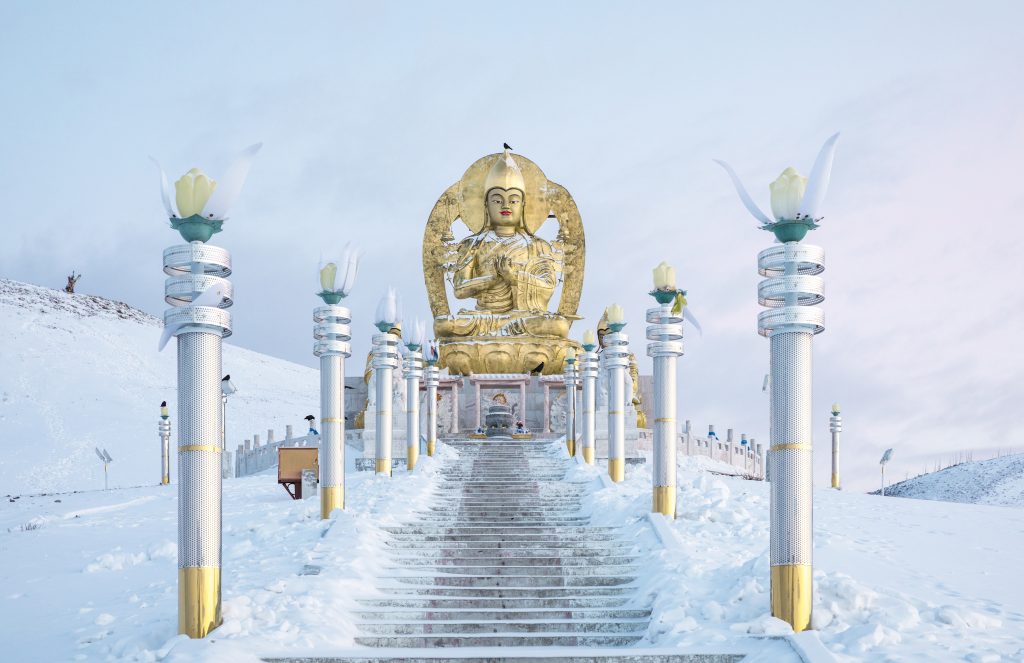
Khövsgöl is shorthand for Khövsgöl Nuur National Park, located in Khövsgöl Province. At its heart lies the 136km-long lake itself. Many tour companies refer to it as the “Blue Pearl of Mongolia,” but Mongolians know it as Dalai Ej — Mother Sea, a name that carries far greater meaning. The lake is the younger sister of Lake Baikal in Siberia, both formed as part of the same rift system. On a clear day, you can stand on the frozen shoreline and see the snow-covered Sayan Mountains, which form the border with Siberia. The highest point in the Khovsgol watershed is Munkh Saridag (3,491m), rising from these mountains.
At the southern tip of the lake lies Khatgal, a small lakeside settlement where Khövsgöl Nuur drains into the Egiin Gol river. Now connected to Mörön by a relatively new asphalt road, Khatgal is often passed through rather than lingered in. During the Ice Festival, however, the village comes alive, revealing a warmth and energy that makes it a pleasure to experience.
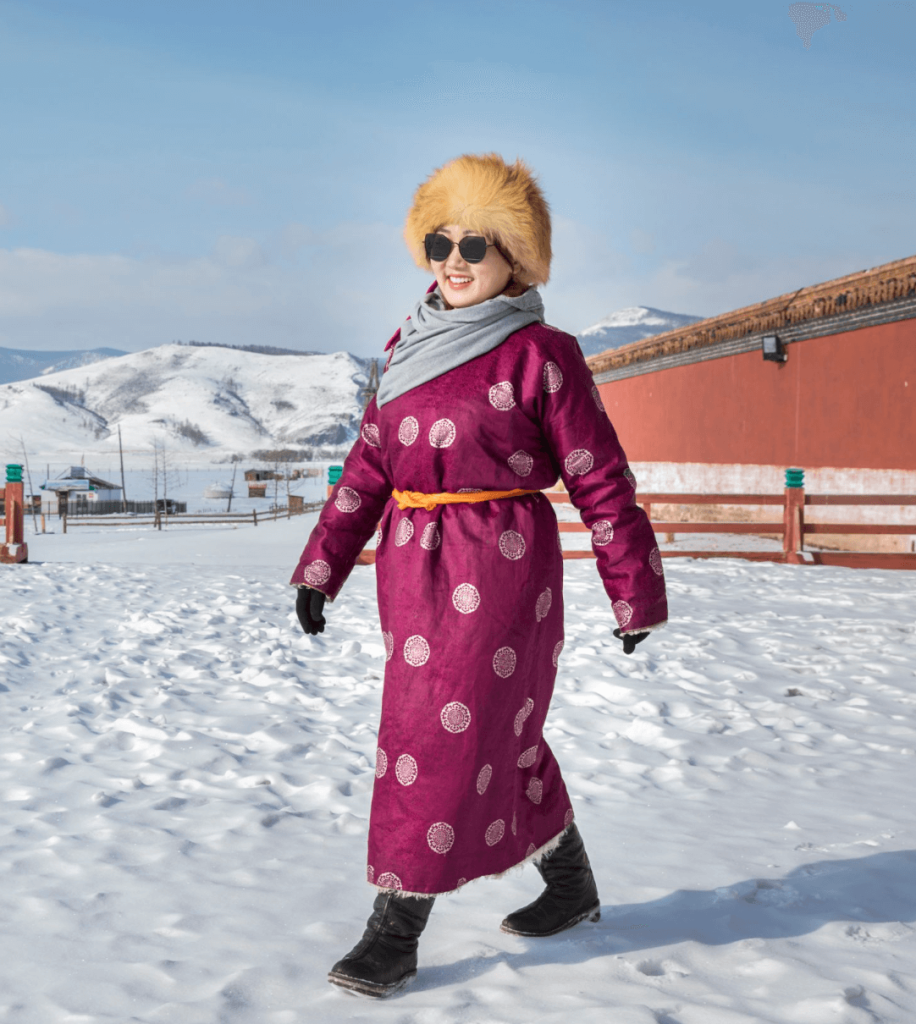
Go with the flow
This is not a festival governed by a strict timetable. While there are organised competitions and activities across the two days, the Ice Festival is better understood as a gathering — a chance for connection, exchange, and shared enjoyment. It reflects local collaboration and the desire to build a resilient future for the region and its herding communities.
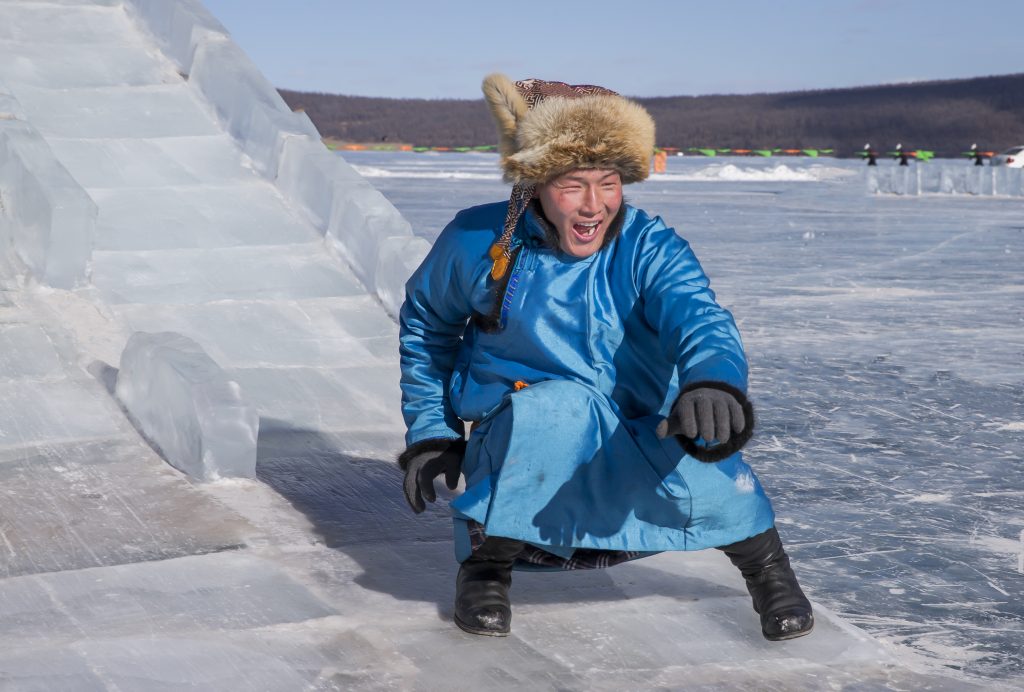
So, leave your watch behind. Dress warmly. Use the EL van as a place to thaw out when needed. Spend time talking, watching, and joining in. Events typically include ice sumo, tug-of-war, ice sculpting, ice driving rallies, and skating, alongside shamanist ceremonies and live music.
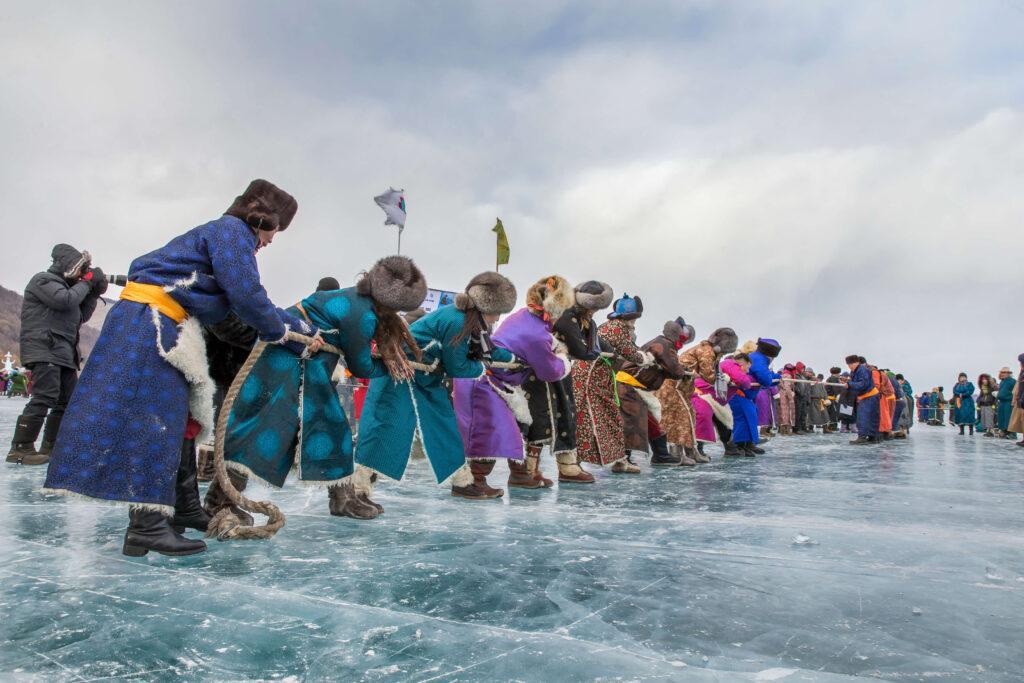
The Darkhad and winter life on the lake
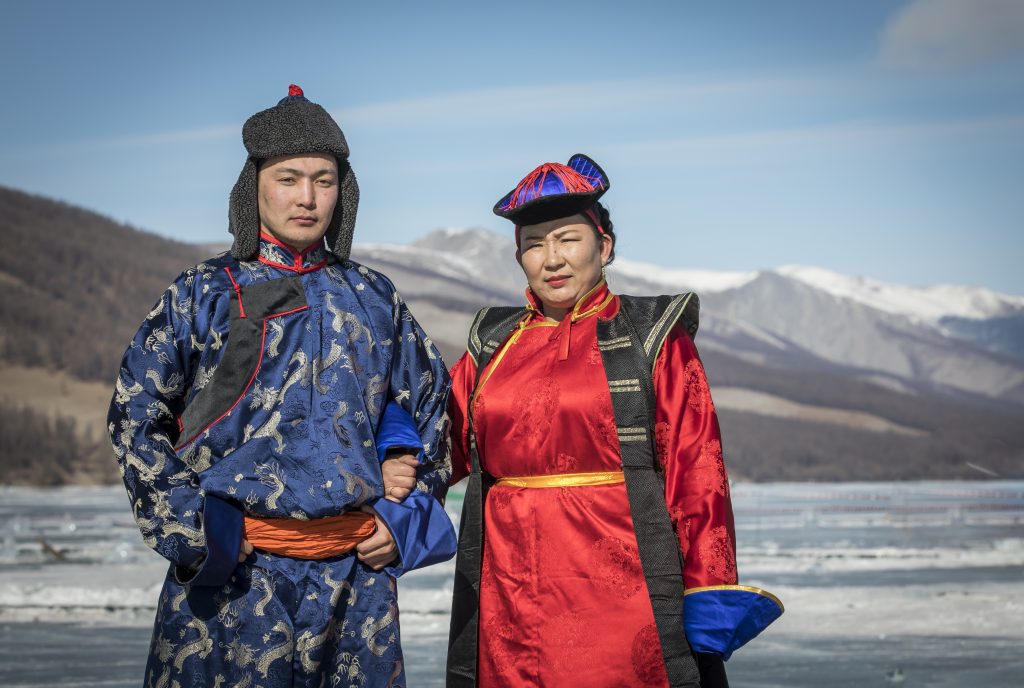
The Darkhad are an ethnic group of predominantly nomadic herders with their own cultural identity and dialect, distinct from the majority Khalkh Mongols. Their summer pastures lie in the grasslands of the Darkhad Valley, while many families migrate through the Khoridol Saridag Mountains to winter camps near Khovsgol Nuur.
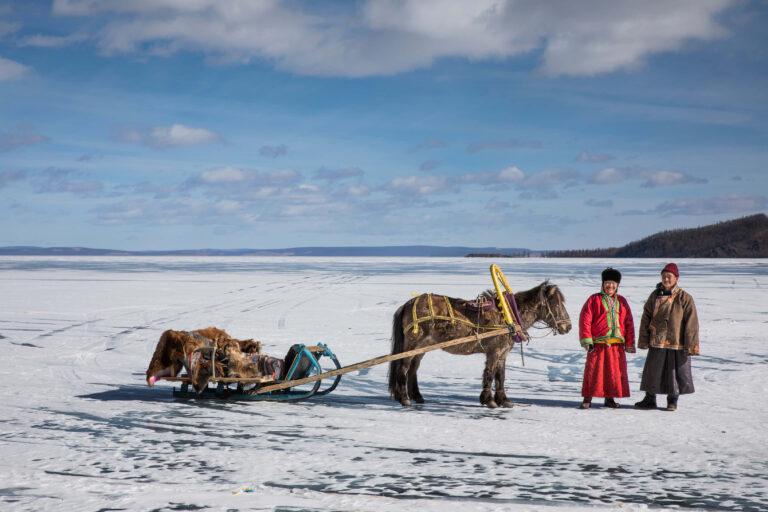
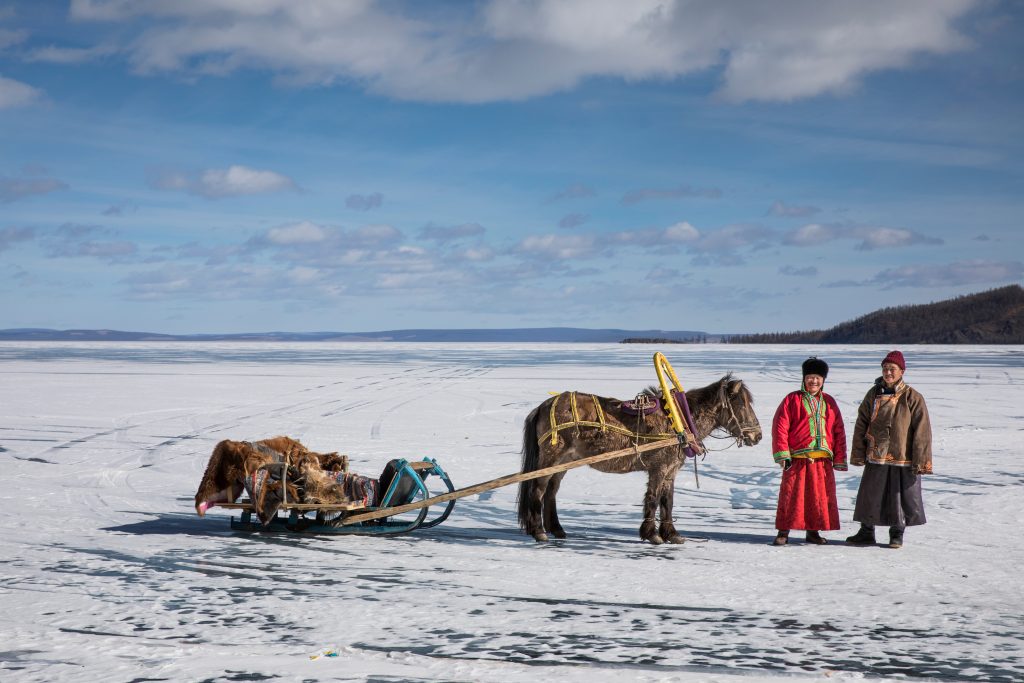
In winter, frozen Khövsgöl Lake becomes a vital travel route, with horse-drawn sleighs gliding across the ice. This seasonal rhythm is central to life here — and one reason why we also offer our Khövsgöl Horse Sleigh Expedition, timed to finish at the Ice Festival. Travelling by sleigh across the frozen lake is a quietly powerful experience, shaped by weather, landscape, and tradition.
Why we travel by road
Some itineraries combine the Khövsgöl Ice Festival with domestic flights, and we can do so as well on our tailor made Domestic flights carry higher emissions per kilometre, largely due to take-off and landing. For this reason — and many others — we travel to and from Khovsgol by road.
Flying removes context. You miss the transitions, the distances, the everyday lives between destinations. Overland travel slows the pace and allows space for understanding — of landscape, weather, settlements, and the quieter places rarely mentioned in guidebooks. In winter, these journeys take on their own beauty, and travelling through them becomes part of the experience itself.