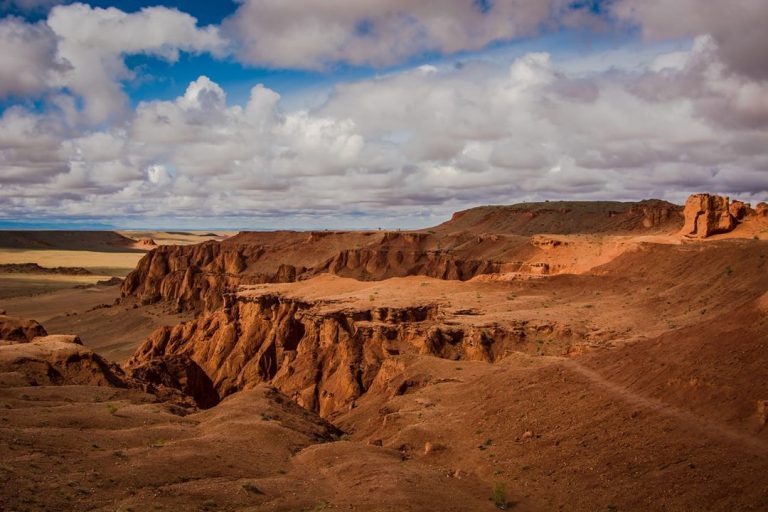
The sandstone formations of Khermen Tsav in Mongolia's southern Gobi Desert

Gobi Desert Mongolia – Landscapes, Wildlife & Local Life

Explore Mongolia's Gobi Desert, from sand dunes and dinosaur fossils to wildlife, local communities and the remarkable landscapes in between.
Jess - Who We Are - Eternal Landscapes Mongolia
Jessica Brooks
Eternal Landscapes
Notes From The Road In Mongolia Subscribe For Occasional Stories, Updates, & Journeys

The Gobi Desert Mongolia: Our Guide

When people think of Mongolia’s Gobi Desert, they often imagine endless sand dunes, scorching temperatures and little sign of life. And while there are certainly places in the Gobi where you will find towering dunes and extraordinary expanses of sand, they make up only a small part of the region.

Much of the Gobi is a landscape of gravel plains, mountains, rocky outcrops, dry valleys and areas of desert steppe. There are springs, wetlands, saxaul woodlands and small settlements. There are herding families, mining communities, provincial towns with people going about their everyday lives.

It is a landscape that is far more varied, both geographically and culturally, than many visitors initially expect.

I have been travelling through Mongolia’s Gobi since 2006, and it remains one of my favourite regions of the country. Not necessarily because of its famous landmarks, although they are extraordinary, but because of everything in between.

There is something about the immense gravel plains, the long journeys between settlements and the small details of life along the road that continues to draw me back.

At Eternal Landscapes, we believe that getting to know the Gobi means looking beyond the places that appear on most tour itineraries. It means understanding something of its geology and natural history, but also recognising that this is a living, working landscape, home to communities whose lives continue to evolve.

This guide brings together some of the places, people and landscapes.

Mongolia’s Gobi Desert – At a Glance

  • The Gobi Desert extends across southern Mongolia and northern China and is one of the world’s largest deserts, covering approximately 1.3 million square kilometres.
  • Rather than being dominated by sand dunes, it consists largely of gravel plains, rocky landscapes, mountains and desert steppe.
  • Mongolia’s Gobi is known for its dinosaur fossils, the Khongoryn Els Sand Dunes, Gobi Gurvan Saikhan National Park and wildlife including khulan (Asiatic wild ass), wild Bactrian camels and the critically endangered Gobi bear.
  • It is also home to herding communities, towns and a growing mining sector.
  • Visitors can explore the region on overland journeys, staying with local families, visiting historic and natural sites and discovering the diversity of life in the Gobi.
Mongolian ger in the vastness of the middle Gobi. Image by our guest Tristan Clemens

Table of Contents

“Mongolia’s Gobi Desert seems like earth reduced to its most basic elements: rock, sky, glaring sunlight and little else. The apparent emptiness is both compelling and intimidating. But the Gobi is not empty; it is filled with space, sky, history and landscapes.”

Conservation Ink

Understanding The Gobi Desert 

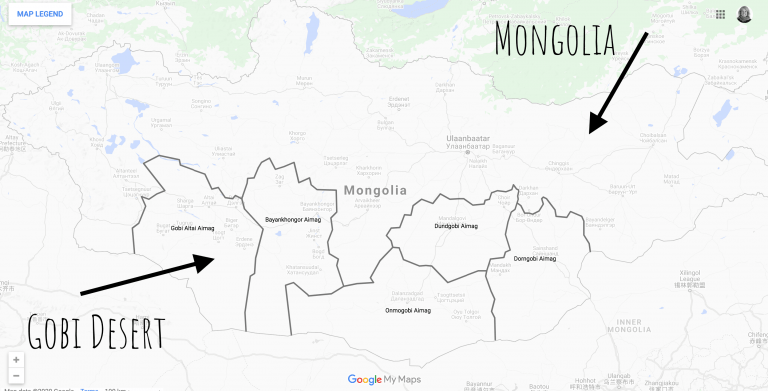
The Gobi stretches across southern Mongolia and northern China, covering an immense area of approximately 1.3 million square kilometres. In Mongolia, the Gobi landscape extends across several provinces, including Ömnögovi, Dundgovi, Dornogovi, Bayankhongor and Govi-Altai.

Map of Mongolia's Gobi Desert

‘The word gobi denotes a desert or a waterless place but doesn’t really mean anything by itself. The Mongolians have many descriptive words for types of gobi, like the Eskimo and Scandinavians with their words for snow. There are supposed to be thirty-three Mongolian words for gobi – such as gravel, sand, bare earth, rock, mountain, dune, watering place, and those describing various types of vegetation. The ancient Gobi was more like an East African savannah – long grasses and some trees, with lakes and marshes. Successive waves of drought turned it into the more barren land it is today.’

John Man, Tracking The Gobi

It is often described simply as a desert, but this single word does little to convey its geographical variety.

The Mongolian word говь (govi, often written gobi in English) refers to an arid or desert landscape. But Mongolians also say that there are 33 different kinds of Gobi. Whether or not you could identify all 33 while travelling, the idea captures something important: this is not one uniform landscape.

There are mountain ranges rising from the plains, areas of bare rock and gravel, stretches of sand, dry riverbeds and places where underground water reaches the surface, supporting vegetation and wildlife.

In his book Tracking the Gobi, John Man writes about this extraordinary variety, describing how the ancient Gobi was once a very different environment, with lakes, marshes and vegetation supporting a diversity of life. The landscape we see today is the result of geological and climatic processes extending over millions of years. And even now, it is continually changing.

The Green Gobi

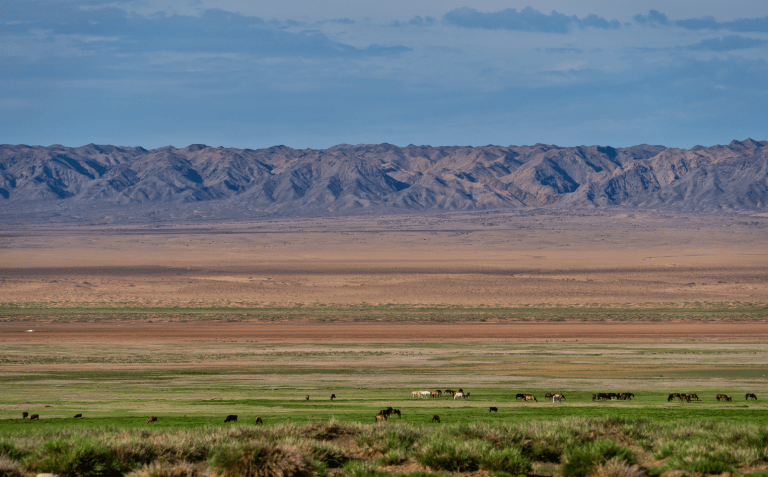
Despite its harsh climate, with less than 100mm of annual precipitation, the Gobi Desert has the potential to transform into a “green desert” with the arrival of moisture. This rain shadow desert, formed by the Himalayas blocking rain-bearing clouds from the Indian Ocean, may seem barren at first glance, but its soil is not inherently lifeless—only deprived of water. When rain does come, the Gobi blooms, revealing a landscape teeming with life.

This diverse ecosystem supports some of Mongolia’s most threatened species, including the wild Bactrian camel, Gobi bear, wild ass, and yes, even snow leopards. The region is also home to a variety of small mammals, such as hamsters, jerboas, gerbils, and the irresistibly cute Mongolian pika. The Gobi’s surprising biodiversity makes it an important refuge for wildlife in one of the most extreme environments on Earth.

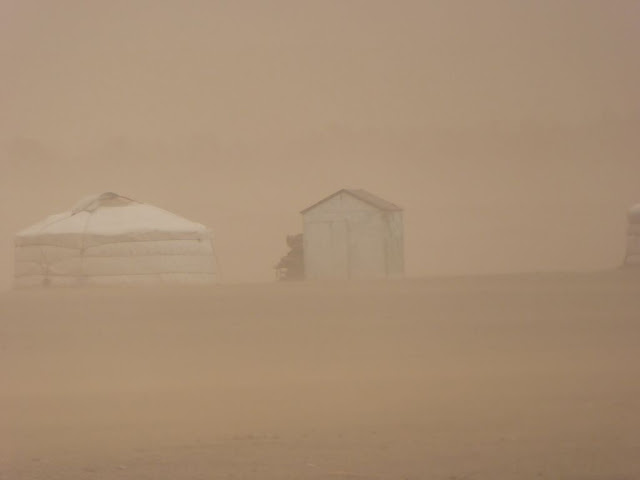
Sand storms such as this one are a frequent occurrence in Mongolia during the spring season - not just in the Gobi Desert but countrywide.
Dust storms, known as *ugalz* in Mongolia, are a frequent phenomenon, particularly during the spring season. These storms are not limited to the Gobi Desert but occur across the entire country. *Ugalz* are characterized by their sudden onset, violent intensity, and short duration, typically lasting just a few hours or less. These swift-moving storms are a dramatic feature of Mongolia’s springtime, sweeping through the landscape with force and leaving as quickly as they arrive.
Green Gobi Desert
Desert flora has evolved to endure extreme heat and aridity through a range of physical and behavioral adaptations, much like desert animals. These plants play a crucial role in the ecosystem, helping to sustain both domesticated livestock and wild animals in their natural habitats. By efficiently conserving water and withstanding harsh conditions, desert vegetation forms the backbone of survival in these arid landscapes, providing food, shelter, and resources for the region’s wildlife and pastoral communities alike.

‘The word gobi denotes a desert or a waterless place but doesn’t really mean anything by itself. The Mongolians have many descriptive words for types of gobi, like the Eskimo and Scandinavians with their words for snow. There are supposed to be thirty-three Mongolian words for gobi – such as gravel, sand, bare earth, rock, mountain, dune, watering place, and those describing various types of vegetation. The ancient Gobi was more like an East African savannah – long grasses and some trees, with lakes and marshes. Successive waves of drought turned it into the more barren land it is today.’ John Man, Tracking The Gobi

A Cultural Landscape

The Gobi Desert is a land where survival depends on adapting to extreme temperature fluctuations, with temperatures ranging from freezing cold to near-boiling heat. Resilience is at the heart of life here, in a cultural landscape shaped by herders who have lived in harmony with the fragile Gobi ecosystem for generations. Despite the region’s sparse population, Gobi herders exemplify human adaptability, relying on scarce resources to sustain both themselves and their livestock in this arid terrain.

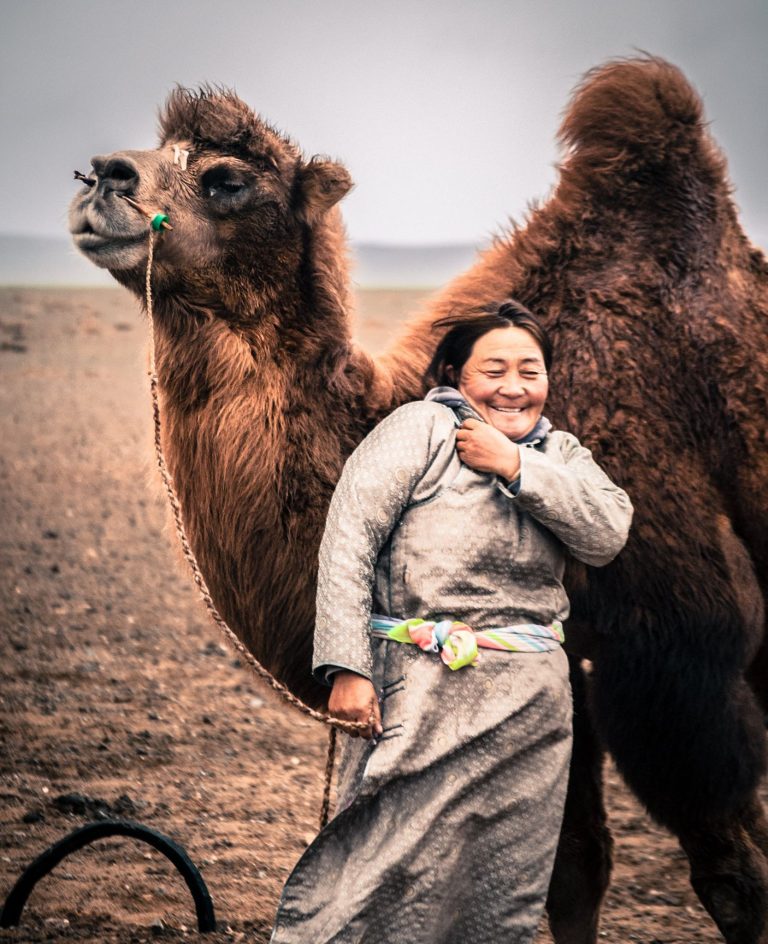
A female camel herder in Mongolia's Gobi Desert

However, the traditional nomadic lifestyle now faces modern threats, particularly from water-intensive mining operations that put both the environment and the herders’ way of life at risk. Compounding these challenges is the looming threat of desertification, which casts a growing shadow over the Gobi. The desert is expanding due to climate change, shifting weather patterns, and increased aridity. These forces are degrading once-fertile lands, and overgrazing—especially by goats—is further straining the delicate ecosystem, leading to vegetation loss and accelerated erosion.

The expanding Gobi’s impact stretches beyond its borders, threatening food security and the livelihoods of those who depend on the land. Addressing desertification is not just an environmental imperative but a socio-economic challenge deeply connected to the future of the Gobi’s human and animal inhabitants.

In addition to the standard tourist ger camps, local herding families also offer ger accommodations for visitors. While these family-operated camps are more basic and lack the comfortable amenities of standard camps, they provide a unique opportunity to experience the lifestyle of the Gobi. Staying with a local family offers a glimpse into the daily challenges and traditions of their life, while also directly supporting the local economy.

But, don’t limit your Gobi experience to just the nomadic herders. The Gobi is also home to miners, drivers, Buddhist monks, musicians, conservationists, teachers, cleaners, students, shopkeepers, and other small business owners. Many live in provincial capitals like Dalanzadgad, home to the impressive Gobi Museum of Nature and History, or in smaller towns like Tsogt Ovoo. Though often windswept and rugged, these communities are deeply woven into the fabric of modern Mongolia.

To seek only the nomadic herders’ way of life is to overlook the rich diversity of Mongolian society and to disregard the full spectrum of life in the Gobi. When you visit the Gobi, expand your horizons. Not just through its landscapes, but also through the people you meet along the way.

Alpine Mountains & Gorges

Gobi Gurvan Saikhan National Park Mongolia
Yolyn Am, also known as Vultures’ Gorge, is a prominent spring within Gobi Gurvan Saikhan National Park. It is named for the Lammergeiers, or Bearded Vultures, that can often be seen soaring on the thermals above the canyon. Yolyn Am is particularly renowned for its thick sheet of ice that forms in the narrow gorge during winter. This ice, sometimes several meters thick, often remains preserved until early July, as the overshadowing peaks slow its melt. The water tables beneath the Gobi Gurvan Saikhan were established by ancient geological processes. As the mountains began to rise and fault lines fractured the earth, subterranean water was forced upwards, seeking the easiest route downhill. This has given rise to the springs that sustain the region’s wildlife and ecosystem, with Yolyn Am being a striking example of how the Gobi’s water systems are intertwined with its geological history.

You will find fracture zones running along the base of the mountains – sometimes visible as a contour. These fracture zones dominate the ecology and economy of the Gobi as along these lines subterranean water is squeezed to the surface. Not all rainfall evaporates – some replenish the water table which under subterranean pressure then squeezes up through the cracks, emerging in springs.

One area where you can find a series of springs is the interior of the Gobi Gurvan Saikhan National Park – Mongolia’s largest national park and a mountainous terrain rising out of the extensive desert plains and a region of incredible biological diversity. This mountainous region was formed by the same tectonic activity that created the Himalayas and is part of the Gobi Altai Range – the outer crumple zone of the Himalayan geological activity.

Dinosaurs & Bad-Ass Explorers

‘The Gobi offers a cross-section of this sweep of earth’s history.’ – John Man

The Gobi Desert in Mongolia offers a fascinating lesson in Earth’s ever-changing environment—it hasn’t always been an arid desert. Around 80 million years ago, during the Late Cretaceous Period, the Gobi was a landscape of open grasslands, much like a savannah. Marshes, lakes, rivers, and patches of forest dotted the region, creating a diverse ecosystem. This period marked the final stage of dinosaur dominance, and some of the most significant fossil discoveries come from the Nemegt Basin in the Gobi. These fossils include species that illuminate the transition from the age of dinosaurs to the age of mammals, offering vital insights into Earth’s prehistoric past.

Jess: When was the Gobi a sea? Turuu: Back when I was a fish.

Roy Chapman Andrews - explorer in Mongolia's Gobi Desert

It is said that the character of Indiana Jones was inspired by Roy Chapman Andrews, the famed American explorer and paleontologist. In the 1920s, Central Asia was still largely unknown to the scientific community, but Andrews and a team of scientists ventured into the region on a series of five “Central Asiatic Expeditions,” sponsored by the American Museum of Natural History in New York City. Henry Fairfield Osborn, Andrews’s superior, had theorised that “Asia would prove to be the womb in which mammals had developed, and the base from which they dispersed throughout the world” (John Man: Gobi: Tracking the Desert).

Andrews’s expeditions to the Gobi Desert are still considered groundbreaking. Among their most significant discoveries were the first nests of dinosaur eggs at Bayanzag, also known as the Flaming Cliffs, as well as new species of dinosaurs and fossils of early mammals that coexisted with dinosaurs. These findings revolutionised the understanding of prehistoric life and established the Gobi as one of the world’s most important paleontological sites.

‘I have been so thirsty that my tongue swelled out of my mouth. I have ploughed my way through a blizzard at 50 below zero, against wind that cut like a white-hot brand. I have seen my whole camp swept from the face of the desert like a dry leaf by a whirling sandstorm. I have fought with Chinese bandits. But these things are all part of a day’s work.’ This Business Of Exploring, Roy Chapman Andrews

‘Like a fairy city, it is ever-changing. In the flat light of midday the strange forms shrink and lose their shape, but when the sun is low the Flaming Cliffs assume a deeper red and a wild and mysterious beauty lies with the purple shadows in every canyon.’ Roy Chapman Andrews, The New Conquest Of Central Asia

Image of Bayanzag - red sandstone rock formations - in Mongolia's southern Gobi Desert

Camels & The Singing Sands

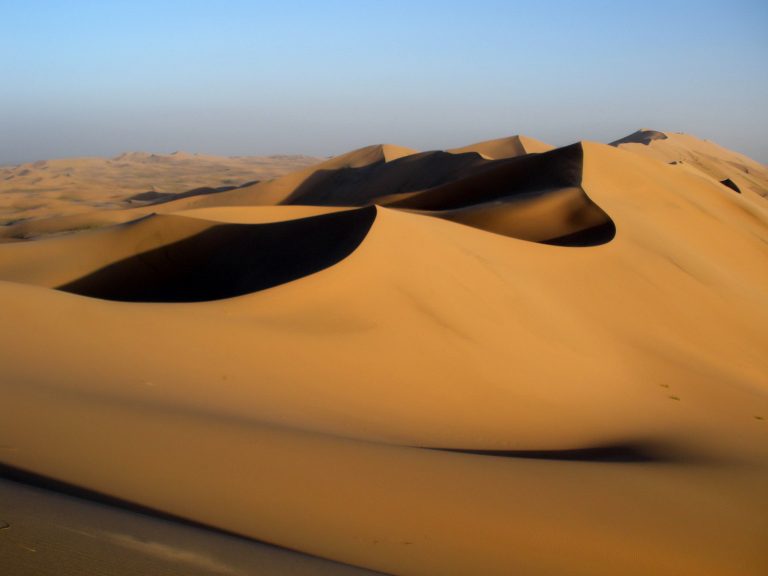
‘The dunes of Khongoryn Els sweep up against Zöölön Uul, a mountain range that is at the easterly reach of the Gobi Altai. You could say the dunes were a mountain range themselves. They are mammoth, the highest peak of sand being approximately 300m. They present the stereotypical beauty I think of in relation to a desert; sweeping lines and sharp contrasting forms lit by an unforgiving sun. ‘With the rising of the moon the desert takes on its most captivating appearance, and though the long hours while she travels from one side of the horizon to the other she has her own way with human imagination, softening the austere outlines and investing the barest formations with subtle charm. She is mistress of magic and with one touch can turn the wilderness into a dream world.’ Mildred Cable and Francesca French, The Gobi Desert  

The Singing Sands Mongolia
This stunning image, captured by our guest Egon Filter, showcases the *Khongoryn Els* sand dunes in the southern Gobi. Known locally as *Duut Mankhan*, or the “singing sands,” these dunes create a unique sound when the wind moves the grains or when small avalanches occur as the sand shifts. Climbing to the top of these majestic dunes offers a breathtaking view, especially at sunrise or sunset. However, it’s no easy feat—it requires at least an hour of challenging physical effort! Each step forward is often followed by a significant backslide, making the ascent a test of endurance. But the reward is undeniable. Sitting atop the dunes, surrounded by wide-open spaces and endless horizons, is glorious!

What you might not know is that camels have been used for transportation in Mongolia for centuries, including as vital pack animals on The Tea Road—an ancient trade route that connected China to Russia and beyond. These sturdy, resilient animals were essential for carrying heavy loads of goods across Mongolia’s vast, challenging terrain.

If you’re intrigued, you can learn more about our unique camel trekking experiences and how we explore Mongolia’s stunning landscapes with these incredible animals here.

The Marvellous Middle Gobi

Informally known as the Middle Gobi, this region encompasses the area surrounding Dundgobi Aimag and is a key segment of the vast Gobi Desert. While guidebooks and tour operators tend to focus on only a few sites within the Middle Gobi, we find every corner of this region fascinating. Its diverse landscapes, including the sacred Zorgol Khairkhan, a towering mountain rising almost vertically from the steppe and part of Mongolia’s granite belt, and the historic religious site Delgeriin Choiriin Khiid, offer a richness that remains largely undiscovered by most international visitors.

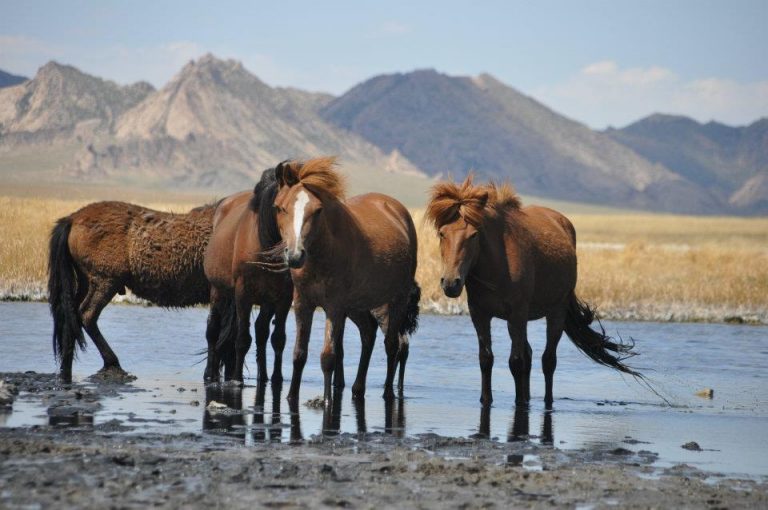
A herd of Mongolian horses in front of the rock formations of Zorgol Khairkhan mountain.

Unlike the more famous southern Gobi, the Middle Gobi offers a quieter, more serene experience. Those who venture into this overlooked region are rewarded with profound silence—a rare sanctuary from the noise of modern life—and the perfect setting for reflection and contemplation in a truly undisturbed landscape. Learn more in our blog post here.

Life In The Gobi’s Extremities

The Gobi Desert is known for its extreme environment, and one of the most formidable regions within it is the Great Gobi Strictly Protected Area (SPA) in southwestern Mongolia. This vast area is divided into two distinct parts: Part “A” of the Great Gobi SPA spans five districts in Bayankhongor Province, while Part “B” covers four districts in Khovd and Govi-Altai provinces. Additionally, there is a Small Gobi “A” and “B” in the southeastern Gobi, representing key desert ecosystems, including the saxaul forest. The saxaul plant, found as either a small tree or large shrub, has heavy, coarse wood and spongy, water-soaked bark that helps it survive in arid conditions. This region is also the natural habitat of the endemic khulan (wild ass).

The Great and Small Gobi SPAs were established to protect integral parts of the Central Asian desert ecosystem. Despite the harsh conditions, these protected areas support some of Mongolia’s rarest and most critically endangered species and serve as vital sites for large-scale animal migrations. Endangered species found here include the Snow leopard, Ibex, Argali sheep,  Saiga antelope, Gobi bear and wild Bactrian camel. Additionally, the Przewalski horse, once extinct in the wild, has been successfully reintroduced to the Takhiin Tal reserve within the protected area.

The Great and Small Gobi SPAs provide an exceptional opportunity to conserve and study these unique ecosystems and the endangered species that inhabit them, safeguarding a vital part of Mongolia’s natural heritage. However, it is important to note that these areas are strictly protected, and visiting them requires specific permits. To ensure minimal environmental impact, any visit should be arranged through a conservation organisation that can guide you in adhering to the region’s strict protections and responsible tourism practices.

Map of Strictly Protected Areas, Mongolia's Gobi Desert

Energy Centres 

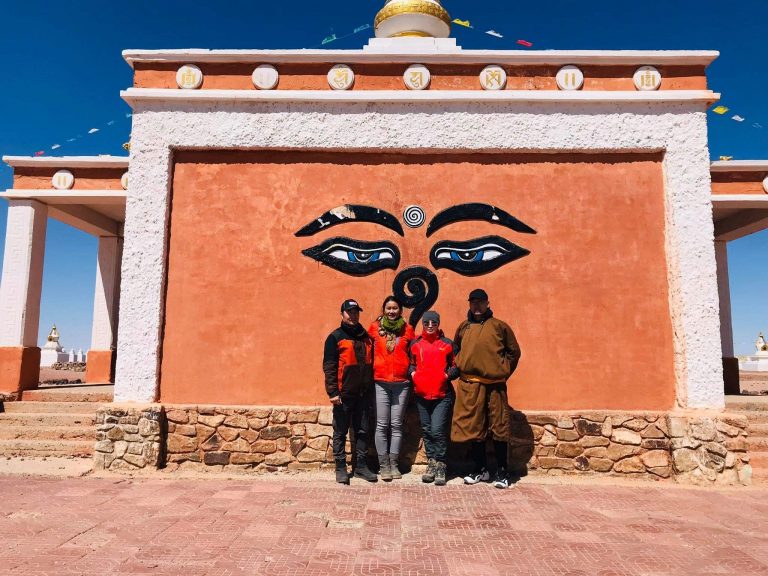
When you think of the Gobi Desert, energy centres might not be the first thing that comes to mind. However, Khamariin Khiid Monastery, established in the 1830s by Danzan Ravjaa—a revered figure in Mongolia though less known in the West—is a significant spiritual site. This monastery serves as both a place of worship and a pilgrimage destination for Mongolians and followers of Buddhism.

The entrance to shambala - Khamariin Khiid Monastery

Central to the spiritual importance of the monastery is its connection to Shambala, a legendary kingdom believed to be located in Central Asia, though its precise location remains a mystery. Shambala is said to be a peaceful realm where inhabitants live in joy and harmony, and many Mongolians believe that the entry to this mystical kingdom lies within Khamariin Khiid.

Learn more about the monastery and its spiritual significance in our blog post here.

‘The Gobi will make you question everything you thought you knew about the desert. It will strip the layers of expectation, familiarity and ‘seen it all before’ mentality from the harshest of critics. No longer will you compartmentalise landscapes into preconceived boxes. ‘The ground was speckled with tuffs of grass, livestock were huddled around a ger and there were drops of water obscuring my view. RAIN?!  Barren rocky outcrops, glistening natural springs bordered by lush green trees, wind swept dunes and blazing sunsets amongst the ghosts of prehistoric creatures. From the furgon, the back of a camel and on foot I moved through these changing scenes like the sole actress on a deserted film set. 

The remoteness lends itself to a sense of freedom and unconscious ownership. Just when you feel an element of power over the landscape, mother earth will remind you of your perilous position in the world.  This tap on the shoulder came to me deep in the middle of the night. The wind embraced the tent with the full force of a bear hug, using my body as a barrier against the side bending to it’s demands, I felt as minuscule as an ant in the wide open steppe.’ 

Megan Greentree, EL guest

Explore Using Our Map

If you’re interested in exploring the Gobi Desert with us, to help you plan, the following map highlights some of our favourite locations in the region. In keeping with tradition, all journeys in Mongolia typically follow a clockwise direction—ours does too, ensuring an immersive and authentic exploration of the Gobi.

Why Not Join Us?

If you’d like to experience the Gobi Desert with us, you can choose from one of our dedicated Gobi journeys

Essence Of The Gobi | Private, Tailor Made & Adaptable | 7 Days

Journey into the heart of Mongolia’s Gobi Desert—a land of vast horizons, dramatic contrasts, and resilient life. Our adaptable tailor made itinerary captures the Gobi’s raw, untamed beauty and offers a powerful introduction to one of the world’s most extraordinary landscapes and the communities that call it home.

Essence Of Mongolia | Small Group Trip | September 5-16 2026

Blending Mongolia’s dramatic natural contrasts with meaningful cultural encounters, the immersive small group experience offers more than just the highlights. With a slower pace, family-run stays, and time to simply be in the landscapes, this is a road trip that trades the ticklist for connection, meaning, and a sense of place.

Or, explore our collection of other shorter experiences, several of which highlight the desert’s most captivating landscapes.

Whichever adventure you decide on, we’d be delighted to welcome you to the remarkable Gobi.

Jess @ Eternal Landscapes

Share this article
Taste of Mongolia: Everything You Need to Know About Khuushuur
The Auspicious Symbols of Mongolia: A Snapshot
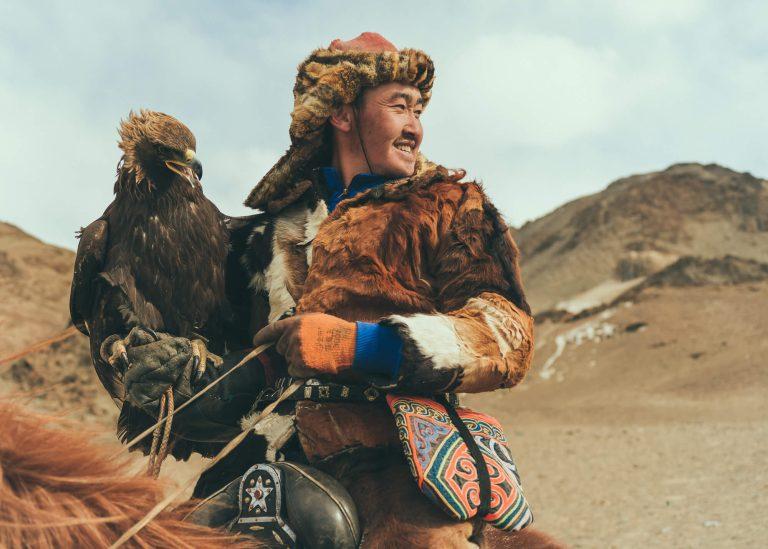
Mongol Kazakh eagle hunter
Our Mongolia Tours
Browse our range of Mongolia trips. We offer experiences rather than tours and provide you with freedom and flexibility as well as a genuine and personal introduction to the real Mongolia – a Mongolia...
Read More ...
More from our blog
All
Experiences In Mongolia
From The Archive
General
Mongolian Culture
Our Community In Mongolia
Our Philosophy & Advocacy
Our Practical Guides
Travel Destinations
Ulaanbaatar
1 2 3 … 46