
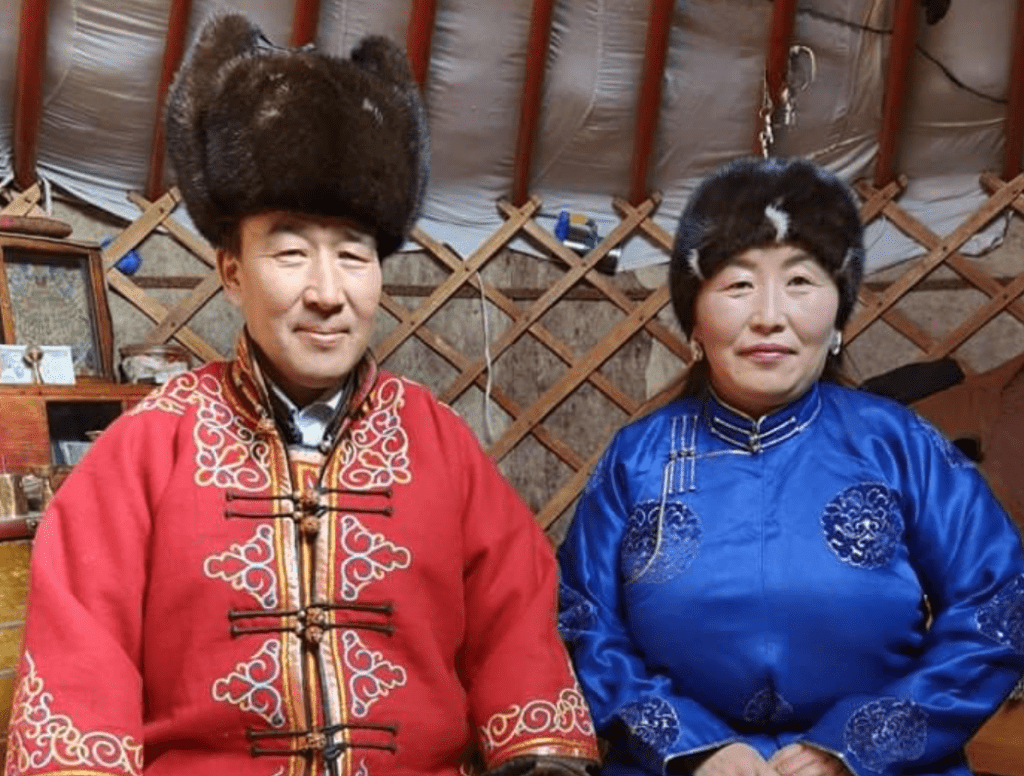
Tsagaan Sar – Mongolian Lunar New Year
The Mongolian Lunar New Year, known as Tsagaan Sar or “White Month,” holds significant cultural importance. It occurs on the second new moon following the winter solstice, marking the beginning of the new year. During this traditional holiday, spanning a minimum of three days, families come together in a celebration of reunion and tradition.
Tsagaan Sar: Quick Facts
What it is: Tsagaan Sar is Mongolia’s Lunar New Year, marking the end of winter and the beginning of a new year rooted in renewal, respect, and continuity.
When it’s celebrated: The dates change each year according to the lunar calendar, usually falling in late January, February or early March.
What the name means: Tsagaan Sar translates as “White Month”, symbolising purity, renewal, and a fresh start.
How it’s celebrated: Families gather at home, greet elders with the traditional zolgokh greeting, share food, and visit relatives over several days.
Why it matters: Tsagaan Sar is one of the most important traditions in Mongolian life, strengthening family ties, honouring elders, and reinforcing relationships.
Table of Contents
Prior To Tsagaan Sar
In brief, you clean.
Prior to Tsagaan Sar, Mongolians embark on a thorough cleaning spree, preparing for the upcoming national holiday. This cleaning ritual extends beyond homes, apartments, or gers, with even the streets receiving attention. It’s a time for redecoration too, as families invest in new carpets or rugs to adorn their walls. Alongside new household items, acquiring new clothing is also customary during this pre-Tsagaan Sar period.

Mongolians engage in thorough cleaning prior to Tsagaan Sar as a symbolic act of clearing out the old year, both literally and metaphorically. It’s a time for reconciliation and closure, where old quarrels are resolved, and outstanding debts are settled. Tsagaan Sar serves as a unifying moment for family and friends, allowing them to set aside past grievances and start anew. By leaving behind previous problems and entering the New Year with a fresh perspective, Mongolians embrace the spirit of renewal and harmony.
Bituun | New Year’s Eve
In brief: prepare and then eat a lot of mutton dumplings
Bituun, or New Year’s Eve, marks the culmination of the current lunar year, symbolised by the invisible moon and total darkness. In preparation for Tsagaan Sar, Mongolian families prepare hundreds of buuz, traditional Mongolian dumplings, which are then frozen until steamed for guests. Tsagaan Sar is a time for honouring family elders, and the abundance of buuz prepared reflects respect for the eldest members of the family. On bituun, people indulge in hearty feasting, as it’s believed that entering the new year on a full stomach ensures plenitude and prosperity in the year ahead.

This is bituun described by our guest Ross Briggs:
‘On to our hosts, the Zorgio family. We are invited into the main ger, it is beautiful. Centre at the back of the ger is the Tsagaan Sar feast. A stack of large biscuits, 9 high topped with dried cheeses, dried yoghurt, white sweets and sugar cubes. Around this are plates of buuz, potato salad, pressed mutton, salami and gherkins, pickled vegetables, a large bowl of sweets and beverages. The eldest daughter serves us individually, milk tea first followed by airag (here it is fermented camel milk, I like it) followed by all the dishes and beverages ending with a shot of vodka. The hospitality is marvellous.’
EL guest, Ross Briggs
Traditions Of New Year’s Day
To ensure health and happiness in the new year, it’s customary for each individual to take their “first steps of the New Year” in a direction determined by their lunar year of birth and the current year. Starting the year in the right direction is believed to be crucial for prosperity and well-being.
After taking these symbolic first steps, family members gather back inside the home to begin the Tsagaan Sar greetings. Among the various traditions observed on this day, one significant custom is the passing of the snuff bottle, symbolising new friendships and honouring loved ones.
A particularly formal tradition is the “zolgokh” greeting, where younger family members demonstrate respect and support for their senior relatives by placing their arms under theirs and holding their elbows. This gesture is accompanied by presenting a khadag, a blue sacred scarf, which is used throughout the Tsagaan Sar period. The traditional greeting exchanged during these interactions is “Ta amar mend baina uu?” which translates to “How are you doing?” The response to this greeting is “Amar mendee,” meaning “I am fine, I am good.”

These are the traditions of Mongolia’s Tsagaan Sar described by our guest, Ross Briggs:
This is New Year's Day in the words of our guest Ross Briggs: ‘Shine Negiin (New Year’s Day) sees everyone together for zolgokh, a ceremony to show respect and support for your elders. The eldest person is the mother of the Zorgio family, she has pride of place and I, being the second eldest, sit beside her. The rest of the family form a line around the inside of the ger in age order and start by greeting the mother first and then me. Being the eldest we are supported at our elbows, the greeting ‘amar mend uu' is exchanged, and we kiss the cheeks of all the others. The line folds on its self until everyone has greeted each other, the younger person with their hands under the elbows of the older. I feel very honoured to be included in this very Mongolian ceremony.’
EL guest, Ross Briggs
Shiniin Negen | New Year’s Day
In brief, honour the spirits and honour your family

On the morning of the New Year, before sunrise, every member of the household gathers to welcome the dawn. Traditionally, the male head of the household pays homage to the nature and spirits of Mongolia by visiting an ovoo, a stone shrine situated atop a hill or mountain. Bringing food and offerings, the eldest member expresses gratitude and reverence to the spirit of the mountain and its surroundings. The sunrise of New Year’s Day in Mongolia holds dual significance: bidding farewell to the old and ushering in the new. Many bring offerings such as milk, rice, and juniper. Initially, in the pre-dawn darkness, the focus is on releasing the past. As the sun ascends, the new year is joyously welcomed. Turuu often remarks on the crisp, clean air of the first day of Tsagaan Sar, signifying the successful passage of winter and the arrival of spring.


The Tsagaan Sar Table
In brief, mutton.
In addition to buuz, Mongolians traditionally prepare two other important dishes for Tsagaan Sar. Alongside the iconic dumplings, another staple is boov, a traditional Mongolian bread. Boov, akin to biscuits made from flour, complements the festive spread, offering a delightful accompaniment to the celebratory feast.

The boov holds symbolic significance in its presentation during Tsagaan Sar. These bread layers are stacked in odd numbers—such as three or five—as odd numbers are associated with happiness. Moreover, the height of the boov stack reflects respect, with taller stacks symbolising greater reverence for older family members. The number of boov layers also indicates the status of the family, determined by the age of the parents and the number of their children. To enhance its visual appeal, the boov is adorned with aaruul (Mongolian dried cheese) and small sweets.
Furthermore, a notable feature of the Tsagaan Sar table is the presence of a whole sheep’s back, including the fat from its tail. Mongolians aim to cook a sheep with the largest possible tail, symbolising wishes for family wealth and prosperity. This sheep’s back, served throughout the holiday, serves as a tangible representation of these hopes for abundance and well-being.
What Does Tsagaan Sar Represent For Our Team Of Trip Assistants?
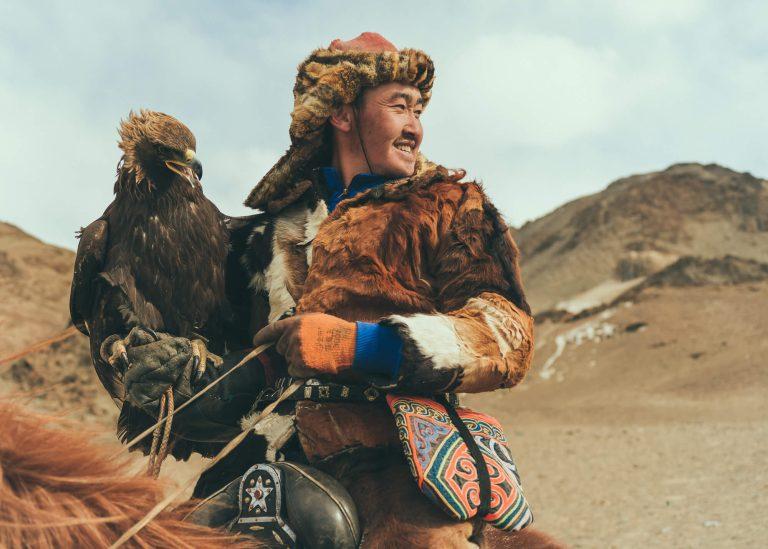
In Amaraa’s words, Tsagaan Sar is “a great holiday for Mongolians to welcome spring after passing through the harsh winter.” Zumbee echoes this sentiment, describing it as Mongolia’s largest traditional celebration, marking the first day of spring when winter ends and temperatures begin to rise. It is also one of the country’s oldest festivals.
As Mishka explains, Tsagaan Sar is a deeply respectful time, particularly for younger generations. “It connects us with the traditions and customs of our ancestors, and with how these have been passed down,” she says. “It’s a time to meet close and distant relatives, and to welcome newborns into the wider family.”
One important tradition, mentioned by Pujee, is that people do not argue with one another during Tsagaan Sar — conflict is forbidden. The celebration represents a clean break from the previous year: as the new crescent moon appears, the new year begins, symbolising freshness, clarity, and renewal. During Tsagaan Sar, people are encouraged not to be angry, greedy, or sad, but instead to clear their minds and spirits of negativity and welcome the year with calm, positive intentions.
Baaska explains that New Year’s Eve is known as Bituunii Üdür, the “black day,” because there is no moon in the sky. With the appearance of the first crescent moon, Tsagaan Sar begins. New Year’s Day, Shiniin Negin, marks the start of the “white days” and the “white month.” It is a moment to acknowledge the year that has passed and to prepare for a hopeful, healthy year ahead — one rooted in kindness, support, and togetherness.
Alongside marking the transition from winter to early spring, Tsagaan Sar is also, as Tuya notes, a very special time to visit relatives. Unuruu shares a similar view, describing it as a time for family reunions, bonding, and showing respect to elders. “It’s a chance for relatives to meet and talk about the year just finished,” she says. One of her favourite parts is serving her family’s handmade buuz (dumplings) and welcoming new members to the family, whether a baby, a brother-in-law, or a sister-in-law.
Pujee adds that Tsagaan Sar represents both the final day of winter and the first day of spring. It is a national holiday that Mongolians have celebrated for hundreds of years. Preparation is an important part of the festival: homes, clothes, and minds are cleaned, and families come together to make boov (traditional bread) and dumplings. Each person has a role — from preparing flour to shaping dumplings — and children often help by counting how many are made. Through these shared preparations and celebrations, Tsagaan Sar creates time, space, and meaning for families to be together.
If you’d like to experience Tsagaan Sar with Eternal Landscapes, our Tsagaan Sar small-group winter journey explores the festival in context, alongside the people and traditions that shape it. You can also browse our wider range of winter journeys in Mongolia.
We’d be glad to welcome you.
As people say in Mongolia during Tsagaan Sar — “Sar shinedee saikhan shineleerei” — may the new year bring you happiness and prosperity.
Jess @ Eternal Landscapes